


Listen to the article
Unpacking Gaza Casualty Statistics: A Critical Analysis of UN OCHA Data
As the reported death toll in Gaza surpasses 50,000 people, closer scrutiny reveals significant questions about the validity of these widely cited figures. The statistics, frequently referenced by international media and world leaders, deserve careful examination regarding their source and reliability.
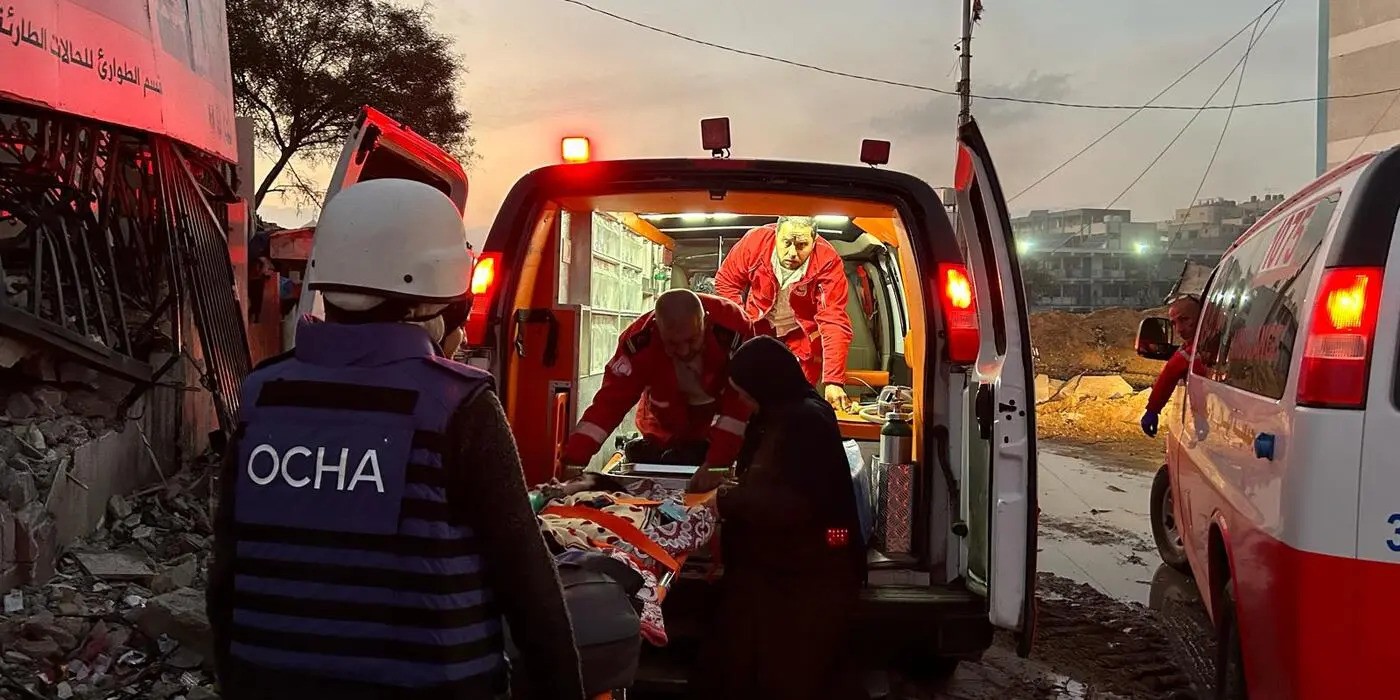
Most reports cite casualty figures from the United Nations Office for the Coordination of Humanitarian Affairs (UN OCHA). According to their March 25, 2025 update, 50,144 Gazans have been killed since the conflict began, with another 113,704 injured.
What often goes unmentioned is that these numbers come directly from Gaza’s Ministry of Health, which is operated by Hamas. UN OCHA includes a disclaimer on its website acknowledging this source: “Casualty numbers have been provided by the Ministry of Health (MoH) and the Israeli authorities. The fatality breakdowns currently cited are those that the MoH in Gaza has fully identified as of 22 March 2025 out of the higher number of casualties they report.”
In essence, anyone quoting UN OCHA is inadvertently relying on Hamas-provided statistics that have been repackaged with UN credentials.
Analysis of these figures reveals several problematic patterns. One notable issue is what could be called the “70 Percent Rule” – a seemingly predetermined ratio of women and children casualties maintained throughout the reporting.
On December 8, 2023, UN OCHA reported 17,487 casualties, with 5,153 women and 7,729 children, together comprising 70 percent of the total. Remarkably, by December 27, when the total death toll had risen to 21,110, the number of women and children killed remained unchanged, yet still accounted for a reported 70 percent of casualties – a mathematical impossibility.
The inconsistencies continued. On March 29, 2024, UN OCHA reported 32,623 Palestinian casualties, including at least 9,000 women and 13,000 children. A week later, with the total increasing to 33,091, the number of women killed allegedly rose by 500 and children by 1,500. This would mean that out of 468 additional deaths, over 2,000 were women and children – a statistical anomaly that defies explanation.
A significant shift occurred on May 8, 2024, when UN OCHA suddenly clarified that of the total alleged casualties, only 24,686 had been identified. The number of women killed plummeted from over 9,000 reported two days earlier to 4,959, while children dropped from over 14,500 to 7,797.
This dramatic revision followed a Hamas announcement on March 29, 2024, admitting they had “incomplete data” for over 11,000 people previously claimed as killed – with women and children comprising most of these uncertain cases.
Another questionable element was UN OCHA’s reporting on people “missing under rubble.” By February 4, 2025, this number had grown to more than 10,000. Yet just one week later, this statistic disappeared entirely from the reports without explanation.
The UN OCHA statistics also fail to distinguish between civilian and combatant deaths. This omission is problematic as it presents all casualties as civilian victims, regardless of their potential status as militants. The UN’s institutional position of not recognizing Hamas as a terrorist organization further complicates this issue.
Additionally, the statistics make no distinction between those killed by Israeli actions and those killed by Hamas or other militants’ errant rocket fire. The Al-Ahli hospital incident illustrates this problem – initially reported by UN OCHA as causing 471 deaths from an Israeli strike, it was later conclusively determined to be caused by a misfired Palestinian Islamic Jihad rocket with fewer than 100 casualties. Nevertheless, UN OCHA never corrected its figures.
The casualty count also fails to account for natural deaths. Based on CIA statistics, approximately 15-16 Gazans die daily from natural causes, meaning around 8,160 people would have died from natural causes during the 544-day period from October 7, 2023, through April 2, 2024.
While the human toll of the conflict is undeniably tragic, these statistical issues raise serious questions about the accuracy of the widely cited death toll and its use in shaping international opinion and policy. The figures presented by UN OCHA should be understood not as independently verified UN statistics, but as Hamas-provided data that has been republished with UN imprimatur.
Fact Checker
Verify the accuracy of this article using The Disinformation Commission analysis and real-time sources.

5 Comments
While the loss of life is tragic, the accuracy of these casualty figures is concerning. Unbiased, third-party monitoring and verification will be key to painting a clear picture of the true impact of this conflict.
It’s troubling that the UN OCHA data appears to rely so heavily on Hamas-provided statistics. Verifying the credibility of these numbers should be a top priority before continuing to cite them as authoritative.
This highlights the challenges in reporting on complex, politically-charged conflicts. It’s essential that the international community works to obtain independent, verified data to ensure accurate assessments of the situation on the ground.
This is a concerning development. Accuracy of casualty statistics in conflict zones is critical for understanding the true human toll. I hope a thorough, impartial investigation can shed light on the reliability of these UN OCHA figures.
Careful scrutiny of statistics, especially in conflict zones, is crucial. I hope this investigation leads to more transparent and reliable data that can inform effective humanitarian responses and policy decisions.