


Listen to the article
In a landscape where digital misinformation spreads rapidly, a fabricated social media post allegedly from President Donald Trump about German Chancellor Friedrich Merz has been debunked as false.
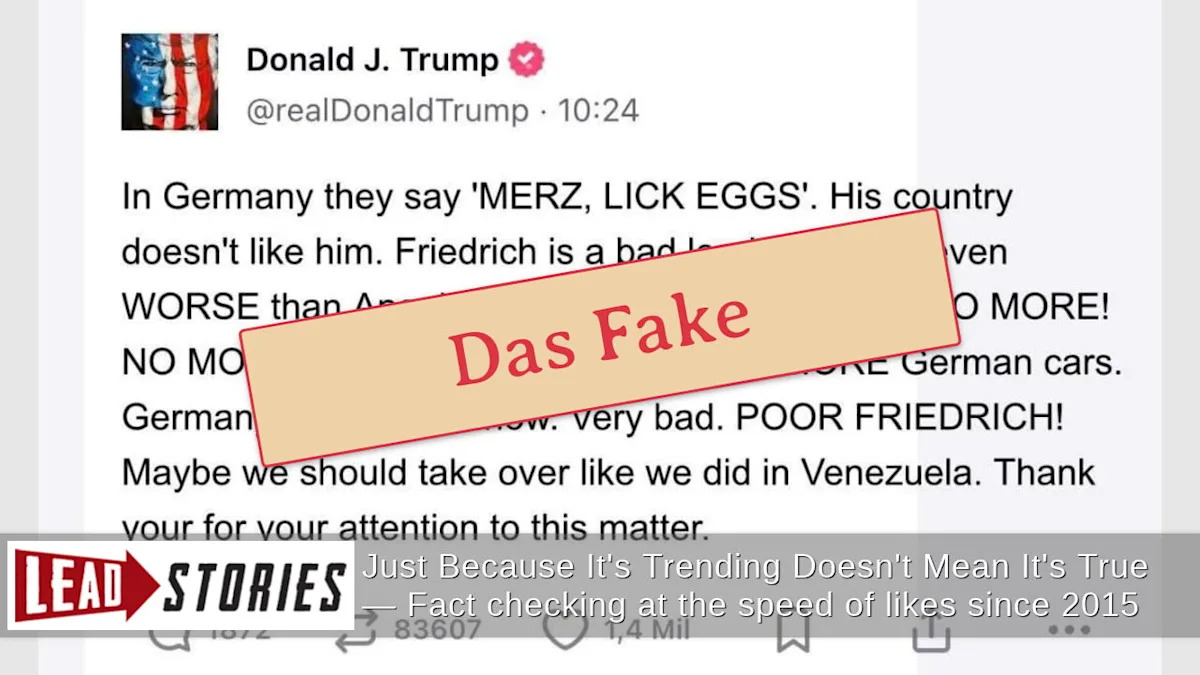
The doctored image, shared on X (formerly Twitter) by the account @jeremy_passkall on May 5, 2026, purported to show Trump using the German protest slogan “MERZ, LICK EGGS” and suggesting the United States might “take over” Germany. The fabricated post also claimed Trump would end U.S. military presence in Germany and block German auto imports.
A comprehensive review of Trump’s Truth Social account conducted by fact-checkers revealed no evidence that such a post ever existed. Searches of archived presidential statements between February 28, 2026 (when the U.S.-Iran conflict began) and May 6, 2026, showed no instances of the inflammatory language or threats attributed to the president in the fake screenshot.
The falsified content stands in stark contrast to Trump’s actual communications regarding the German chancellor. While the president has been critical of Merz’s position on Iran, his authentic statements have been significantly more measured than the inflammatory rhetoric in the fabricated post.
Trump has made two verified posts about Merz since the outbreak of hostilities with Iran. In an April 28 Truth Social statement, the president criticized Merz’s position on Iran’s nuclear program, stating: “The Chancellor of Germany, Friedrich Merz, thinks it’s OK for Iran to have a Nuclear Weapon. He doesn’t know what he’s talking about!” Trump continued by suggesting Merz’s stance explained Germany’s economic difficulties.
A subsequent post on May 3 featured Trump sharing a Breitbart news story related to Merz, though the content of that share was not detailed in fact-checking reports.
The fabricated post comes amid heightened tensions between the United States and Germany over differing approaches to the Iran conflict. Since taking office in 2025, Chancellor Merz has advocated for a diplomatic approach to addressing Iran’s nuclear ambitions, while the Trump administration has pursued more direct military engagement.
The false claim also coincides with real protests in Germany against Merz’s domestic policies, where some demonstrators have used the crude slogan mentioned in the fake post. These protests have primarily focused on economic reforms introduced by Merz’s center-right government rather than foreign policy issues.
International relations experts note that such fabricated content could potentially damage the already strained U.S.-German relationship if widely believed. Germany remains a crucial NATO ally, hosting approximately 35,000 U.S. military personnel at bases that serve as strategic hubs for American operations in Europe, the Middle East, and Africa.
The incident highlights the continuing challenge of digital misinformation in international affairs. Despite verification tools and increased public awareness, manipulated content claiming to represent official statements from world leaders continues to circulate widely on social media platforms.
Major news organizations have not reported any such inflammatory statements from President Trump toward Germany, which would certainly have generated significant coverage had they been authentic. The absence of credible reporting further confirms the fabricated nature of the alleged post.
As U.S.-German relations navigate complicated policy differences over Iran, energy security, and defense spending, distinguishing between authentic disagreements and manufactured controversy remains essential for accurately understanding the diplomatic landscape.
Fact Checker
Verify the accuracy of this article using The Disinformation Commission analysis and real-time sources.

10 Comments
While political tensions can run high, resorting to fabricated social media posts is unethical and counterproductive. Verified information should guide public discourse.
Well said. Fact-based dialogue, not inflammatory rhetoric, is the foundation of a healthy democracy.
It’s concerning to see the extent of misinformation being spread, even around global political leaders. Fact-checking is more important than ever in the digital age.
I share your concern. Responsible media and citizens must work to counter the proliferation of fabricated content online.
This highlights the need for robust cybersecurity and information safeguards, especially around high-profile political figures. Doctored images and posts can have serious consequences.
Absolutely. Tackling digital misinformation should be a priority to protect the integrity of public discourse and decision-making.
Interesting to see another case of fabricated social media posts targeting political figures. It’s important to rely on verified sources and fact-checks to avoid spreading misinformation.
Agreed, fact-checking is crucial in today’s digital landscape. Fabricated content can be so convincing, it’s essential to validate claims before sharing.
This incident underscores the importance of critical thinking and media literacy. We must be vigilant in distinguishing truth from fiction, especially online.
Absolutely. Developing these skills is crucial for citizens to navigate the complex information landscape responsibly.