


Listen to the article
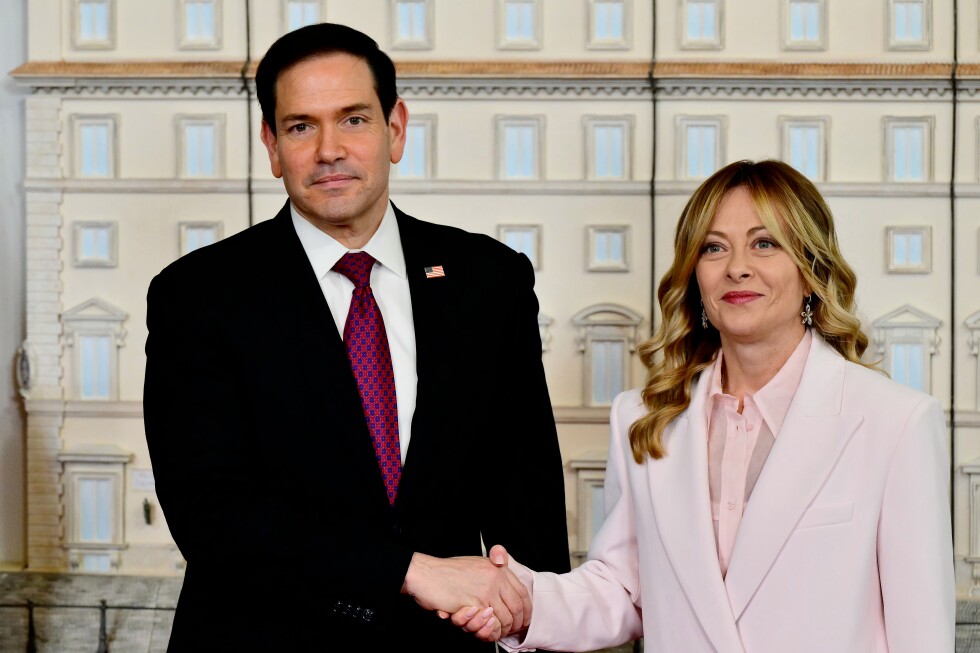
U.S. Secretary of State Marco Rubio called on European allies Friday to take concrete action against Iran, as he navigated delicate diplomatic terrain during a two-day visit to Italy aimed at repairing strained relations.
During meetings with Italian Premier Giorgia Meloni and Foreign Minister Antonio Tajani in Rome, Rubio emphasized the need for more than rhetoric in addressing Iranian threats, particularly Tehran’s attempts to assert control over the strategic Strait of Hormuz.
“Everybody says Iran is a threat. Everybody says that Iran can’t have a nuclear weapon… but you’ve got to do something about it,” Rubio told reporters. “If the answer is no… then you better have something more than just strongly worded statements to back it up.”
The Secretary’s blunt messaging came with an explicit warning to Iran against threatening U.S. assets in the vital waterway. He revealed that the United States had already thwarted attacks on three Navy ships in the strait, drawing a firm boundary for potential Iranian actions.
“The red line is clear. They threaten Americans, they are going to be blown up,” Rubio stated, while noting that diplomatic channels remain open, including a proposed U.N. Security Council resolution aimed at preserving freedom of navigation.
The diplomatic mission comes after weeks of significant tensions between Washington and Rome over the U.S.-Israeli war in Iran, potential U.S. tariffs on Italian goods, and President Donald Trump’s public criticism of both Meloni and Pope Leo XIV.
Despite these challenges, Meloni described her meeting with Rubio as “constructive, frank and productive,” focused on bilateral relations and major international challenges including the Middle East, Ukraine, China, and regions of Italian interest such as Libya and Lebanon.
“We both understand how important the trans-Atlantic relationship is, but we also understand that each country must defend its own national interests,” Meloni emphasized, signaling continued independence in Italy’s approach.
Tajani struck a more conciliatory tone, saying, “I am convinced Europe needs America — Italy needs America — and the United States also needs Europe and Italy,” adding his hope that “tensions have been calmed.”
Despite these positive diplomatic overtures, substantive differences remain over the Iran conflict. Italy has categorically opposed the U.S.-Israeli bombing campaign, with Meloni previously characterizing it as “illegal.” The Italian government has consistently resisted involvement in offensive operations related to the conflict.
Tajani indicated that Italy would be prepared to contribute naval forces to demine the Strait of Hormuz once a permanent ceasefire is achieved and would maintain its role in the U.N. peacekeeping mission in Lebanon. He also emphasized the importance of continued U.S. troop presence in Europe amid concerns about potential reductions.
Responding to these concerns, Rubio stated that “no final decision” had been made regarding NATO troop adjustments, though the U.S. has already announced plans to withdraw 5,000 military personnel from Germany. President Trump has previously threatened to reduce troops in Italy and Spain over their positions on the war.
Italy, which serves as a crucial logistics hub for U.S. and allied operations in the Mediterranean, has already demonstrated limits to its cooperation. In March, Italian authorities declined to allow U.S. bombers bound for the Middle East to use a base in Sicily without parliamentary approval, reflecting both constitutional requirements and strong domestic opposition to the conflict.
For Meloni, who was recently weakened by a referendum defeat, the war presents significant political challenges. Public opinion in Italy has largely opposed the conflict, and she has insisted that any use of Italian bases for offensive operations would require parliamentary approval.
Beyond security concerns, the war has raised economic anxieties in Italy. Disruptions in the Strait of Hormuz risk driving up energy costs and inflation in the country, which is already facing potential impacts from U.S. tariff threats on its export-driven economy.
Rubio’s visit also included efforts to ease tensions with the Vatican following Trump’s criticism of papal peace initiatives. After meeting with the pontiff and Vatican Secretary of State Cardinal Pietro Parolin on Thursday, Rubio affirmed Washington’s commitment to a “productive and fruitful” relationship with the Catholic Church, while maintaining the U.S. position on Iran.
The Secretary also confirmed discussions about Cuba at the Vatican, noting that the U.S. has provided approximately $6 million in humanitarian aid to be distributed through the church’s Caritas charity organization, with up to $100 million in additional assistance offered but not yet accepted by Cuban authorities.
Fact Checker
Verify the accuracy of this article using The Disinformation Commission analysis and real-time sources.

6 Comments
Rubio’s message seems pretty blunt – the US is drawing a firm line against any Iranian aggression in the Strait of Hormuz. But diplomacy will be crucial to find a peaceful resolution. Curious to see how Italy and other allies respond.
Tensions in the Strait of Hormuz are always concerning. I hope the US and its allies can find a diplomatic solution to prevent any further escalation or conflict. Clear communication and de-escalation efforts will be crucial.
Agreed. Rhetoric alone won’t solve this – concrete actions and diplomatic solutions are needed to address the threats from Iran. Let’s hope all parties can come together constructively.
Interesting geopolitical maneuvering. Rubio seems to be taking a tough stance, but diplomacy will be key to ease tensions in the region. I wonder if Italy can play a constructive role as an intermediary.
This is a delicate geopolitical dance. Rubio is pushing for concrete action, but Iran will likely see that as provocation. Diplomacy, de-escalation, and finding common ground will be key to resolving this tension.
The US needs to tread carefully here. Saber-rattling and ultimatums may play well domestically, but could inflame the situation further in the region. Italy could potentially play a stabilizing role as an honest broker.