


Listen to the article
Passengers Begin Evacuation from Hantavirus-Hit Cruise Ship in Tenerife
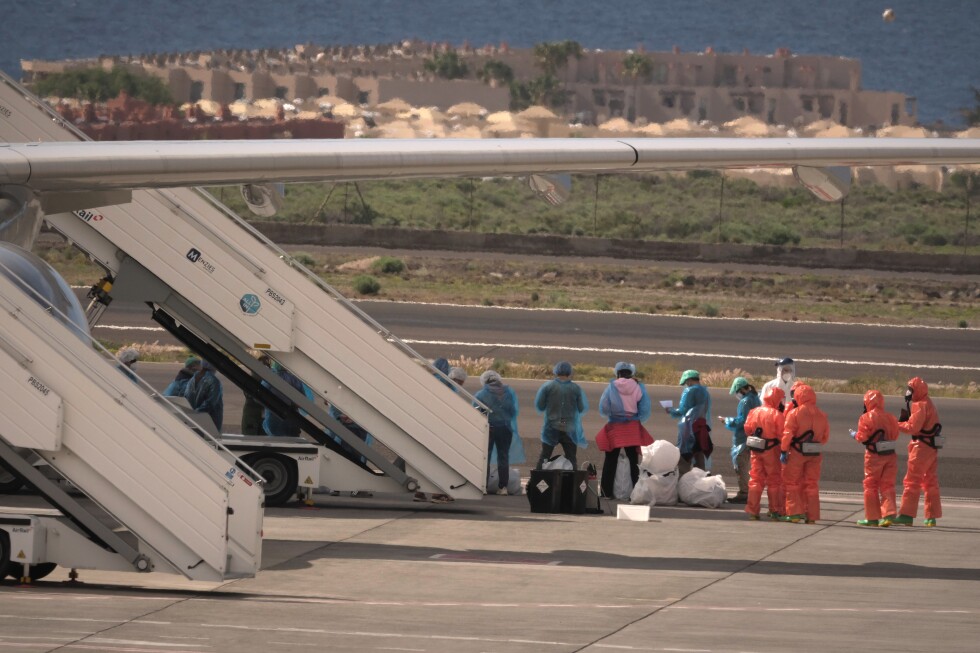
Passengers started disembarking Sunday from the MV Hondius cruise ship, which arrived in Spain’s Canary Islands amid an outbreak of hantavirus that has claimed three lives so far. Small vessels carried people from the anchored vessel to Granadilla port in Tenerife, where officials guided them to buses for transfer to medical facilities.
“The entire operation is proceeding normally,” Spanish Health Minister Mónica García told reporters as the complex evacuation began. Spanish nationals were the first to leave the ship, following protocols established by international health authorities.
None of the more than 140 people still on board the vessel are showing symptoms of hantavirus, according to Spanish authorities, the World Health Organization, and cruise operator Oceanwide Expeditions. However, five passengers who previously left the ship have been infected with the virus, which can cause life-threatening illness.
The MV Hondius reached Tenerife early Sunday morning after departing Cape Verde on May 6. The ship remains anchored offshore as small launch boats ferry groups of five to ten people to shore. Everyone disembarking undergoes symptom screening before being transported to evacuation flights arranged to take them to their home countries.
WHO Director-General Tedros Adhanom Ghebreyesus has joined Spain’s health and interior ministers in Tenerife to supervise the evacuation, underscoring the international significance of the operation. Authorities have implemented strict isolation protocols to ensure passengers and crew have no contact with the local population.
International Response and Repatriation Plans
The evacuation has mobilized a multinational response, with several countries dispatching aircraft to retrieve their citizens. The United States, United Kingdom, and Netherlands have sent planes to evacuate their nationals, with Americans set to undergo quarantine at a specialized medical center in Nebraska.
The Dutch Foreign Ministry confirmed that 29 people will board their charter flight, including Dutch nationals and citizens of other countries. Five French passengers will be repatriated today and hospitalized for 72 hours of monitoring before continuing a 45-day quarantine at home, according to France’s Foreign Ministry.
British citizens will be hospitalized for observation upon return to the UK. Australia is sending an aircraft expected to arrive Monday to evacuate its nationals and those from nearby countries such as New Zealand. García indicated the Australian plane would be the last to depart Tenerife.
Norway has dispatched an EU-owned ambulance plane with personnel specifically trained in transporting patients with high-risk infections. Spanish authorities aim to complete all evacuation flights between Sunday and Monday.
Health Protocols and Containment Measures
Passengers are leaving behind their luggage, permitted to take only small bags containing essential items, cellphones, chargers, and documentation. Some crew members will remain on the ship along with the body of a passenger who died on board.
After the evacuation, the vessel will sail to Rotterdam, Netherlands—a journey expected to take approximately five days—where it will undergo thorough disinfection procedures.
Hantavirus typically spreads when people inhale contaminated residue from rodent droppings and isn’t easily transmitted between humans. However, the Andes virus strain identified in the cruise ship outbreak may be capable of human-to-human transmission in rare cases. Symptoms typically develop between one and eight weeks after exposure.
Global Monitoring of Potential Cases
The outbreak has triggered monitoring of suspected cases worldwide. British Army medics parachuted onto Tristan da Cunha, a remote South Atlantic territory where one of the 221 residents—a former passenger of the MV Hondius—has a suspected case of hantavirus.
The UK defense ministry reported that six paratroopers and two medical clinicians jumped Saturday from a Royal Air Force transport plane, which also dropped oxygen and medical supplies. Tristan da Cunha, Britain’s most remote inhabited overseas territory, lies approximately 1,500 miles from the nearest inhabited island and is typically accessible only by a six-day boat journey from South Africa.
In Spain, health authorities reported Saturday that a woman in Alicante province who was suspected of infection tested negative for hantavirus. She had been a passenger on the same flight as a Dutch woman who later died in Johannesburg after traveling on the cruise ship.
As the evacuation continues, health officials worldwide remain vigilant, monitoring for any additional cases that might emerge in the coming weeks.
Fact Checker
Verify the accuracy of this article using The Disinformation Commission analysis and real-time sources.

12 Comments
The article mentions that Spanish nationals were the first to disembark. I’m curious to know if there were any other nationalities on board and how their evacuation is being handled.
That’s a good question. The international nature of cruise passengers means they’ll need to coordinate with various governments to ensure all travelers receive proper care and support during the disembarkation process.
The Canary Islands are a popular cruise destination, so this outbreak must be quite disruptive for the local tourism industry. I wonder how this will impact future cruise bookings to the region in the short term.
That’s a good point. A high-profile incident like this could definitely shake traveler confidence, at least until the situation is fully resolved and the public reassured about safety protocols.
It’s good to hear that none of the remaining passengers are showing symptoms so far. However, they’ll need to continue monitoring the situation closely as the evacuation progresses. Hopefully the five previously infected individuals make a full recovery.
Yes, vigilance will be key. With the virus’s potential to cause severe illness, they can’t afford to let their guard down until everyone has safely disembarked and received proper medical evaluation.
It’s reassuring that the evacuation is proceeding ‘normally’ according to the Health Minister. However, with a potentially deadly virus involved, I imagine there are significant logistical and medical challenges they’re working through behind the scenes.
Absolutely, even if the visible process appears orderly, I’m sure the authorities are working hard to maintain control and mitigate risks as much as possible. Containing the spread will be their top priority.
This is certainly a troubling situation. I hope the authorities are able to handle the evacuation and medical care for the passengers safely and effectively. Hantavirus can be quite serious, so they’ll need to take all necessary precautions.
Agreed, the health and safety of the passengers should be the top priority here. Careful coordination between the cruise operator, local authorities, and international health organizations will be crucial.
This incident highlights the importance of having robust health and safety protocols in place for cruise ships, especially in light of the COVID-19 pandemic. Hopefully the industry and regulators will take steps to prevent similar outbreaks in the future.
Good point. The cruise industry will likely face increased scrutiny and pressure to strengthen its infectious disease preparedness and response capabilities after this event.