


Listen to the article
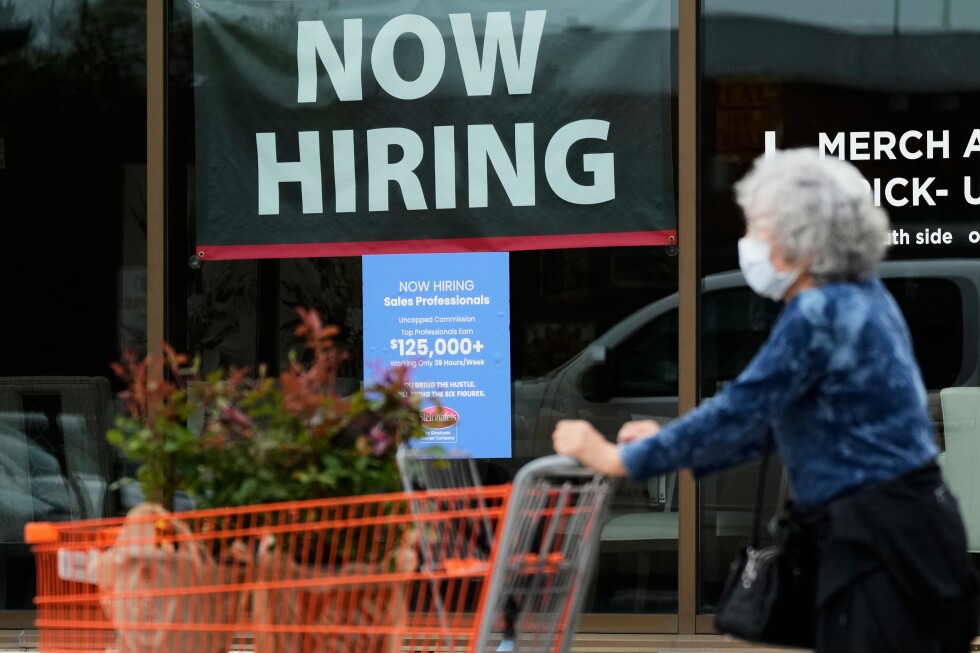
U.S. economy showed resilience last week with better-than-expected job growth despite ongoing challenges from inflation and the Iran conflict. Employers added 115,000 jobs in April, nearly double the 65,000 forecasted by analysts, though down from March’s 185,000 figure.
The unemployment rate held steady at 4.3%, according to the Labor Department’s Friday report. Healthcare and retail sectors led job creation with 37,000 and 22,000 new positions respectively. Manufacturing, however, continued its downward trend, shedding 2,000 jobs in April and 66,000 over the past year, despite protectionist policies aimed at boosting factory employment.
Job market data released earlier in the week painted a mixed but generally positive picture. The Job Openings and Labor Turnover Survey showed job openings remained relatively stable at 6.87 million in March, down slightly from February’s 6.92 million. More encouragingly, employers added 5.55 million gross jobs in March, the highest level since February 2024.
Labor market confidence appears intact as more Americans quit their jobs voluntarily, traditionally a sign workers feel secure in finding new opportunities. Weekly jobless claims, while rising by 10,000 to 200,000 in the week ending May 2, remain at historically low levels – better than the 205,000 analysts had anticipated.
“The job market has been showing remarkable resilience in the face of multiple economic headwinds,” said Michael Pearson, chief economist at Capital Market Analysts. “These numbers suggest employers are still hiring despite uncertainty from international conflicts and inflation concerns.”
Meanwhile, mortgage rates continued their upward climb, reflecting ongoing economic volatility. The benchmark 30-year fixed mortgage rate rose to 6.37% from 6.3% the previous week, according to Freddie Mac. While this marks the second consecutive weekly increase, rates remain below the 6.76% average from a year ago.
The mortgage rate increases mirror bond market volatility, exacerbated by surging oil prices stemming from the ongoing conflict with Iran. The war, which began on February 28, has clouded economic outlooks by threatening global energy supplies, particularly in the Strait of Hormuz – a critical chokepoint for oil tankers delivering crude from the Persian Gulf.
Despite these challenges, U.S. financial markets responded positively to the employment data. The S&P 500 climbed 0.5% toward an all-time high following Friday’s jobs report, positioning the index for its sixth consecutive winning week – its longest such streak since 2024.
Market analysts attribute the stock market rally since late March partially to easing concerns about worst-case scenarios regarding the Iran conflict and hopes for reopening the Strait of Hormuz. Corporate earnings reports have also exceeded expectations for many major U.S. companies, further bolstering investor confidence.
For American consumers, however, economic resilience hasn’t yet translated to relief at checkout counters. Trips to grocery stores and gas stations remain notably more expensive than a year ago, forcing many households and businesses to adjust spending patterns.
The Federal Reserve continues monitoring these mixed economic signals as it weighs potential adjustments to monetary policy. The combination of job growth, persistent inflation concerns, and geopolitical tensions presents a complex landscape for policymakers attempting to guide the economy toward sustainable growth.
“We’re seeing an economy that’s maintaining momentum despite significant headwinds,” noted Elizabeth Chen, senior economic advisor at National Financial Partners. “The challenge moving forward will be balancing growth against inflation pressures, particularly as global conflicts impact energy markets and supply chains.”
Fact Checker
Verify the accuracy of this article using The Disinformation Commission analysis and real-time sources.

14 Comments
The resilience of the U.S. economy is commendable, but the uneven performance across sectors is a reminder that challenges remain. The manufacturing decline is worrying and warrants close attention.
The labor market confidence reflected in worker mobility is an encouraging sign, but the overall data suggests the economy is navigating a complex landscape.
The mixed economic data paints a nuanced picture of the U.S. economy. The strength in healthcare and retail is encouraging, but the manufacturing decline is a cause for concern.
It will be interesting to see if the protectionist policies can help boost the manufacturing sector in the long run. Maintaining a balanced and diverse economy is key to sustainable growth.
While the overall job gains are positive, the continued decline in manufacturing is concerning. It will be important to monitor whether the protectionist policies can help revive that sector.
The resilience of the U.S. economy in the face of challenges is commendable, but the uneven performance across sectors warrants close attention from policymakers.
It’s good to see the economy showing resilience, though the manufacturing decline is a worrying trend. The labor market confidence reflected in worker mobility is an encouraging sign.
The combination of job growth and labor turnover suggests the economy is in a relatively stable position, despite ongoing challenges like inflation and geopolitical tensions.
The resilience of the U.S. economy in the face of challenges is encouraging. Though manufacturing continued its decline, the overall job growth and labor market confidence are positive signs.
It will be interesting to see if the manufacturing sector can rebound with the protectionist policies in place. The mixed data paints a nuanced picture of the economy.
The strong job gains, particularly in healthcare and retail, indicate that certain sectors are thriving despite broader economic headwinds. However, the drop in manufacturing jobs is concerning.
I wonder what can be done to support and revive the manufacturing industry in the U.S. Maintaining a healthy balance across all sectors is crucial for sustained economic growth.
The job growth and labor market confidence are positive, but the manufacturing decline is a concern. It will be important to monitor how the protectionist policies impact the industrial sector.
The nuanced picture painted by the economic data highlights the need for a balanced and adaptive approach to support all sectors of the economy.