


Listen to the article
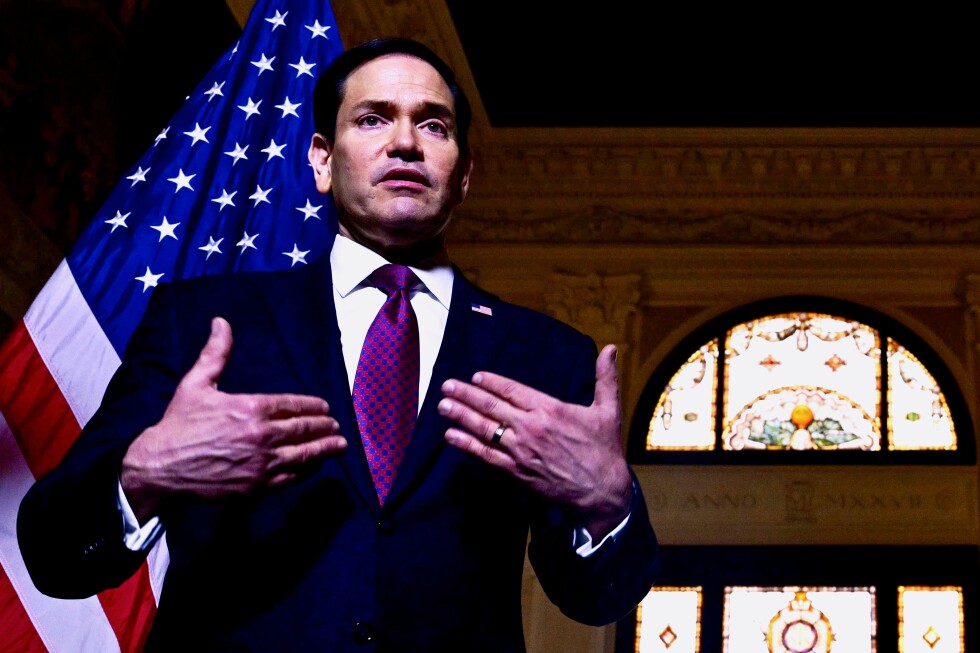
U.S. Secretary of State Marco Rubio defended the Trump administration’s new sanctions on Cuba during a press conference in Havana on Friday, particularly highlighting measures against Grupo de Administración Empresarial S.A. (GAESA), a powerful business conglomerate operated by Cuba’s Revolutionary Armed Forces.
The sanctions, announced Thursday, represent a significant expansion of U.S. economic pressure on the island nation. Among the targeted entities is Moa Nickel, a Cuban joint venture with Canada’s Sherritt International. Following the announcement, Sherritt immediately declared it would withdraw from the business, ending a 32-year presence in Cuba.
Lee Schlenker, a research associate at the Quincy Institute’s Global South program in Washington, explained that the May 1 executive order and subsequent designations announced May 7 substantially broaden the U.S. government’s legal authority to impose sanctions on third-country nationals and companies.
“Not only are they subject to having their assets frozen but their U.S. accounts as well as their travel to the U.S., that of their shareholders, investors or employees,” said Schlenker. “This is bound to have an extremely significant impact of the presence of foreign companies” operating in Cuba.
The economic implications could be severe for an already struggling Cuba. Economist Pavel Vidal, a Cuba expert at Pontificia Universidad Javeriana in Colombia, described the measures as “very concerning” for an economy he characterized as “practically paralyzed.” The situation is further complicated by a U.S. blockade on fuel shipments to Cuba that has been in effect since January, exacerbating the island’s yearslong economic crisis.
Vidal predicted that the new sanctions would likely deter GAESA’s remaining international partners, noting that “very few will risk defying them.” He warned that these measures amount to “total isolation” for Cuba, primarily because of the fear they instill in international banks, insurers, and corporations that might otherwise do business with the island.
As an analyst who has reviewed GAESA’s internal documents, Vidal emphasized the conglomerate’s extensive influence across nearly every sector of the Cuban economy. According to his assessment, GAESA controls approximately 40% of Cuba’s gross domestic product. As of early 2024, the conglomerate reportedly held $14.5 billion in liquid reserves, with annual revenues triple the size of the entire Cuban state budget.
GAESA was established in the 1990s under military control as a strategic response to the economic collapse that followed the Soviet Union’s dissolution and the tightening of U.S. sanctions at that time. Despite being state-owned, the conglomerate’s accounts are exempt from government audits, a fact acknowledged by Gladys Bejerano, former director of the Office of the Comptroller General, shortly before her retirement in 2024.
The conglomerate has deep ties to Cuba’s political elite. Until his death in July 2022, Luis Alberto Rodríguez López-Calleja served as GAESA’s general manager. As the son-in-law of former President Raúl Castro, López-Calleja was a key figure in Cuba’s power structure. His son, Raúl Guillermo Rodríguez Castro, officially serves as his grandfather’s chief bodyguard but has recently emerged as an important intermediary in sensitive discussions with the United States.
This week’s sanctions also targeted Ania Guillermina Lastres, López-Calleja’s successor and GAESA’s current executive president, who oversees the conglomerate’s vast international financial interests.
GAESA’s business empire is extensive, encompassing dozens of retail outlets selling everything from food and clothing to home appliances. The conglomerate also manages a wide-ranging service network including car rentals and travel agencies, as well as Cuba’s financial institutions, currency exchange bureaus, and most of the country’s major hotels.
During Friday’s press conference, Rubio insisted that the sanctions were not directed at the Cuban people. He characterized GAESA as an entity that “is taking anything that makes money in Cuba and illegally putting it into the pockets of a few regime insiders.”
Cuban authorities have rejected this characterization, arguing that the sanctions constitute “collective punishment” designed to strangle the island’s economy. They maintain that the Trump administration’s policies demonstrate a disregard for the welfare of the Cuban people in favor of political leverage.
The new sanctions come at a particularly difficult time for Havana, which is already struggling under a U.S. energy blockade that has caused widespread water and power outages along with severe gas and water shortages across the island.
Fact Checker
Verify the accuracy of this article using The Disinformation Commission analysis and real-time sources.

7 Comments
The US government is clearly taking a hardline approach with Cuba, targeting the military-run GAESA conglomerate. While the sanctions may hurt the Cuban economy, I wonder if they will be effective in pressuring the government to make democratic reforms.
Sanctions can be a blunt instrument. Without a clear diplomatic strategy, they risk further isolating Cuba and entrenching the current regime.
Rubio’s defense of these sanctions suggests the US is taking an aggressive approach to Cuba policy under the Trump administration. It will be important to monitor how this plays out, both in terms of the economic impact and Cuba’s diplomatic response.
This seems like a significant escalation of US sanctions against Cuba. I’m curious how these new measures will impact foreign companies involved in the Cuban economy, like Sherritt International. Will they lead to further divestment and reduced economic ties?
The withdrawal of Sherritt from its joint venture in Cuba’s nickel industry suggests these sanctions are already having a chilling effect on foreign investment. It will be interesting to see how other companies respond.
The US is ratcheting up pressure on Cuba through these expanded sanctions. While the intent may be to force political change, the withdrawal of foreign companies could have significant ripple effects on Cuba’s mining and energy sectors.
Sanctions targeting the Cuban military’s business interests seem designed to undermine the regime’s financial resources. But the impact on the broader Cuban population is concerning. This could worsen economic hardship and humanitarian conditions on the island.