


Listen to the article
Controversial Solar Plant Continues Operations Despite Thousands of Bird Deaths
Regulators are allowing the Ivanpah Solar Power Plant to continue operating in the Mojave Desert, even as thousands of birds are killed annually by its reflected solar beams, a recent investigation has found.
The sprawling facility near the California-Nevada border, built during the Obama administration with substantial taxpayer support, remains in compliance with environmental regulations despite documented wildlife deaths that have occurred since its opening. No fines or enforcement actions have been taken against the operators.
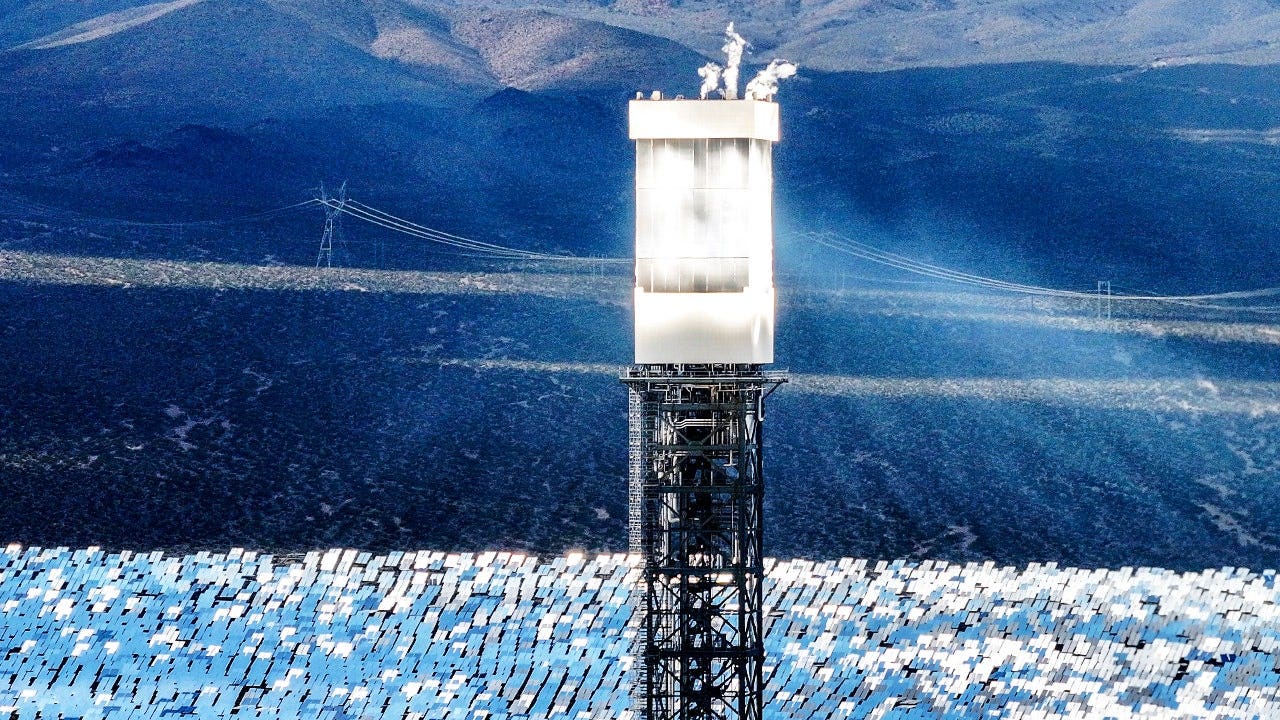
Birds flying through the facility’s concentrated solar beams – known as solar flux – often suffer burn injuries or death. Researchers have dubbed this phenomenon “streamers,” as affected birds can be seen trailing smoke as their feathers burn. Songbirds, doves, warblers and other migratory species are among the casualties found at the site.
“Staff is not aware of any formal enforcement actions or fines issued by either the U.S. Fish and Wildlife Service or the California Department of Fish and Wildlife related to avian or wildlife mortality at the Ivanpah Solar Electric Generating System,” the California Energy Commission told investigators.
The commission, which oversees large energy projects in California, explained that the project operates under a framework that allows some level of wildlife mortality. The facility was approved with monitoring and mitigation requirements rather than zero-tolerance standards for environmental impacts.
The Ivanpah plant, characterized by three large towers that glow brightly when operational, was a flagship project in Obama-era efforts to rapidly expand renewable energy following the 2008 financial crisis. The federal government provided substantial financial backing, including a $539 million grant and a separate $1.6 billion loan.
At the time of its development, regulators were aware of potential risks to wildlife. Environmental reviews conducted before construction warned that birds could be killed either by burning in concentrated sunlight or by colliding with the facility’s tens of thousands of mirrors. Concerns were also raised about damage to the 4,000-acre desert habitat and endangered species like the desert tortoise.
Despite these warnings, regulators approved the project with the understanding that monitoring and mitigation requirements would be implemented, rather than requiring these environmental risks to be fully resolved before operation.
The facility’s technology has since been outpaced by conventional solar panels that convert sunlight directly into electricity, making Ivanpah’s energy production more expensive. Additionally, the plant relies on natural gas to start up each day, producing tens of thousands of metric tons of carbon dioxide annually – undermining its status as a “clean energy” facility.
A 2016 congressional review highlighted concerns about the lack of penalties for bird deaths at Ivanpah, a pattern that appears to have continued. Monitoring reports document hundreds of bird carcasses found at the site each year, with some estimates suggesting thousands of annual fatalities.
Regulatory responsibility for the facility is divided among multiple agencies, including the U.S. Fish and Wildlife Service, the California Department of Fish and Wildlife, and the Bureau of Land Management. This fragmented oversight may contribute to the absence of enforcement actions.
The U.S. Fish and Wildlife Service has stated that it reviews monitoring data and provides technical input but has not indicated any enforcement actions tied to bird deaths at the site.
Under federal law, violations involving protected migratory birds can theoretically carry fines of up to $15,000 per bird. However, such prosecutions have become rare in the United States. In 2017, the Department of the Interior reinterpreted the Migratory Bird Treaty Act to apply only to intentional killings, not “incidental” deaths caused by industrial activities such as power generation. Federal courts have since reinforced this narrower interpretation.
NRG Energy, which operates the facility, has previously stated its commitment to providing renewable electricity but declined to comment specifically on environmental concerns.
The situation at Ivanpah illustrates a tension in renewable energy policy: a project approved as environmentally beneficial that nevertheless causes ongoing wildlife harm and uses fossil fuels, yet continues operating without penalties due to regulatory frameworks that prioritize monitoring over enforcement.
Fact Checker
Verify the accuracy of this article using The Disinformation Commission analysis and real-time sources.

13 Comments
This is a disappointing revelation about the Ivanpah solar plant. While renewable energy is important, we can’t ignore the significant toll on wildlife. Regulators should be holding this facility to much stricter standards to mitigate harm to birds and other species.
Agreed. Renewable projects like this need to be held accountable for their environmental footprint. Protecting biodiversity should be a priority, not an afterthought.
This is a concerning situation that highlights the need for rigorous environmental impact assessments and ongoing monitoring for renewable energy projects. While the Ivanpah plant provides clean power, the bird mortality rates are clearly unsustainable and need to be addressed.
As someone who supports renewable energy, I find this news very troubling. Thousands of bird deaths annually is unacceptable, no matter the benefits of the solar plant. Regulators need to step up enforcement and require the operators to implement better mitigation measures.
Seems like a concerning situation with the Ivanpah solar plant. While renewable energy is important, we need to carefully weigh the environmental impacts and ensure proper oversight to protect wildlife. It’s troubling that regulators are allowing these bird deaths to continue unchecked.
I agree, the lack of enforcement action is disappointing. Renewable projects should be held to high environmental standards, not given a free pass on wildlife impacts.
The Ivanpah solar facility seems to be an example of renewable energy development going awry. While the energy produced is valuable, the impacts on wildlife are clearly too high. Regulators should be working to find a better balance that protects birds and other species.
Exactly. Renewable projects must be held to high environmental standards. Sacrificing wildlife is not an acceptable tradeoff, even for clean energy.
I’m glad this issue is getting attention. Thousands of bird deaths annually at a solar plant is very troubling, no matter the renewable energy benefits. Regulators need to take stronger action to enforce environmental protections and ensure these impacts are minimized.
This is a complex issue with valid concerns on both sides. We need to find a way to balance renewable energy goals with responsible stewardship of the environment. Hopefully regulators can work with the plant operators to minimize bird fatalities through better monitoring and mitigation measures.
That’s a fair perspective. Renewable energy is crucial but the wildlife impacts need to be thoroughly addressed. It will take collaboration between all stakeholders to find the right solution here.
As someone who cares about both renewable energy and wildlife conservation, I’m troubled by the revelations about Ivanpah. Thousands of bird deaths annually is a major ecological impact that can’t be ignored. Regulators need to step in and force the operators to find solutions to mitigate this harm.
Agreed. Renewable energy is crucial, but not at the unacceptable cost of decimating bird populations. This plant needs to be brought into compliance with environmental regulations, no exceptions.