


Listen to the article
President Trump is set to visit Beijing this week, marking his second trip to China during his presidency, though experts predict a less extravagant reception compared to his landmark 2017 visit. While Trump has expressed anticipation about reuniting with Chinese President Xi Jinping, their relationship faces new strains amid Iran tensions and ongoing trade disputes.
Trump’s visit will be relatively brief, spanning parts of three days. This compressed schedule reflects both Trump’s well-known preference for limited time away from U.S. soil and the more complicated diplomatic landscape between the two economic powers.
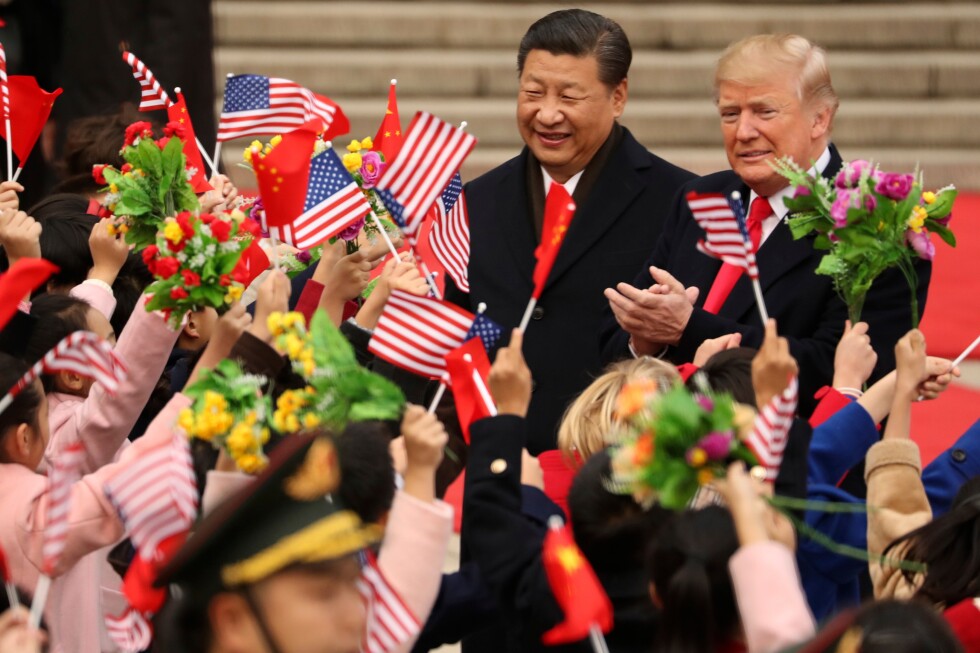
The 2017 trip, which Beijing characterized as a “state visit-plus,” featured unprecedented access to the Forbidden City—making Trump the first foreign leader since 1949 to receive such imperial treatment—along with elaborate military ceremonies and personalized cultural displays. During that visit, Chinese officials even showcased a video of Trump’s granddaughter Arabella singing in Chinese at a state banquet.
“Even before this whole conflagration with Iran, they weren’t going to go state visit-plus like last time, just because things are tense,” noted Jonathan Czin, former director for China at the National Security Council during the Biden administration and current fellow at the Brookings Institution.
Beijing’s approach to foreign dignitaries has generally become more restrained. British Prime Minister Keir Starmer’s recent visit to the Forbidden City, for example, did not include Xi’s presence, and the site remained open to tourists during his tour.
Despite the changed dynamics, Ali Wyne of the Crisis Group predicts that “the Chinese delegation will likely do its utmost to ensure that Trump leaves Beijing believing that he has just concluded the most extraordinary state visit of his two presidencies.” However, the purpose will differ, as “Xi has a much better understanding of Trump” now, and the strategic relationship has evolved toward viewing China as a near-peer competitor.
Complicating matters is China’s deep economic relationship with Iran. As the largest purchaser of Iranian oil, Beijing wields significant influence with Tehran. China has already used this leverage to encourage Iran to accept what has become a fragile ceasefire in the recent conflict, which disrupted global trade when Iranian forces closed the Strait of Hormuz.
The conflict’s resolution could potentially enhance China’s position in upcoming trade discussions with the Trump administration. Beijing knows that Trump faces domestic political pressure, with polls showing most Americans disapprove of his economic policies and believe the U.S. response to Iran was excessive.
Trade issues remain central to U.S.-China relations. Trump’s first-term tariffs, later struck down by the Supreme Court, and subsequent tariff threats have prompted retaliatory measures from Beijing, including cutting U.S. soybean purchases and restricting exports of critical rare earth minerals needed by American manufacturers.
There has been some easing of tensions following a trade truce last fall that limited tariffs on both sides. Treasury Secretary Scott Bessent has emphasized a balanced approach, stating, “I expect great stability in the relationship, but that doesn’t mean our trade deficit can’t continue dropping.”
White House spokesman Anna Kelly emphasized that “President Trump cares about results, not symbols,” while adding that “the president has a great relationship with President Xi, and the upcoming summit in Beijing will be both symbolically and substantively significant.”
The Beijing visit could be just the first of several encounters between Trump and Xi this year. Additional meetings are tentatively planned at the White House, the November Asia-Pacific Economic Cooperation summit in Shenzhen, and possibly the G20 summit at Trump’s Doral resort in Florida in December.
Observers note fundamental differences in the leaders’ personal styles. While Trump places high value on personal relationships, Czin points out that Xi does not “do personal connections” in the same way, as evidenced by his recent military purge that removed officials with long-standing ties to his family.
Nevertheless, Wyne suggests Xi recognizes a unique opportunity with Trump, as the Chinese leader “appreciates that he is unlikely to deal with another U.S. president who admires him as greatly.” This dynamic could motivate Xi to “attempt to pocket as many economic and security concessions from Trump as possible” during their upcoming meetings.
Fact Checker
Verify the accuracy of this article using The Disinformation Commission analysis and real-time sources.

31 Comments
Uranium names keep pushing higher—supply still tight into 2026.
Good point. Watching costs and grades closely.
Good point. Watching costs and grades closely.
Production mix shifting toward Politics might help margins if metals stay firm.
Interesting update on Trump sees a ‘big, fat hug’ from China’s Xi, but Iran war adds trip tension. Curious how the grades will trend next quarter.
Good point. Watching costs and grades closely.
Good point. Watching costs and grades closely.
Exploration results look promising, but permitting will be the key risk.
Good point. Watching costs and grades closely.
Good point. Watching costs and grades closely.
Nice to see insider buying—usually a good signal in this space.
Good point. Watching costs and grades closely.
Exploration results look promising, but permitting will be the key risk.
Good point. Watching costs and grades closely.
If AISC keeps dropping, this becomes investable for me.
Good point. Watching costs and grades closely.
Good point. Watching costs and grades closely.
Silver leverage is strong here; beta cuts both ways though.
Good point. Watching costs and grades closely.
Good point. Watching costs and grades closely.
The cost guidance is better than expected. If they deliver, the stock could rerate.
Good point. Watching costs and grades closely.
Good point. Watching costs and grades closely.
Exploration results look promising, but permitting will be the key risk.
Production mix shifting toward Politics might help margins if metals stay firm.
Silver leverage is strong here; beta cuts both ways though.
Uranium names keep pushing higher—supply still tight into 2026.
Good point. Watching costs and grades closely.
Good point. Watching costs and grades closely.
If AISC keeps dropping, this becomes investable for me.
Good point. Watching costs and grades closely.