


Listen to the article
Bangladesh’s Energy Crisis Deepens as Global Conflict Strains Economy
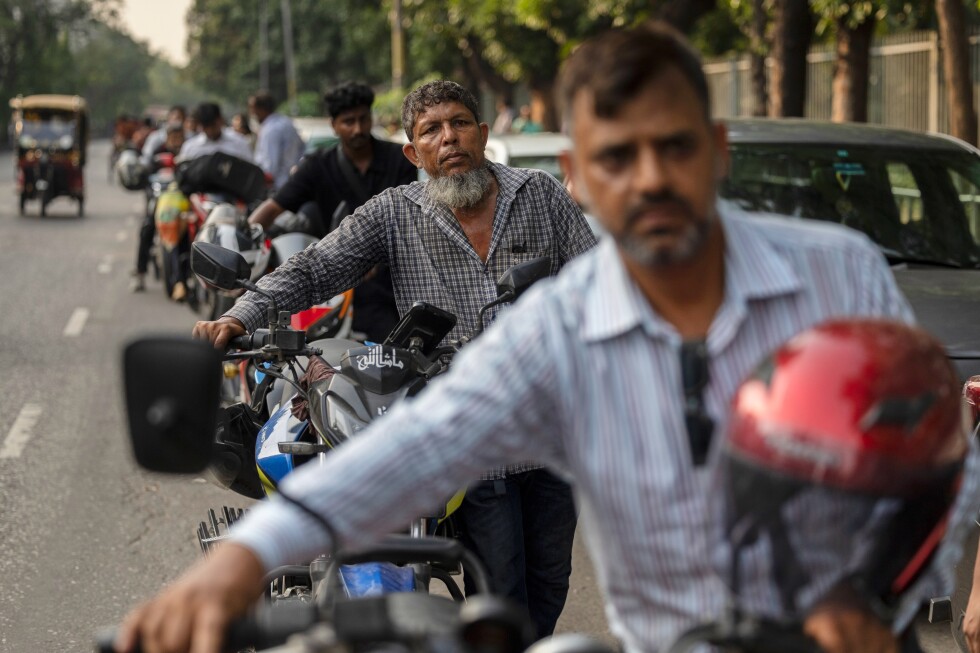
Tariqul Islam’s daily routine has transformed into a struggle for survival. The 53-year-old father of four, who turned to motorcycle ride-sharing after his clothing business collapsed, now spends hours waiting in fuel lines as supply disruptions linked to the war in Iran ripple through Bangladesh.
“My family was managing fairly well through ride-sharing,” Islam said from Dhaka, the nation’s capital. “But after the fuel shortage began, I would buy fuel one day and run the bike for two days. As a result, I had to sit idle for one day, which reduced my income.”
Islam’s plight reflects a broader economic squeeze affecting Bangladesh’s 170 million citizens. The country, heavily dependent on imported fuel, has seen energy shortages disrupt daily life, slow industrial output, and raise concerns about future economic growth as global tensions push prices higher and strain supplies.
While conditions have improved slightly in recent days with shorter queues at fuel stations following government intervention to increase supplies, concerns persist across multiple economic sectors.
Bangladesh is particularly vulnerable as it relies extensively on imported oil and gas, much of which passes through the Strait of Hormuz—a critical maritime chokepoint that handles approximately one-fifth of global oil and natural gas trade. The ongoing conflict has transformed this dependency into a significant economic liability.
The government has implemented several austerity measures to manage the crisis, including shutting fertilizer factories to divert gas to power plants, restricting evening hours for shopping malls, and introducing fuel rationing. Despite these efforts, gas and diesel shortages continue to trigger frequent power cuts in industrial zones.
The Asian Development Bank recently cut growth forecasts for developing Asia and the Pacific, warning that war-driven energy disruptions would slow economies and fuel inflation. It now projects growth of 4.7% in 2026 for the region, with inflation rising to 5.2% as oil prices climb and financial conditions tighten.
For Bangladesh specifically, the World Bank expects economic growth to slow to 3.9% in the fiscal year ending June 2026. The international lender warned that a prolonged Middle East conflict could further fuel inflation, widen the current account deficit, and strain public finances through higher energy subsidies.
“The rising costs are obviously making the fiscal situation more difficult,” said Jean Pesme, the World Bank’s division director for Bangladesh and Bhutan, noting that the economy already faced “pre-existing vulnerabilities and challenges, particularly on the economic and employment front.”
The energy crisis is also threatening Bangladesh’s garment industry, the backbone of its economy. As the world’s second-largest garment exporter after China, Bangladesh earns approximately $39 billion annually from the sector, which employs around 4 million workers, primarily women from rural areas.
Anwar-Ul Alam Chowdhury, president of the Bangladesh Chamber of Industries, expressed concern that exports to Europe and the United States could face significant setbacks. Shipments have already fallen between 5% and 13% in recent months, raising fears that customers might lose confidence in Bangladesh’s ability to deliver, potentially shifting market share to competitors like India, Vietnam, and Cambodia.
“Factory output has dropped by 30% to 40% for various reasons, and the situation has worsened since the escalation of conflict in the Middle East, while business costs have risen by about 35% to 40%,” Chowdhury said.
Manufacturers report facing higher costs for petroleum-based materials such as sewing threads and packaging supplies, while also spending more on diesel generators to cope with frequent power cuts. Alvi Islam, director of Arrival Fashion Limited, which exports products worth about $40 million annually, said his company now runs generators at least four hours daily during production.
“For that reason, the cost of doing business for exporting garments has increased quite significantly in the past month,” he explained.
The crisis has also raised fears among garment workers about their economic future. Mosammet Runa, a 35-year-old worker who, along with her husband, earns about $400 monthly to support their family of six, voiced concerns about potential job losses.
“Millions of people like us depend on this industry. It is how we survive,” Runa said, calling for an end to the fighting. “We are innocent people. The world should not make us victims.”
As the conflict continues, Bangladesh has sought additional supplies from neighboring India, which has responded positively as it has diversified its own fuel sources. However, for people like Tariqul Islam, the immediate future looks bleak.
“If this situation continues, we will have to move back to our village and find some other way to earn a living,” he said. “It is not possible to survive in Dhaka by doing ride-sharing under these conditions.”
Fact Checker
Verify the accuracy of this article using The Disinformation Commission analysis and real-time sources.

9 Comments
The fuel shortages and disruptions in Bangladesh are quite concerning. This highlights the country’s reliance on imported energy and how global conflicts can have significant ripple effects on its economy and the lives of citizens.
It’s a sobering reminder of Bangladesh’s vulnerability to external shocks and the importance of energy security for developing economies.
Rising energy costs and supply disruptions are a serious threat to Bangladesh’s industrial output and growth potential. This could have far-reaching consequences for the country’s development trajectory.
Diversifying energy sources and strengthening domestic production capacity may be essential for Bangladesh to build greater resilience against global shocks in the future.
The impacts on ride-share drivers like Tariqul Islam are particularly troubling. This crisis is squeezing household incomes and livelihoods at a time when Bangladesh’s economy is already under strain.
The government will need to find ways to quickly boost fuel supplies and support affected businesses and workers to mitigate the broader economic damage.
It’s concerning to see how the fallout from the Iran conflict is cascading through Bangladesh’s economy. This underscores the importance of global cooperation and diplomacy to prevent such widespread disruptions.
This crisis highlights the need for Bangladesh to reassess its energy strategy and infrastructure investments to enhance self-sufficiency and shield its economy from external volatility.
Renewable energy sources could be an opportunity to diversify the country’s energy mix and reduce reliance on imported fossil fuels.