


Listen to the article
In a move that challenges the European Union’s expanding anti-disinformation efforts, German author Norbert Häring has released a provocative new critique of what he calls “outsourced censorship” through government-funded fact-checking initiatives.
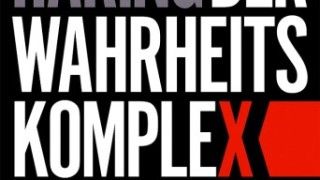
Häring’s book, “Der Wahrheitskomplex” (“The Truth Complex”), published by Westend in May 2026, examines what the author describes as a troubling network of state authorities, NGOs, fact-checkers, and transatlantic think tanks that has been quietly expanding since 2014. The 304-page work is subtitled “How NGOs combat unwanted opinions on state orders.”
The book arrives at a pivotal moment in Europe’s ongoing debate about content moderation and platform governance. Rather than focusing on isolated fact-checking errors, Häring presents a systemic critique, arguing that European governments have created mechanisms to shape public discourse indirectly through ostensibly independent organizations, thereby sidestepping the constitutional constraints that would apply to direct state censorship.
Häring traces the origins of this approach to the 2014 Ukraine crisis and Russia’s annexation of Crimea, with a second significant acceleration following the 2016 US presidential election and subsequent concerns about Russian disinformation campaigns. These geopolitical events, he argues, provided the justification for building increasingly sophisticated information control mechanisms.
The institutional architecture Häring critiques is substantial and growing. The European Digital Media Observatory (EDMO), active since 2020 and hosted by the European University Institute, coordinates researchers, fact-checkers, and media literacy specialists across all EU member states. While the European Commission maintains that EDMO operates with strict editorial independence safeguards, its mandate continues to expand. This March, Brussels allocated an additional €2.5 million to EDMO specifically to monitor online information during elections and crises.
EDMO represents just one component of a broader ecosystem. Under its European Democracy Shield initiative, the Commission has implemented a crisis protocol within the Digital Services Act (DSA), established a European Network of Fact-Checkers, and reinforced its support for EDMO. At the end of March 2026, Brussels approved a €5 million grant aimed at enhancing fact-checking capabilities across all EU languages and creating a centralized European repository of fact-checks.
Häring identifies the Digital Services Act as the legal foundation underpinning this entire structure. While officially presented as legislation that empowers users through greater transparency and appeal rights, the DSA requires major online platforms to assess risks related to illegal content, fundamental rights, media freedom, electoral integrity, and public security. It also establishes a “trusted flagger” system, giving priority to notices from designated organizations regarding potentially illegal content, though platforms technically retain final decision-making authority.
This framework has become a focal point for political disagreement. Brussels defends these measures as essential protection against manipulation, foreign interference, and online harm. Critics, including French publication “La Flamme de la Liberté,” characterize the DSA’s approach as a concerning shift toward privatized censorship.
One of Häring’s most significant contributions is his detailed mapping of connections between public funding, civil society organizations, platform enforcement mechanisms, and security policies. He points to the EU’s May 2025 sanctions against AFA Medya and its founder Hüseyin Doğru under its Russian hybrid-threat regime as evidence that expressing certain narratives can now result in sanctions, though Brussels maintains these actions directly address Russian influence operations.
The book’s most compelling argument centers on transparency concerns. In 2025, the European Court of Auditors concluded that the EU’s oversight of NGO funding remained fundamentally unreliable—a finding that strengthens Häring’s call for more transparent financial accountability.
While “Der Wahrheitskomplex” doesn’t provide definitive answers, it raises critical questions about the balance between protecting democratic institutions from manipulation and preserving the open exchange of ideas. As Europe continues to develop its anti-disinformation capabilities, Häring’s fundamental question remains: Can systems designed to protect democratic debate avoid eventually becoming the arbiters that define its acceptable boundaries?
The debate sparked by Häring’s work reflects broader tensions between security concerns and civil liberties that democracies worldwide continue to navigate in the digital age.
Fact Checker
Verify the accuracy of this article using The Disinformation Commission analysis and real-time sources.

10 Comments
This is a concerning development if true. The EU should be mindful of upholding democratic principles and free expression, even as it tries to combat disinformation. I’ll be curious to see how this book is received.
Absolutely. Maintaining a balance between addressing genuine threats and preserving civil liberties is crucial. I hope this book sparks a productive discussion on these complex issues.
This is a timely and important critique, given the growing influence of NGOs and fact-checking organizations in the online space. The EU should be vigilant about ensuring these efforts remain impartial and don’t become tools for state-sponsored censorship.
Agreed. The line between combating disinformation and stifling legitimate debate is a fine one. I hope this book prompts a wider discussion on the appropriate scope and oversight of these initiatives.
Interesting allegations about the EU’s anti-disinformation efforts potentially being used to censor unwanted opinions. This book seems to raise important questions about transparency and the role of NGOs in moderating online content.
I’ll have to look into this book further. Censorship concerns are always concerning, so I’m curious to understand more about the author’s perspective and evidence.
This is a complex and sensitive topic. It’s critical to balance the need to combat genuine disinformation with protecting free speech. I’ll reserve judgment until I can review the book’s arguments in more detail.
Agreed, a nuanced approach is required. Fact-checking initiatives can be valuable, but they must be transparent and not used as a cover for censorship.
As someone interested in geopolitics and media dynamics, this book sounds like a valuable contribution to the debate around platform governance and the role of NGOs. I appreciate the author taking a critical look at these issues.
Outsourced censorship through NGOs and fact-checkers is a troubling concept. I’ll have to read this book to understand the author’s evidence and arguments. Transparency and accountability around content moderation are so important.