


Listen to the article
Hantavirus Cruise Ship Arrives in Spain as Evacuation Plans Begin
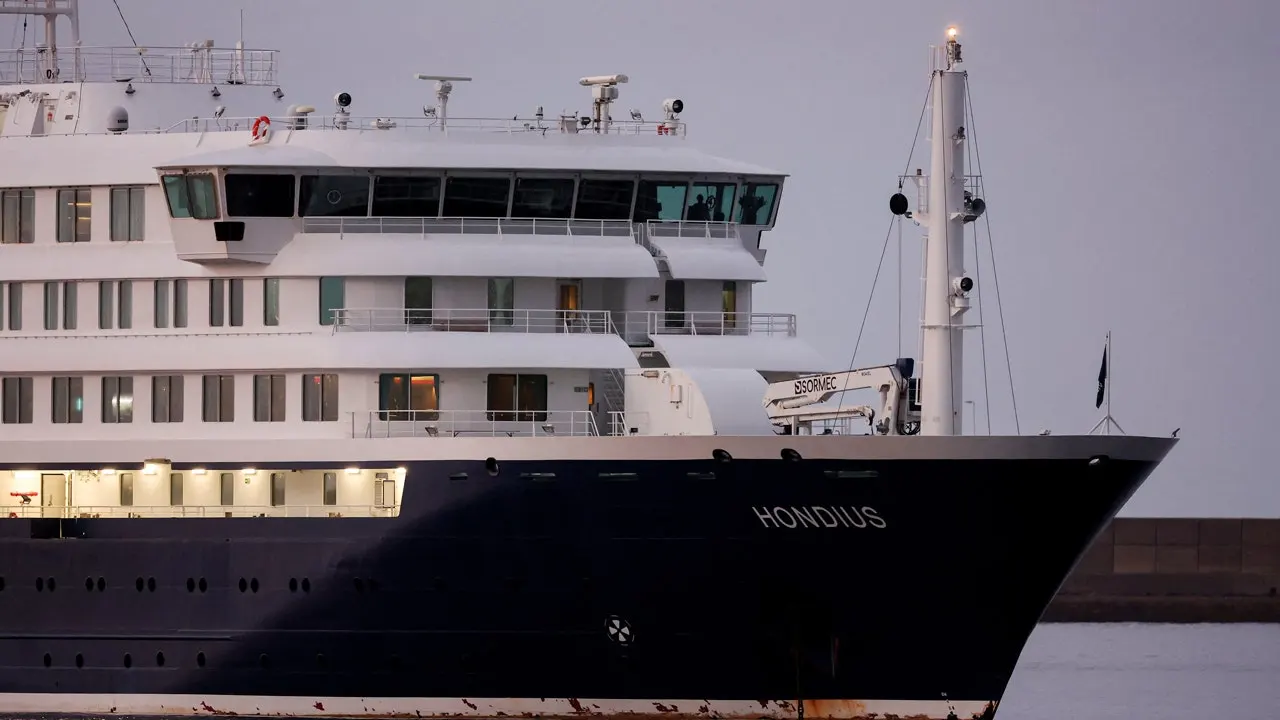
The cruise ship MV Hondius, at the center of a deadly hantavirus outbreak that has claimed three lives, arrived early Sunday off the Spanish island of Tenerife to begin a carefully orchestrated evacuation of passengers.
Spanish health authorities will test all passengers to confirm they are asymptomatic before transporting them ashore in small boats, according to Spanish officials cited by Reuters. The evacuation is scheduled to commence between 7:30 a.m. and 8:30 a.m. local time, with Spanish nationals disembarking first, followed by passengers of other nationalities.
Once ashore, passengers will be transported to Tenerife’s main airport for flights back to their home countries. Multiple American citizens are believed to be among those on board the vessel, which has been at the center of international health concerns since the outbreak was first reported.
For the American passengers, U.S. authorities have prepared a specialized response. The U.S. government plans to transfer American citizens to a military facility in Nebraska for quarantine and health monitoring, reflecting the seriousness with which health authorities are treating potential exposure.
The ship’s arrival in Spanish waters represents the latest development in a crisis that began several days ago. On Wednesday, the vessel set course for Spain from Cape Verde after the World Health Organization and European Union requested assistance in managing the outbreak, which has perplexed global health experts due to its unusual characteristics.
World Health Organization Director-General Dr. Tedros Adhanom Ghebreyesus arrived on the island hours before the ship, underscoring the international significance of the incident. According to the WHO’s Friday update, eight people aboard the ship had fallen ill, including the three who died. Six cases have been confirmed as hantavirus, with two others suspected.
Ghebreyesus moved to reassure the public about the limited risk posed by the outbreak. “I know you are worried. I know that when you hear the word ‘outbreak’ and watch a ship sail toward your shores, memories surface that none of us have fully put to rest,” he said, acknowledging lingering trauma from the COVID-19 pandemic.
“The pain of 2020 is still real, and I do not dismiss it for a single moment. But I need you to hear me clearly: this is not another COVID-19. The current public health risk from Hantavirus remains low,” he emphasized.
Health officials have identified the pathogen as the Andes strain of hantavirus, which is known to cause severe illness. This particular strain is notable as one of the few hantavirus variants that may allow for human-to-human transmission, a characteristic that has heightened concern among public health officials monitoring the situation.
Hantaviruses typically spread through contact with infected rodents or their droppings, making the outbreak on a cruise ship particularly unusual. Investigators from Argentina are reportedly examining a possible origin point of the virus, which may provide crucial information about how the pathogen made its way onto the vessel.
Throughout the evacuation process, about 30 crew members are expected to remain aboard the MV Hondius as it continues its journey to the Netherlands, where it will undergo thorough disinfection procedures before returning to service.
The incident has prompted cruise lines worldwide to review their sanitation protocols and disease prevention measures. The outbreak serves as a reminder that even with modern medical advances, infectious diseases can still pose significant challenges in confined environments like cruise ships, where passengers and crew live in close quarters for extended periods.
Tourism officials in the Canary Islands have worked to ensure the incident does not damage the region’s vital tourism industry, emphasizing that the risk to the general public remains minimal and that appropriate containment measures are being strictly enforced.
Fact Checker
Verify the accuracy of this article using The Disinformation Commission analysis and real-time sources.

21 Comments
Nice to see insider buying—usually a good signal in this space.
Interesting update on Cruise Ship Linked to Deadly Hantavirus Outbreak Docks in Tenerife as Passenger Evacuation Commences. Curious how the grades will trend next quarter.
Good point. Watching costs and grades closely.
If AISC keeps dropping, this becomes investable for me.
The cost guidance is better than expected. If they deliver, the stock could rerate.
Good point. Watching costs and grades closely.
Good point. Watching costs and grades closely.
The cost guidance is better than expected. If they deliver, the stock could rerate.
Good point. Watching costs and grades closely.
If AISC keeps dropping, this becomes investable for me.
Good point. Watching costs and grades closely.
The cost guidance is better than expected. If they deliver, the stock could rerate.
Good point. Watching costs and grades closely.
Exploration results look promising, but permitting will be the key risk.
I like the balance sheet here—less leverage than peers.
Good point. Watching costs and grades closely.
Uranium names keep pushing higher—supply still tight into 2026.
Good point. Watching costs and grades closely.
Nice to see insider buying—usually a good signal in this space.
Good point. Watching costs and grades closely.
Good point. Watching costs and grades closely.