


Listen to the article
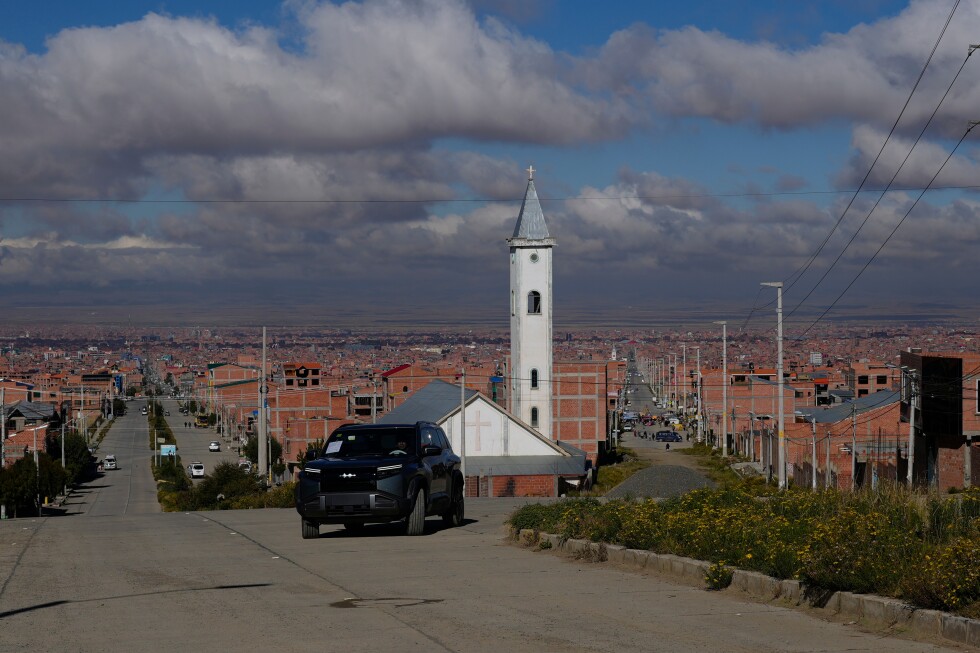
Tired of gasoline shortages and skyrocketing prices, Simón Huanca took matters into his own hands. The 53-year-old Indigenous artisan imported a Chinese electric car to navigate El Alto, Bolivia’s highest city, using the vehicle to transport both his family and the alpaca wool for his weaving workshop.
He installed a dedicated charger in his own garage, partly for convenience, but also out of necessity—there are only three public charging stations serving the vast metropolitan area of El Alto and neighboring La Paz, home to more than 1.6 million people.
“Since last year, I’ve been trying to get an electric car to save on costs,” Huanca said while driving his electric off-road vehicle through a working-class neighborhood.
Huanca is one of a small but growing number of Bolivians abandoning fossil fuel-powered cars for electric vehicles as the South American country grapples with severe fuel shortages and the recent termination of long-standing fuel subsidies, which effectively doubled the cost of gasoline.
Bolivia’s energy crisis intensified in 2023 under then-President Luis Arce, who maintained a state subsidy under which the country purchased fuel at international prices and sold it domestically at half its value. But this approach proved unsustainable for Bolivia, which imports 80% of its diesel and 55% of its gasoline.
The country gradually exhausted its foreign currency reserves needed to purchase fuel, with the subsidy representing an annual drain of more than $2 billion on state coffers. Long lines of vehicles waiting at gas stations became a common sight throughout major cities, creating frustration among motorists and businesses alike.
In December 2023, just one month after taking office, President Rodrigo Paz repealed the subsidy. Energy prices nearly doubled overnight, delivering a severe economic blow to many Bolivians already struggling with inflation and economic instability.
The situation deteriorated further when transport operators began complaining about poor quality gasoline damaging their vehicles. The government alleged sabotage, with President Paz claiming that gasoline distributed by state-owned oil company Yacimientos Petrolíferos Fiscales Bolivianos was contaminated with gum and manganese that had remained in storage tanks since the Arce administration.
This “junk gasoline” scandal triggered widespread strikes and protests among transportation workers and led to the resignations of two high-ranking officials at the state-owned oil company. Public trust in the government’s ability to resolve the fuel crisis plummeted.
The final blow for many Bolivians came with the outbreak of conflict in the Middle East involving Iran, a major oil producer, raising fears of yet another spike in global fuel prices. Faced with this prospect, more citizens began trading in their gasoline-powered cars for electric vehicles.
“The investment exceeds $36,000, but I no longer waste valuable working hours searching for fuel or managing vehicle repairs,” said Ever Vera, a 54-year-old lawyer who recently switched to an electric vehicle.
The number of electric vehicles in Bolivia has grown dramatically, climbing from just 500 to 3,352 over the last five years, according to the Single Registry for Tax Administration. The most significant surge occurred during the last two years, directly coinciding with the worsening fuel crisis.
Despite this growth, electric vehicles still represent only a tiny fraction of Bolivia’s estimated 2.6 million vehicles in a country of almost 12 million people. The vast majority of these electric cars are imported from China, followed by the United States, taking advantage of Bolivia’s increasingly open import policies.
“The growth is exponential,” said Freddy Koch, an electromobility expert with the independent nonprofit organization Swisscontact. He noted that while these vehicles are currently being purchased primarily by more affluent buyers, he expects them to gain broader appeal as prices decrease and infrastructure improves. Koch predicts that the total number of electric vehicles in Bolivia could triple in as little as two to three years.
President Paz has also eliminated import tariffs on all types of automobiles, a policy move that has multiplied the number of importers competing with one another to bring these vehicles into Bolivia at a lower cost. This has made electric vehicles somewhat more accessible, though they remain out of reach for many average Bolivians.
The rising number of electric vehicles has created new economic opportunities. Marcelo Laura, a 38-year-old electrician, identified a lucrative niche in the installation of residential and commercial charging stations just a month ago.
“There aren’t many public charging stations,” he said. “A year ago, I thought it was practically impossible to think that people would actually be bringing in electric cars.”
As Bolivia continues to navigate its complex energy challenges, the shift toward electric mobility represents both an adaptation to immediate economic pressures and potentially the beginning of a longer-term transportation transformation in one of South America’s poorest nations.
Fact Checker
Verify the accuracy of this article using The Disinformation Commission analysis and real-time sources.

12 Comments
It’s encouraging to see Bolivians like Simón Huanca embracing electric cars as a solution to the country’s fuel supply issues. However, the limited public charging network is a clear barrier that the government must address to support broader EV adoption.
Bolivia’s fuel shortages and rising prices are understandably driving greater interest in electric vehicles. However, the lack of public charging options remains a major obstacle to wider EV adoption. Addressing this infrastructure gap should be a priority.
Bolivia’s electric vehicle surge is a promising development, but the lack of charging infrastructure remains a major hurdle. Addressing this infrastructure gap should be a top priority for policymakers to enable more Bolivians to make the switch to clean mobility.
Interesting to see Bolivia embrace electric vehicles due to fuel shortages and rising prices. EVs could offer an affordable, sustainable solution for many Bolivians. However, the lack of charging infrastructure is a major challenge that needs to be addressed.
Agreed. Expanding the public charging network will be crucial to support wider EV adoption in Bolivia. The government should prioritize this infrastructure investment to encourage the transition away from fossil fuels.
It’s impressive to see Bolivians like Simón Huanca taking the initiative to import and use electric cars despite the country’s limited charging infrastructure. Their early adoption could inspire broader EV uptake in the long run.
Yes, these pioneering EV owners are paving the way for others to follow. Their experiences and advocacy will be important in pushing the Bolivian government to invest more in charging facilities and EV-friendly policies.
The lack of public charging stations in Bolivia’s major cities is a significant barrier to widespread EV adoption. The government should prioritize expanding this infrastructure to make electric cars a viable option for more Bolivian consumers.
You raise a good point. Overcoming the charging station scarcity is crucial to accelerating Bolivia’s electric vehicle market. Creative public-private partnerships could help rapidly scale up the charging network.
This surge in Bolivian electric car ownership is an encouraging sign as the country grapples with its energy crisis. It demonstrates the growing global appetite for EVs, even in developing markets facing fuel supply issues.
Absolutely. Bolivia’s shift towards electric mobility could inspire other Latin American nations facing similar energy challenges to explore EV alternatives. This transition aligns with the region’s renewable energy potential.
The transition to electric mobility in Bolivia is an interesting development, but the country’s charging station scarcity will need to be resolved for EVs to become a mainstream option. Overcoming this challenge could unlock significant environmental and economic benefits.