


Listen to the article
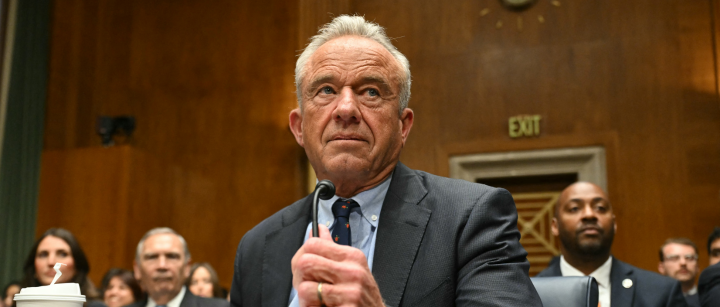
In a contentious series of congressional hearings last month, Health and Human Services Secretary Robert F. Kennedy Jr. sparked debate when he repeatedly claimed that “there are no cuts to Medicaid” under the recently enacted One Big Beautiful Bill Act (OBBBA). His assertions directly contradicted estimates from the nonpartisan Congressional Budget Office, which projects the 2025 law will reduce federal Medicaid spending by more than $900 billion over the next decade.
Kennedy defended his position during an April 22 Senate Finance Committee hearing, telling Democratic Senator Tina Smith of Minnesota: “First of all, there are no cuts in Medicaid. I keep saying this. Here’s what the CBO said: In fiscal year 2025, $668 billion. Fiscal year 2036, $981 billion. That’s not a cut. It’s a 47% increase.”
Smith immediately pushed back, stating: “Secretary Kennedy, a trillion dollars in cuts, according to the CBO. Seven million people losing their health insurance because of the Trump administration actions. That’s not debatable.”
Health policy experts widely agree that Kennedy’s characterization is misleading. Michael S. Sparer, chair of the department of health policy and management at Columbia University’s Mailman School of Public Health, explained that “the notion that since Medicaid spending overall will continue to rise means that there are no cuts is simply false. The rise in Medicaid spending would be far greater had HR1 not been enacted.”
KFF, an independent health policy research organization, has calculated that the OBBBA specifically reduces federal Medicaid spending by $911 billion. These savings primarily come from imposing new work requirements on individuals who became eligible for Medicaid through the Affordable Care Act’s expansion. Additional reductions stem from limiting states’ ability to raise Medicaid revenues through provider taxes, restricting state-directed payments to healthcare facilities, and creating new barriers to enrollment and coverage renewal.
The impact extends beyond financial figures. The CBO estimates that these changes will increase the number of uninsured Americans by 7.5 million people by 2034, affecting both Medicaid and the Children’s Health Insurance Program (CHIP), which serves families with incomes too high for Medicaid but too low for private insurance.
Leighton Ku, director of the Center for Health Policy Research at George Washington University, noted that Kennedy’s claim “ignores the reality of medical care inflation, the aging of the population (which causes medical expenditures to rise even more) and other pressures.” He emphasized that “the reality is that people will receive much less health care under Medicaid because of these cuts,” adding that “health care providers like hospitals, doctors’ offices and nursing homes will hurt financially because of the loss of revenue.”
Dr. Benjamin Sommers, a Harvard University professor of healthcare economics and medicine, called Kennedy’s argument “smoke and mirrors,” explaining that “everything gets more expensive over time, especially in health care.” According to Sommers, the OBBBA isn’t “simply cutting out waste and abuse” as the administration suggests, but making substantial programmatic reductions that will result in millions losing coverage.
The HHS has attempted to frame these reductions differently. Andrew Nixon, an HHS spokesman, told the Associated Press that “HHS is taking steps to ensure Medicaid serves those it is intended to support. These actions are not cuts — they are focused on addressing waste, fraud, and abuse to better position the program for those who rely on it.”
However, health policy analysts maintain that while Republicans have said they are targeting “able-bodied adults” with new Medicaid work requirements, the actual impact will be broader, with many vulnerable individuals losing coverage due to increased paperwork burdens and other restrictive provisions in the legislation.
The OBBBA’s Medicaid provisions appear designed to offset costs associated with the law’s extension of expiring tax cuts for individuals, effectively using healthcare savings to fund tax policy priorities.
As this policy debate continues, the central question remains whether a $900 billion reduction in projected spending that results in millions losing coverage constitutes a “cut” to Medicaid, regardless of whether overall program spending continues to increase due to inflation and demographic changes.
Fact Checker
Verify the accuracy of this article using The Disinformation Commission analysis and real-time sources.

8 Comments
The debate over Medicaid funding cuts highlights the importance of using reliable data and expert analysis to inform policy decisions. I’m curious to see if Kennedy can provide a more compelling case to counter the CBO’s projections, or if the proposed changes will indeed reduce coverage and access.
Agreed, this is a complex issue that requires rigorous, impartial examination. Transparency and accountability from policymakers are crucial when it comes to decisions that impact vulnerable populations.
The apparent contradictions between Kennedy’s claims and the CBO’s estimates are concerning. Medicaid is a critical safety net program, so any cuts need to be thoroughly examined and justified. I hope Congress digs deeper into the details here.
It’s concerning to see such conflicting claims about the impacts of the OBBBA on Medicaid. Accurate data and objective assessment should drive these decisions, not political maneuvering. I hope Congress can get to the bottom of this.
This political debate over Medicaid funding highlights the complexities of healthcare policy. I’m curious to see if Kennedy can provide more convincing evidence to back up his position, or if the CBO’s projections prove to be more accurate.
Agreed, the nuances of these policy decisions can get lost in the political posturing. Impartial analysis is key to understanding the real-world impacts.
Interesting debate over Medicaid spending. Kennedy seems to be spinning the CBO’s projections, but the experts say the cuts are real. I’d like to see a more objective analysis of the proposed changes and their impact on healthcare access.
Agreed, it’s important to get the facts straight on this. The public deserves a clear, unbiased assessment of the proposed Medicaid changes and their consequences.