


Listen to the article
Russian state media have fabricated reports of a hantavirus outbreak among Ukrainian military, according to Ukrainian news sources who denounced the claims as disinformation.
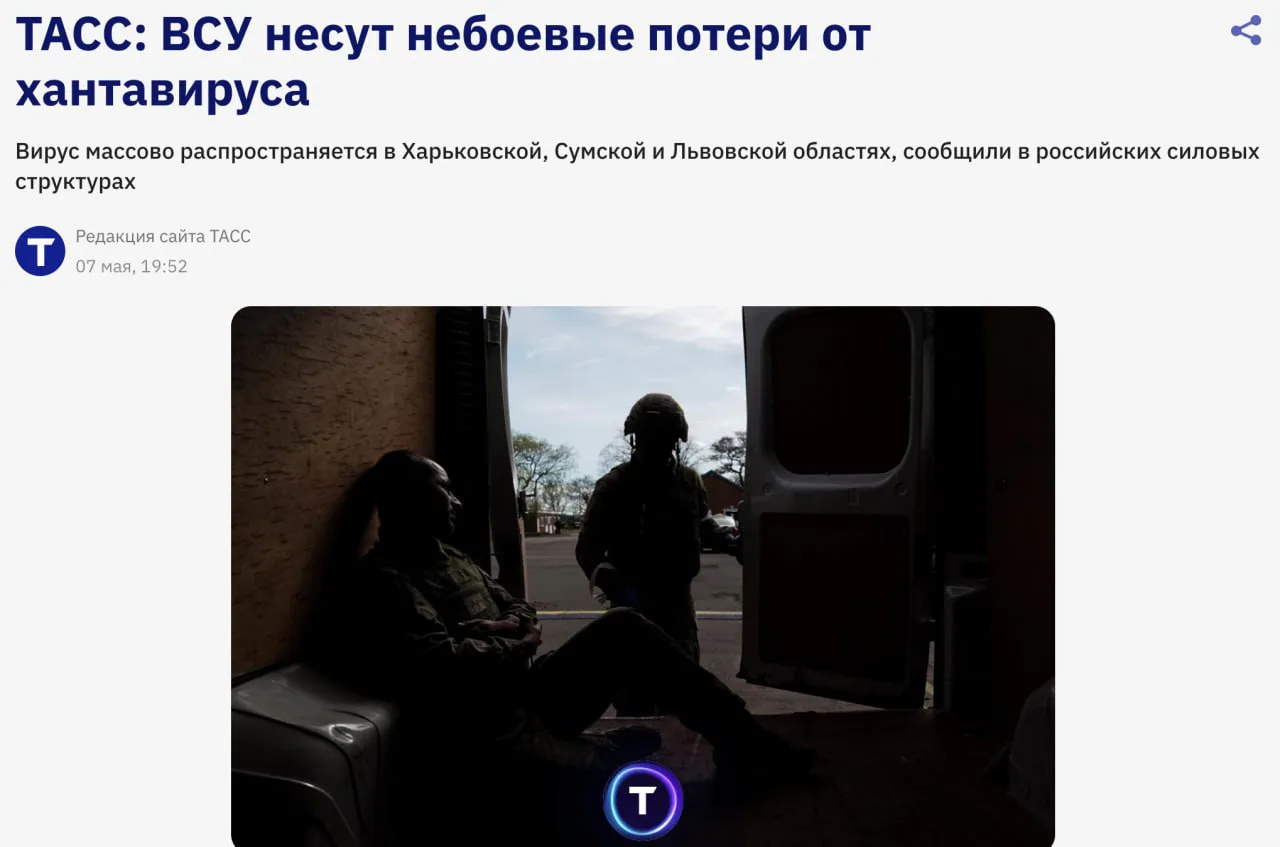
TASS and RIA Novosti, two prominent Russian state-controlled news agencies, published reports claiming widespread hantavirus infections among Ukrainian armed forces in the Kharkiv, Sumy, and Lviv regions. The reports cited anonymous “sources in the Russian security forces” who alleged Ukrainian units were suffering “non-combat losses” due to the virus.
According to the fabricated reports, Ukrainian military commanders were allegedly prohibiting medical assistance to affected soldiers. However, Ukrainian news agency UNN states that no evidence exists to support these claims, and no Ukrainian or international health organizations have confirmed any such outbreak.
The timing of the Russian disinformation campaign appears strategic, coming immediately after a legitimate hantavirus outbreak was reported by the World Health Organization on May 4. That real incident involved the cruise ship Hondius in the Atlantic Ocean, which has prompted several countries to prepare evacuation plans for passengers. The ship is expected to arrive in Spain on the morning of May 10.
Health experts note that hantavirus infections are rare and typically spread through contact with infected rodents or their droppings, not through human-to-human transmission in most cases. The virus can cause severe respiratory problems and hemorrhagic fever with renal syndrome, but outbreaks are typically isolated and can be managed with proper medical protocols.
Russian propaganda channels amplified the false reports through social media networks and public groups, extending the narrative to claim the alleged virus was threatening to spread from Ukraine to border regions within the Russian Federation. These additional claims also lack any official confirmation.
Media analysts point out this pattern aligns with established Russian disinformation tactics that exploit real-world events as foundations for fabricated narratives. The false reports included AI-generated images to give the appearance of authenticity – a growing concern in the spread of misinformation.
This incident represents the latest example in an ongoing information war that has paralleled the physical conflict in Ukraine. Since the beginning of Russia’s full-scale invasion in February 2022, Russian state media have regularly disseminated false narratives about health crises, military operations, and political developments in Ukraine.
International fact-checking organizations have repeatedly identified and debunked similar Russian disinformation campaigns. These operations often aim to demoralize Ukrainian forces, sow distrust in Ukrainian military leadership, or justify Russian military actions.
Ukrainian government agencies have developed robust countermeasures against such disinformation, including rapid response teams that identify and publicly refute false claims. The Center for Strategic Communication, established by the Ukrainian government, regularly monitors and exposes Russian propaganda narratives.
Health officials stress that during actual disease outbreaks, the public should rely on information from credible sources such as the World Health Organization, national health ministries, and established medical institutions, rather than unverified reports from state-controlled media with clear political motivations.
The false hantavirus claims come amid intensified fighting in Ukraine’s Kharkiv region, suggesting a possible attempt to distract from or complement military operations with information warfare tactics.
Fact Checker
Verify the accuracy of this article using The Disinformation Commission analysis and real-time sources.

13 Comments
This is concerning if true, but I haven’t seen any credible evidence to support the Russian claims. Ukraine denying the outbreak and lack of confirmation from international health organizations is telling. Seems like more Kremlin disinformation campaigns.
The timing of these claims is indeed suspect, coming right after a real hantavirus incident on a cruise ship. Seems like a classic Russian tactic to sow confusion and distract from their own actions. I’ll be keeping a close eye on this story as it develops.
Hantavirus is a serious disease, so if there really was an outbreak it would be concerning. But the lack of confirmation from credible sources makes me skeptical of these Russian claims. Seems like more political theater than actual facts.
Interesting, but I’m skeptical of these Russian propaganda claims about a hantavirus outbreak in Ukraine. Sounds like a classic disinformation tactic to sow confusion and distract from real issues. I’ll wait for official confirmation from credible sources before believing anything.
I agree, it’s crucial to verify these types of reports from Russian state media. Spreading unsubstantiated claims about disease outbreaks can have serious consequences.
While hantavirus is a serious disease, I’m not convinced by these Russian reports. The lack of credible evidence and Ukraine’s denial of the outbreak raise red flags. Appears to be another Kremlin disinformation campaign targeting Ukraine’s reputation.
Agreed. It’s crucial that we scrutinize claims from state-controlled Russian media outlets, especially when they involve sensitive public health issues. Maintaining objectivity and fact-based reporting is paramount.
I appreciate Ukraine’s efforts to debunk these false reports. It’s crucial that the public has access to accurate, verified information, especially on sensitive topics like disease outbreaks. Kudos to the fact-checkers working to expose Russian propaganda.
Well said. Maintaining trust in public health institutions is vital, especially amidst an ongoing conflict. Disinformation campaigns like this one undermine that trust and must be vigorously countered.
I’m curious to learn more about the Russian state media’s motivations behind these fabricated reports. Clearly an attempt to discredit Ukraine, but what’s the endgame? More transparency and fact-checking is needed here.
Agreed. It’s worrying to see the Kremlin so brazenly spreading misinformation, especially around public health issues. This requires close scrutiny from the international community.
The timing of this alleged ‘hantavirus outbreak’ seems highly suspicious, coming right after a real incident on a cruise ship. Typical Russian playbook to muddy the waters and undermine Ukraine’s credibility. I hope fact-checkers can get to the bottom of this.
Well said. It’s crucial that the public stays vigilant and doesn’t fall for blatant propaganda, especially when it involves sensitive public health issues.