


Listen to the article
Viral AI-Generated Lego Videos Use Hip-Hop to Deliver Anti-American Propaganda
The missiles flying over Tehran and the Strait of Hormuz are real. So are skyrocketing gas prices, war jitters, and the political exhaustion hanging over Americans already battered by inflation and another contentious election season.
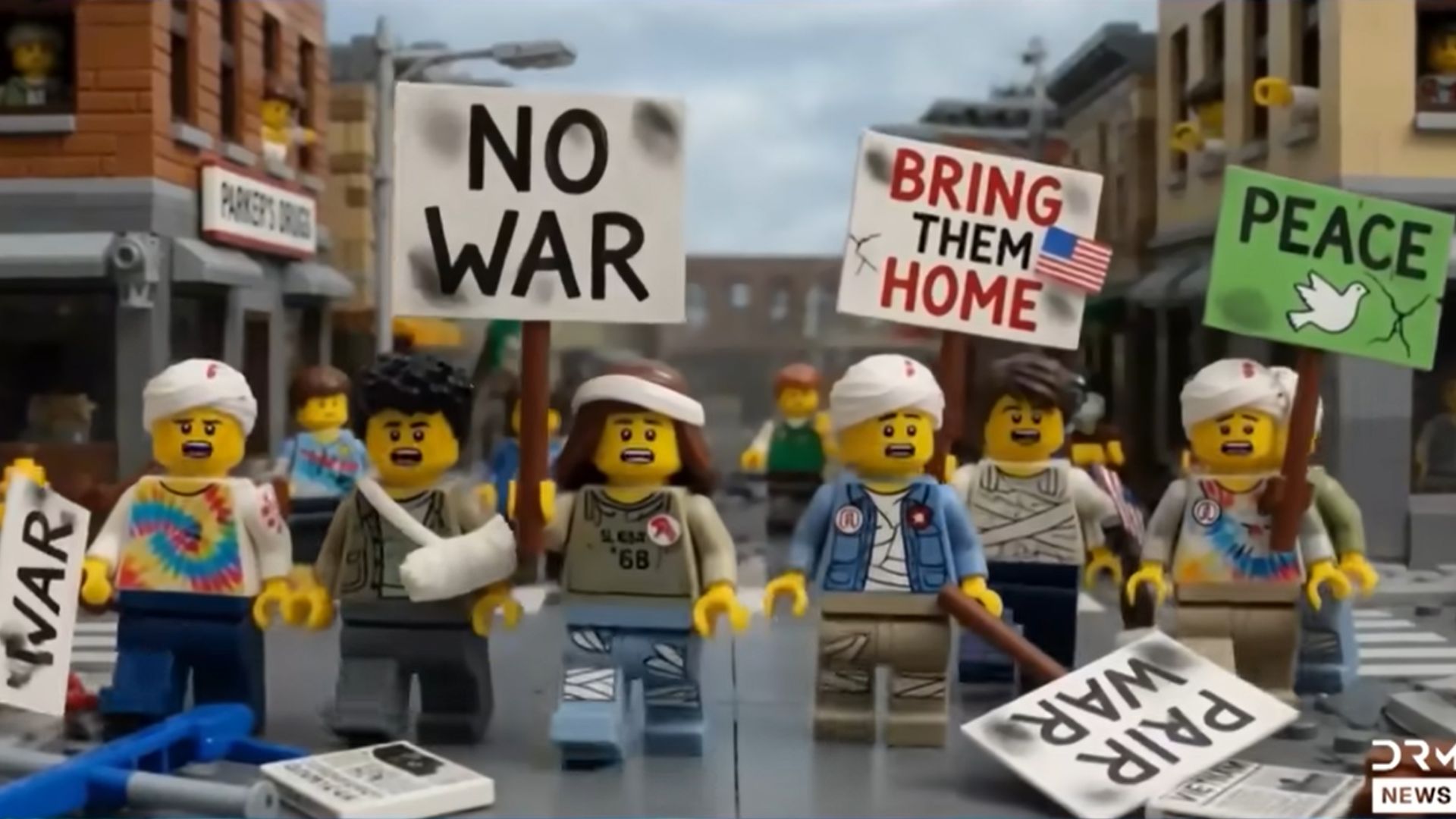
But online, the latest conflict involving the United States and Iran has been repackaged into something more peculiar: viral AI-generated Lego videos that mock President Donald Trump with rap music, trap beats, punchlines, and cartoon explosions. The clips are intentionally comical, but critics warn that beneath the humor lies something more sophisticated and potentially dangerous.
Experts are calling it “hip-hop-aganda” – propaganda masquerading as entertainment that appropriates a Black American art form rooted in struggle, hardship, and resistance as its delivery mechanism.
News reports have linked the videos to Explosive News, a propaganda network with alleged ties to the Iranian government. In an interview with The New Yorker, an unnamed representative of the organization insisted it is a “student-led media team with a background in social activism” that operates independently of any government or military influence. The representative requested anonymity, claiming fear of becoming a target of the U.S. government due to their viral success.
Simon Howard, assistant professor of psychology at the University of Miami, notes it’s no coincidence that the Iranian regime chose Black American music for this campaign. “Rap and hip-hop are a global language of resistance and identity that have served as the soundtrack to revolutions and resistance movements worldwide,” Howard explains. “Based on what these individuals from Iran are doing, they are vocalizing their frustration with the U.S.”
The videos have gained significant traction on social media platforms. Users across Threads and other networks have praised the production value and catchy beats. “I’m loving all of the music!” wrote Threads user @gnamo69. “I was kind of losing my faith in hip-hop lately. I don’t know if it’s just that I’m old, but these things are so on point I just love it so much.”
Another user, @srblaker, described the content as “Another banger from the Iran Lego News crew. The Donny Boy smackdown continues.”
However, some viewers express conflict about enjoying what is clearly propaganda, even if it aligns with their political views. User @axiom.daze wrote: “This is a Lego AI video allegedly from Iran, laying out everything our government tries to hide…and it shouldn’t be this catchy. What a time to be alive.”
For decades, hip-hop has served as a political messenger and societal mirror. From Jadakiss’s 2004 hit “Why” to Young Jeezy’s “My President Is Black,” the genre has consistently provided a platform for marginalized voices. With inflation squeezing working-class Americans, fears of a wider Middle East war growing, and shifting presidential approval ratings, these videos find an audience already primed for cynicism.
Though most clips focus on criticizing the conflict with Iran, the scope has expanded to include videos about Trump falling asleep during press conferences and the shooting at the White House Correspondents’ dinner. The Lego format portrays American political figures as cartoonish villains, creating what Dr. A.D. Carson, associate professor of hip-hop at the University of Virginia, describes as a “funhouse mirror” reflecting our absurd political reality.
“It feels as if they have their fingers on the pulse of something rhetorically significant,” Carson says. “Using Legos and hip-hop as a way to cut through the noise around political discourse is something to admire.” However, he cautions, “I think that we should be vigilant about any media we are engaging with — even if it is something that we see as entertaining or funny. The stakes are incredibly high.”
Both Carson and Howard emphasize the growing need for media literacy. Viewers should learn to think critically about content they consume, even when it aligns with their political views or critiques unpopular policies. Carson notes these videos often “draw more people in than the actual event,” particularly among those who primarily get news online. “Vigilance is going to be incredibly important because our ability to scrutinize media will determine what we are vulnerable to.”
The Hip Hop Caucus, an organization that mobilizes communities of color to fight for racial, climate, and economic justice, raises concerns about how AI-generated content potentially devalues the art form. Brittany Bell Surratt, the Caucus’s senior director of storytelling and communication, believes these videos dilute hip-hop because they lack the lived experiences of Black communities navigating systemic inequality.
“When AI tools replicate the sound and aesthetic of hip-hop without that lived context, it extracts from the culture,” she explains. “What we’re seeing is both a testament to hip-hop’s universal appeal and a warning about how easily culture can be extracted and repurposed without accountability.”
As global tensions rise and information warfare evolves, these viral Lego rap videos represent a new frontier where entertainment, politics, and propaganda converge – using a historically Black American art form as the vehicle to deliver messages to a global audience increasingly difficult to reach through traditional channels.
Fact Checker
Verify the accuracy of this article using The Disinformation Commission analysis and real-time sources.

9 Comments
The blending of viral Lego videos and anti-American rap lyrics is a unique approach to propaganda. It will be interesting to see how effective this tactic is in shaping public perception, especially among younger demographics more accustomed to consuming this type of content.
The Iranian government’s use of Lego and hip-hop to spread anti-American sentiment is a concerning tactic. Propaganda that masquerades as entertainment can be particularly insidious, as it can bypass critical thinking and appeal directly to emotions.
Interesting that Iran is using pop culture to spread its message. While creative, this ‘hip-hop-aganda’ raises concerns about the blurring of entertainment and propaganda. It’s important to be aware of the potential agendas behind viral content.
Viral AI-generated Lego videos set to trap beats and punchlines – this is certainly a novel approach to propaganda. While the creativity is noteworthy, the underlying motives are troubling and warrant further investigation.
Agreed. The blending of popular culture and political messaging is a worrying trend that requires close scrutiny. Propaganda that cloaks itself in the guise of entertainment can be particularly effective at shaping public opinion.
The use of Lego and hip-hop to deliver anti-American propaganda is certainly a novel approach. I wonder if it will be effective in swaying public opinion, especially among younger audiences. Propaganda often relies on emotional appeals rather than facts.
That’s a good point. Propaganda that masquerades as entertainment can be particularly insidious, as it can bypass critical thinking and appeal directly to emotions. Careful media literacy is key to recognizing these tactics.
While the creative use of Lego and hip-hop is attention-grabbing, the underlying motives of this ‘hip-hop-aganda’ are concerning. Propaganda that coopts popular culture is a concerning trend that warrants further scrutiny.
This ‘hip-hop-aganda’ raises important questions about the intersection of entertainment, social media, and geopolitics. While creative, the use of pop culture to spread propaganda is a worrying development that deserves close monitoring.