


Listen to the article
Apple TV+’s Israeli Thriller “Unconditional” Sparks Controversy Amid Global Tensions
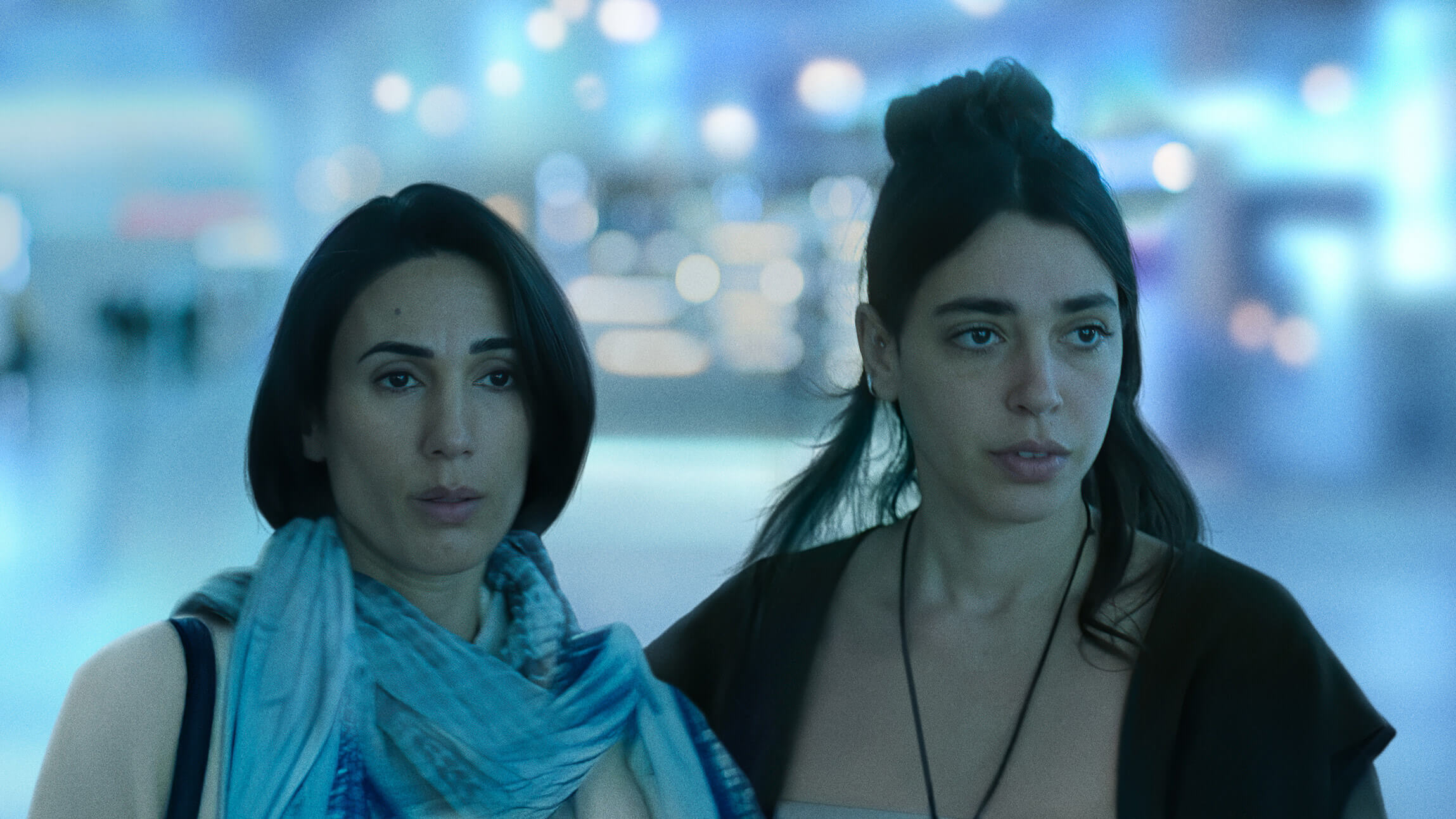
Apple TV’s new Israeli thriller “Unconditional” debuts today amid a storm of controversy that highlights the complex position Israeli media occupies in the current global landscape. The series follows Orna, a mother whose daughter Gali is detained in Russia on dubious drug charges and sentenced to seven years in a Russian prison.
Despite following a familiar streaming thriller template – a missing person, a determined parent’s investigation, unexpected deaths, and shifting alliances – “Unconditional” has generated significant backlash even before most viewers had seen a single episode.
The controversy erupted when the show’s announcement trailer featured protagonist Gali (played by Ronn Talia Lynne) in her IDF uniform. Pro-Palestinian social media accounts immediately condemned the series as “hasbara” or “Zionist propaganda,” despite the fact that the show makes no mention of Palestinians or the Gaza conflict.
This reaction demonstrates the challenging environment facing Israeli cultural exports today. However, “Unconditional” presents a more nuanced picture than critics might expect, offering commentary on Israel’s own propaganda mechanisms, both internal and external.
Created by the team behind “Hatufim” (which was adapted into Showtime’s hit “Homeland”), the series examines how Orna (Liraz Chamami) and her PR handler carefully craft her daughter’s public image for Israeli media. They present Gali as a “happy, good-hearted girl” who served in the army and even extended her service – using the uniform photo that proves so controversial internationally.
The show spends significant time in India, where Gali and Orna were touring before their Moscow layover, and portrays the controversial “Ugly Israeli” stereotype abroad. Some scenes show Israelis as disruptive tourists, reflecting real-world complaints about Israeli travelers on what has been called the “Hummus trail” in India and Southeast Asia.
“These Sabras ruin mindfulness workshops and start shoot-outs in hotel lobbies. It’s not great for the brand,” the series seems to acknowledge, presenting characters who are far from perfect representatives of their nation.
Apple’s decision to release an Israeli production at a time when public opinion toward Israel has significantly deteriorated raises questions about the streaming platform’s strategy. The move likely stems from the previous success of another Israeli series on the platform, “Tehran,” which follows an IDF hacker trapped in Iran.
Industry analysts will be watching closely to see if viewers follow through on threats to cancel subscriptions, or if the show’s nuanced approach might actually appeal to a broader audience.
“Unconditional” also contains moments that could be interpreted as commentary on Israel’s post-October 7 military campaign. In one late episode, a government official named Rita (Evgenia Dodina) criticizes Orna’s tendency to excuse her daughter’s actions: “You give me a thousand excuses for Gali. ‘It’s because of me. It’s not her fault. Poor thing.’ It doesn’t matter she didn’t understand what she was getting into, and it doesn’t matter she didn’t mean to.”
When Orna responds that the situation is different because Gali is her daughter, the dialogue seems to suggest a metaphor about national loyalty and the willingness to overlook a country’s actions because of personal connection.
The show’s reception illustrates how Israeli cultural products have become lightning rods in the current political climate. Even neutral depictions of Israeli characters have proven controversial, as demonstrated by recent criticism of author R.F. Kuang for acknowledging Israeli characters in her work.
As “Unconditional” makes its streaming debut, it serves as both entertainment and a mirror reflecting the polarized global discourse surrounding Israel, demonstrating how even a thriller about a mother searching for her daughter cannot escape the gravitational pull of geopolitics.
Fact Checker
Verify the accuracy of this article using The Disinformation Commission analysis and real-time sources.

12 Comments
This sounds like a gripping political thriller. I’m curious to see how it navigates the complex geopolitical landscape surrounding Israel and the region. A story about a mother fighting for her daughter’s release could make for compelling drama.
Yes, the controversy around the show’s portrayal of Israeli military service is understandable given the sensitivity of the topic. It will be interesting to see if the show offers a nuanced perspective.
Thrillers that tackle real-world geopolitical tensions can be tricky, but if done well, they can shine a light on important issues. I’ll reserve judgment until I’ve seen the show and can assess its approach for myself.
The decision to feature the protagonist in IDF uniform was bound to stir up controversy. It will be interesting to see if the show explores the nuances of military service and its societal impacts.
As someone interested in global current affairs, I’ll be keeping an eye on this series. The way it handles themes of politics, justice, and personal sacrifice could provide valuable social commentary, if done thoughtfully.
The backlash before the show has even aired highlights how polarized the discourse around Israeli media can be. I hope the creators are able to navigate this minefield carefully.
As someone who follows commodities and geopolitics, I’m intrigued by the potential for this show to touch on issues like resource extraction, trade disputes, or sanctions. Those kinds of real-world tensions could provide an interesting backdrop.
That’s a good point. The setting in Russia could potentially introduce themes around energy politics and resource nationalism, which are relevant to the mining and commodities space.
As someone who follows developments in the mining and energy sectors, I’m curious to see if this series touches on any related issues, like resource conflicts or sanctions. Those could provide an interesting backdrop to the personal drama.
You raise a good point. The setting in Russia could potentially introduce themes around energy geopolitics and resource nationalism, which would be relevant to my interests.
While the controversy around this show is understandable, I think it’s important to withhold judgment until we can actually see the full context and storytelling approach. Nuance is often lacking in these kinds of debates.
Agreed. Knee-jerk reactions before the content has been consumed are rarely productive. I’ll be interested to see if the show manages to navigate these sensitive issues in a thoughtful way.