


Listen to the article
U.S. Military’s Century-Long Propaganda Leaflet Campaign Raises Questions About Effectiveness
For over a century, the United States military has conducted psychological operations by dropping billions of propaganda leaflets over enemy territories. Despite the military’s long-standing confidence in these tactics, declassified documents and historical analysis raise significant questions about their actual effectiveness.
The practice began in 1918, when the U.S. released more than 3 million leaflets behind German lines during World War I using aircraft and hydrogen balloons. Military officials claimed these efforts successfully eroded enemy morale and unit cohesion, establishing a precedent that would continue through every major American conflict since.
Much of this early propaganda work was coordinated through the Office of War Information between 1942 and 1945. Now, thanks to Khajistan, a New York-based digital archive group focused on preserving “art, words, and media from forgotten or silenced communities,” many of these historical leaflets are available for public viewing in an interactive exhibit titled “Office of War Information” at Pioneer Works in Brooklyn.
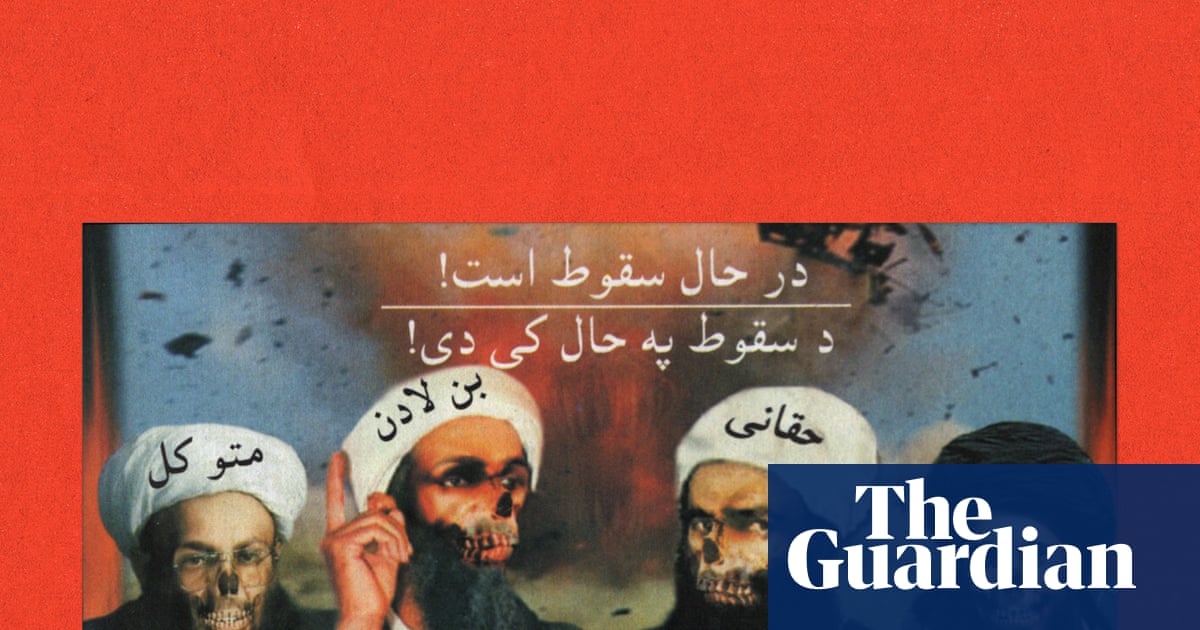
Since 2022, Khajistan has collected hundreds of propaganda leaflets from American wars in Iraq, Afghanistan and Libya, along with materials dropped on Japan during World War II. The collection offers rare insight into messaging typically unseen by the American public despite being distributed in their name.
Internal military assessments tell a more complicated story about these operations than official narratives suggest. A declassified 1971 U.S. Air Force report challenges the supposed success of leafleting campaigns in Vietnam, where the scale was truly massive—approximately 5 billion leaflets dropped annually between 1968 and 1971 over Vietnam, Cambodia and Laos.
Aircraft dispensing these materials were sometimes derisively labeled “B.S. Bombers” by military personnel. The air force report found that many leaflets “violated a basic rule” of persuasion by making claims that contradicted what local populations could observe firsthand, thus undermining their credibility.
Interviews with captured enemy soldiers revealed unexpected uses for the paper propaganda. “One POW explained why he had two leaflets in his possession at the time of his capture,” the report notes. “They were ‘carried as paper with which [the] source could roll his cigarettes.’ Another source explained that everyone in his unit ‘including the cadre, used leaflets as toilet tissue.’ Soldiers in some units collected the leaflets as souvenirs.”
Despite these findings, leafleting operations continued. During the Gulf War in the early 1990s, the U.S. produced 29 million leaflets. Military reports claim these efforts “persuaded approximately 44% of the Iraqi army to desert, more than 17,000 to defect, and more than 87,000 to surrender”—figures that appear difficult to verify independently.
Saad Khan, founder of Khajistan, began collecting war propaganda for deeply personal reasons. “I come from war,” explained Khan, who was born and raised in Pakistan. He recounted recently being in Islamabad with family when an Islamic State bombing occurred nearby. “We heard it,” he says. “It’s part of fucking life.”
The exhibition at Pioneer Works recreates a wood-paneled government office featuring authentic American propaganda posters, including materials supporting Afghan mujahideen fighters against Soviet forces. Among the most striking artifacts is an edition of “The Alphabet of Jihad”—a controversial USAID project from the early 1980s that taught Afghan children to read through anti-Soviet imagery featuring missiles, tanks and landmines at a cost of $51 million.
Thousands of replica leaflets are scattered across the exhibition floor, with new ones printed every ten minutes. Visitors can examine a leaflet, input its identification number into vintage computers, and discover translations and historical context.
The leaflets themselves reveal evolving propaganda strategies across different conflicts. Those dropped on Japan during World War II contained stark threats reminiscent of modern political rhetoric. One leaflet showed people fleeing collapsing buildings with text warning: “America is capable of producing earthquakes that will cause damage a thousand times greater… Note carefully the American style of earthquake; you will know the time when it will occur.”
Materials targeting Iraq typically contained more text than those used in Afghanistan, likely reflecting different literacy rates. Common themes include caricatures of enemy leaders, appeals for cooperation with U.S. forces, and emphasis on ethnic brotherhood, though many contain imagery that appears culturally demeaning.
Khan questions the fundamental premise behind these operations: “Dehumanization is at the core of this shit. Thinking that you can drop shit on people like this and think that they will change their mind… There’s racism in this.”
He ultimately suggests these leaflets serve a different purpose than their stated objective. “These leaflets are just trash, like on the floor,” Khan observes. “They’re dropped so that, after the war, in Congress, when they summon the guy, he’ll say: ‘we dropped the leaflets before [we bombed them].’ This is self-serving for Americans, like how America bombs and then sends non-profits. It’s part of that system.”
Fact Checker
Verify the accuracy of this article using The Disinformation Commission analysis and real-time sources.

14 Comments
The preservation of these historical leaflets through the Khajistan digital archive is a valuable contribution to our understanding of 20th century propaganda and military history. It’s important this material is made publicly accessible.
Absolutely. Having this trove of primary sources available for researchers and the public to examine is crucial for maintaining transparency and accountability around these wartime tactics.
The scale of these leaflet campaigns is quite staggering – billions of leaflets dropped over enemy territories. I wonder if the sheer volume compensated for any lack of measurable impact on the ground.
That’s a good question. The massive scale suggests the military must have felt the leaflets were worth the investment, even if the long-term effects were hard to quantify.
This article raises important questions about the true effectiveness and impact of these propaganda leaflet drops. The declassified documents seem to undermine the military’s claims about their success in eroding enemy morale.
Definitely. It would be interesting to see more detailed historical analysis on the measurable outcomes and unintended consequences of these psychological warfare tactics over time.
It’s concerning to see the US military engaging in such extensive psychological warfare efforts, even if the ultimate goal was to demoralize and undermine enemy forces. The ethics of these tactics warrant close examination.
I agree, the moral and ethical implications of these propaganda campaigns should be carefully scrutinized, especially given the scale and longevity of the US military’s involvement.
It’s interesting to see this trove of historical propaganda leaflets being preserved and exhibited. This provides an important window into the military’s evolving psychological warfare tactics over the past century.
Agreed. Having this digital archive available for public viewing is valuable for researchers and historians looking to better understand the nuances and impacts of these propaganda efforts.
Fascinating look at the US military’s long history of using propaganda leaflets as a psychological warfare tactic. I wonder how effective these tactics really were in eroding enemy morale and cohesion over the decades.
You raise a good point. The declassified documents seem to raise doubts about the actual effectiveness of these leaflet campaigns, despite the military’s confidence in them.
I’m curious to learn more about how the Office of War Information coordinated these leaflet drops during WWII. What strategic considerations went into the messaging and targeting of these propaganda campaigns?
Yes, the involvement of the OWI adds an interesting layer of complexity. I imagine the interplay between military and civilian propaganda efforts would be worth exploring further.