


Listen to the article
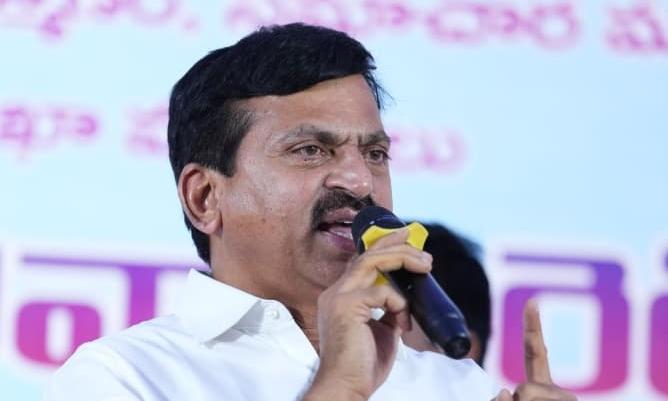
The state government of Telangana will purchase all paddy and maize from farmers at guaranteed Minimum Support Price (MSP), Revenue Minister Ponguleti Srinivas Reddy announced on Saturday. The commitment came during a ‘Praja Darbar’ public meeting held in Tirumalayapalem village, Khammam district.
In his address, Srinivas Reddy highlighted the government’s farmer-centric initiatives, most notably the recent waiver of crop loans amounting to Rs 21,000 crore. This program has provided relief to approximately 25 lakh farmers across the state, representing a significant financial intervention in the agricultural sector.
The minister drew sharp contrasts with the previous Bharat Rashtra Samithi (BRS) government’s agricultural policies. “The former administration actively discouraged paddy cultivation and consistently failed to procure produce at MSP rates,” Srinivas Reddy claimed. He emphasized that the current government is taking the opposite approach by encouraging paddy cultivation and offering additional financial incentives.
As part of these incentives, farmers growing fine rice varieties will receive a Rs 500 bonus per quintal beyond the standard MSP. This premium pricing structure aims to boost high-quality rice production across Telangana, where agriculture remains the primary livelihood for a substantial portion of the population.
Addressing concerns about procurement logistics, the minister offered firm reassurance to farmers. “The government will purchase every grain of paddy and maize produced by our farmers,” he stated, urging the agricultural community not to be swayed by what he termed “false propaganda” from opposition parties.
The procurement issue has become politically charged, with Srinivas Reddy accusing opposition leaders of deliberately creating anxiety among farmers through orchestrated visits to procurement centers. In a particularly pointed criticism, he alleged that during the previous administration, farmers in Khammam who voiced demands were subjected to being “handcuffed” – suggesting a harsh crackdown on agricultural protests.
Beyond crop procurement, the minister addressed persistent land administration issues that have troubled farmers and landowners. He claimed that problems stemming from the Dharani portal – a digital land records management system introduced by the previous government – have been resolved through the implementation of a new system called ‘Bhu Bharathi.’ Land disputes related to Sada Bainama (informal land transfer documents) would also be addressed promptly, according to the minister.
The Praja Darbar program itself, designed as an accessible forum for citizens to bring concerns directly to government officials, has generated significant public engagement. In the Palair Assembly constituency alone, officials have received 14,700 applications from residents seeking government intervention or assistance on various issues.
Housing emerged as the predominant concern among these applications. Responding to this demand, Srinivas Reddy noted that 4.5 lakh Indiramma houses had already been sanctioned in the first phase of the housing program. A second phase is in the planning stages, though specific timelines were not disclosed.
The government’s agricultural procurement guarantees come at a crucial time for Telangana’s farming community, which has experienced volatility in crop prices and procurement challenges in recent years. The state’s agricultural sector, which employs a significant portion of its workforce, has been under pressure from changing weather patterns, market fluctuations, and infrastructure limitations.
By emphasizing both procurement guarantees and loan waivers, the current administration appears to be implementing a two-pronged approach to agricultural support – addressing both immediate financial pressures and market access challenges that have historically affected farmer incomes across the region.
Fact Checker
Verify the accuracy of this article using The Disinformation Commission analysis and real-time sources.

6 Comments
The additional Rs 500 per quintal bonus for fine rice varieties is an intriguing move. I wonder if this will help increase production of these higher-value crops and improve farmers’ incomes.
While the current government’s stance on paddy procurement appears quite different from the previous administration, I’d be curious to hear more about the specific challenges and constraints they faced in ensuring adequate MSP-based procurement.
Interesting to see the contrast in agricultural policies between the current and previous state governments. Curious to hear more details on the incentives being offered to farmers for paddy cultivation and the procurement of their produce at MSP rates.
The contrasting approaches between the current and previous governments on paddy cultivation and procurement highlight the dynamic nature of agricultural policymaking. It will be interesting to see how these new initiatives evolve and influence the state’s agricultural sector.
The state government’s commitment to support farmers through loan waivers and guaranteed MSP procurement seems like a positive step. It will be important to monitor the implementation and impact of these initiatives on the ground.
It’s good to see the state government taking proactive measures to support farmers, especially through initiatives like loan waivers and MSP-based procurement. Transparency in implementation will be key.