


Listen to the article
A 2022 Social Media Post Accurately Predicted 2026 Hantavirus Outbreak
A social media user’s prediction from 2022 has resurfaced amid a recent hantavirus outbreak on a cruise ship, capturing widespread attention for its seemingly prophetic nature.
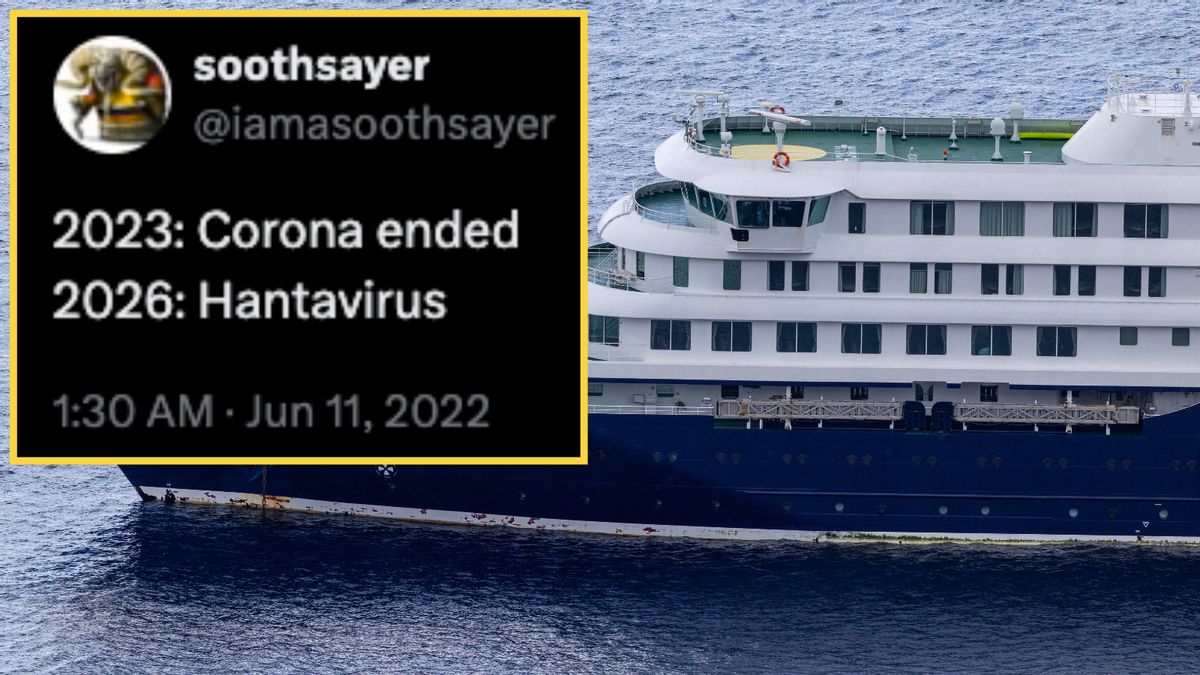
The post, published on June 11, 2022, on what was then known as Twitter (now rebranded as X), contained a simple but now-startling message: “2023: Corona ended … 2026: Hantavirus.” This prediction, made nearly four years before the actual outbreak, has now been reposted more than 143,000 times as users marvel at its accuracy.
The authenticity of the post has been verified through the Internet Archive’s Wayback Machine, which preserved a record of the tweet from the day it was published. The account, operating under the handle @iamasoothsayer, had only four public posts and one reply at the time the prediction went viral.
The timing is particularly striking given the current hantavirus situation. In April 2026, health officials reported an outbreak aboard a cruise ship that has resulted in three deaths so far. The rare infectious disease, primarily transmitted to humans through contact with rodent waste, has prompted an intensive investigation by health authorities.
According to the Associated Press, officials tracking the shipboard outbreak are “confident” there is no risk of a widespread epidemic because hantavirus doesn’t easily spread from person to person. The Mayo Clinic describes hantavirus as a “rare infectious disease,” further supporting the assessment that while serious, it’s unlikely to become a global health emergency like COVID-19.
The World Health Organization has identified the outbreak as a multi-country cluster linked specifically to cruise ship travel, with health officials working to trace potential exposures.
As news of the outbreak spread, social media users began discovering and sharing the four-year-old prediction on May 6, 2026. The apparent accuracy of this forecast quickly caught public attention, despite its brevity.
However, there are reasons to be skeptical about labeling this as a genuine prediction. The account’s bio describes the user as an “astrologist” who “reads the future,” but it’s unclear whether this description existed before the post went viral or was added afterward to capitalize on the coincidence.
Some skeptics have proposed alternative explanations. One X user suggested the account might have posted “thousands of random predictions” then deleted the unsuccessful ones after one happened to come true—a common technique among those claiming predictive abilities. This theory, while plausible, cannot be definitively proven or disproven.
The account owner has not responded to attempts to contact them for comment, leaving their methodology and intent unclear. Regardless, the existence of the post itself is not in question—it was genuinely published in 2022, long before the current outbreak.
This incident highlights the public’s fascination with apparent predictions and coincidences, particularly during health emergencies. It also demonstrates how social media archives can preserve content for years, allowing old posts to resurface in new contexts.
Scientists are currently racing to identify and contact individuals who may have been exposed to the virus during their time on the affected cruise ship. Public health experts are emphasizing that while hantavirus requires serious attention, its limited person-to-person transmission capability differentiates it significantly from the coronavirus pandemic that dominated global attention earlier this decade.
As the investigation continues and health officials work to contain the outbreak, the viral prediction serves as a curious sidelight to an unfolding public health situation—a coincidence that, while intriguing, should not distract from the scientific and medical response to the actual emergency at hand.
Fact Checker
Verify the accuracy of this article using The Disinformation Commission analysis and real-time sources.

7 Comments
This is a curious case, but I would urge caution in putting too much stock in social media predictions, even if they appear to be accurate. There are often many variables at play that can contribute to the timing and nature of disease outbreaks.
While the timing of the hantavirus prediction is certainly uncanny, I would caution against reading too much into it. Disease outbreaks are notoriously difficult to forecast, and there could be many other factors at play.
Fascinating that a random 2022 tweet could seemingly predict a future disease outbreak with such specificity. I’m curious to learn more about the person behind this account and their methods.
Yes, it does raise a lot of questions. Were they simply making an educated guess, or do they have some inside knowledge we’re not privy to?
As fascinating as this prediction is, I think it’s important to maintain a healthy dose of skepticism. Without more context on the account and its track record, it’s hard to say whether this was just a lucky guess or something more significant.
Quite an uncanny prediction about the 2026 hantavirus outbreak. I wonder what other insights this ‘soothsayer’ has up their sleeve. Seems they were spot on with the timing at least.
I agree, the accuracy is eerie. Let’s hope they don’t have any other grim forecasts in store for the coming years.