


Listen to the article
Nations Scramble to Respond as Hantavirus Outbreak on Cruise Ship Claims Three Lives
Countries worldwide are mobilizing to manage the unfolding health crisis aboard a cruise ship where a hantavirus outbreak has claimed at least three lives. The vessel, carrying more than 140 passengers and crew members, is expected to reach the Spanish island of Tenerife early Sunday.
Health officials are working to contain the outbreak while coordinating the repatriation of passengers from multiple countries. The World Health Organization has stated that the risk to the broader public remains low, despite concerns about the rare transmission patterns potentially at play.
Hantavirus is typically transmitted through inhalation of contaminated rodent droppings rather than human-to-human contact. However, scientists believe the Andes virus variant identified in this outbreak may be capable of limited person-to-person transmission in rare circumstances.
The origin of the outbreak remains unclear. Argentine investigators suspect a Dutch couple may have contracted the virus during a bird-watching expedition before boarding the cruise ship in Argentina on April 1. Health officials from Argentina’s Ministry of Health are planning to investigate Ushuaia, the country’s southernmost town, though no definitive source has been confirmed.
The situation is complicated by the fact that over two dozen passengers from at least 12 countries disembarked at St. Helena, a remote South Atlantic island, on April 24. This occurred approximately a week before health authorities confirmed the presence of hantavirus on the ship. Among those who left the vessel was a Dutch woman traveling with her husband’s body. He was the first passenger to succumb to the illness.
This woman later traveled to Johannesburg and briefly boarded a flight to Amsterdam before being removed due to illness. She subsequently became the second fatality. South African and Dutch authorities are now racing to trace anyone who may have had contact with her during her journey.
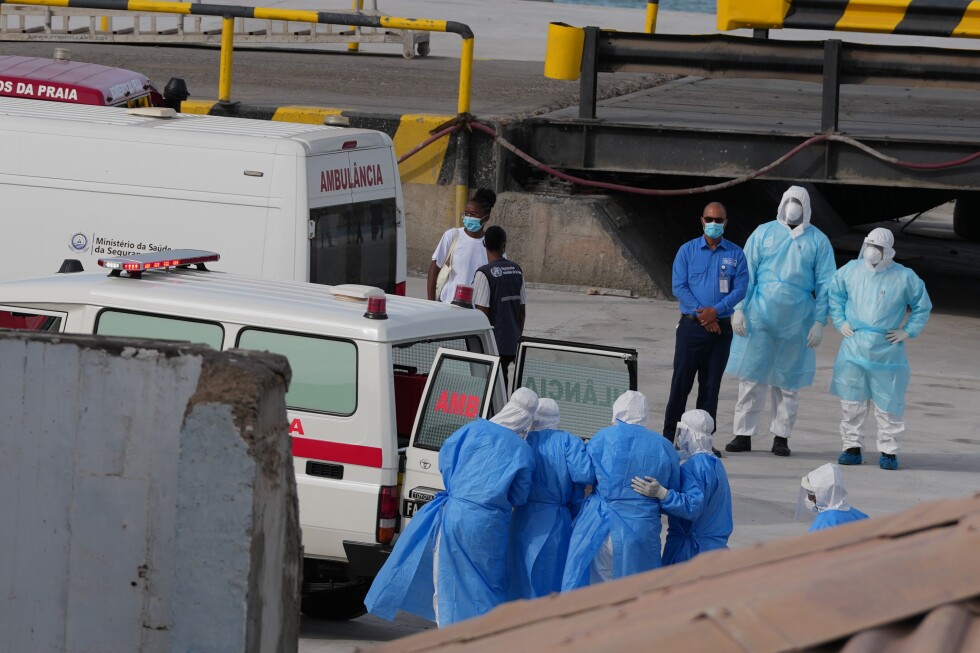
Spanish authorities are implementing an elaborate reception plan for the remaining passengers once the ship reaches Tenerife. Passengers will be evacuated via small boats to awaiting buses only when repatriation flights are ready to depart, minimizing potential exposure.
The United States government has committed to sending a plane to retrieve American citizens, who will be transported to a specialized biocontainment and quarantine facility in Nebraska for assessment and monitoring. British authorities have also arranged flights for their nationals.
Virginia Barcones, Spain’s head of emergency services, indicated that the country has specifically requested medically equipped aircraft for passengers displaying symptoms, highlighting the serious nature of the response.
Health officials across multiple countries are working to locate all passengers who left the ship, particularly those who disembarked at St. Helena. A resident of Tristan da Cunha, another remote island, has been hospitalized with suspected hantavirus symptoms after having been on the vessel. The UK minister of overseas territories, Stephen Doughty, expressed concern for “the islander currently in hospital and their spouse who is isolating.”
In the United States, health departments in several states are monitoring residents who were aboard the ship and have since returned home. So far, none have reported symptoms, which typically develop between one and eight weeks after exposure.
The incident highlights the challenges of containing infectious disease outbreaks in the context of international travel. The delay between the first death and the positive identification of hantavirus gave potentially exposed passengers nearly two weeks to travel to various destinations worldwide, complicating contact tracing efforts.
As the situation continues to develop, health authorities remain vigilant while emphasizing that the overall risk of widespread transmission remains low given the specific characteristics of hantavirus and its uncommon person-to-person spread.
Fact Checker
Verify the accuracy of this article using The Disinformation Commission analysis and real-time sources.

8 Comments
As a precaution, I hope the authorities are carefully screening all passengers and crew who may have been exposed. Rapid identification and isolation of any additional cases will be vital to containing this outbreak. The health and safety of everyone involved should be the top priority.
Hantavirus is not something the general public tends to worry about, so this outbreak is likely causing a fair bit of concern and confusion. Clear, transparent communication from health officials will be essential to reassuring the public and preventing panic.
Tracing the origin of the outbreak is crucial to understanding how it started and preventing further spread. The suspected link to a bird-watching expedition is intriguing, but more details are needed. This is a fluid situation that warrants a cautious, science-based response.
The risk to the general public may be low, but this is still a serious situation that deserves close monitoring. Limiting person-to-person spread of this particular virus variant will be a key challenge. I hope the authorities can get this outbreak under control quickly.
Hantavirus outbreaks are highly concerning due to the severity of the disease and the lack of specific treatments. I’m glad to see the World Health Organization is closely monitoring this situation and providing guidance to national health authorities.
This is a sobering reminder that even relatively rare diseases can pose serious threats, especially in confined environments like cruise ships. I hope the international community can work together effectively to manage this situation and learn from it.
This is certainly concerning news. Hantavirus outbreaks are quite rare, so it will be crucial for health authorities to determine the source and extent of transmission on the cruise ship. Proper containment and medical care for those affected are top priorities.
With the Andes virus variant potentially capable of limited person-to-person transmission, the health authorities will need to be especially vigilant. Strict infection control protocols and detailed contact tracing will be essential to preventing further spread.