


Listen to the article
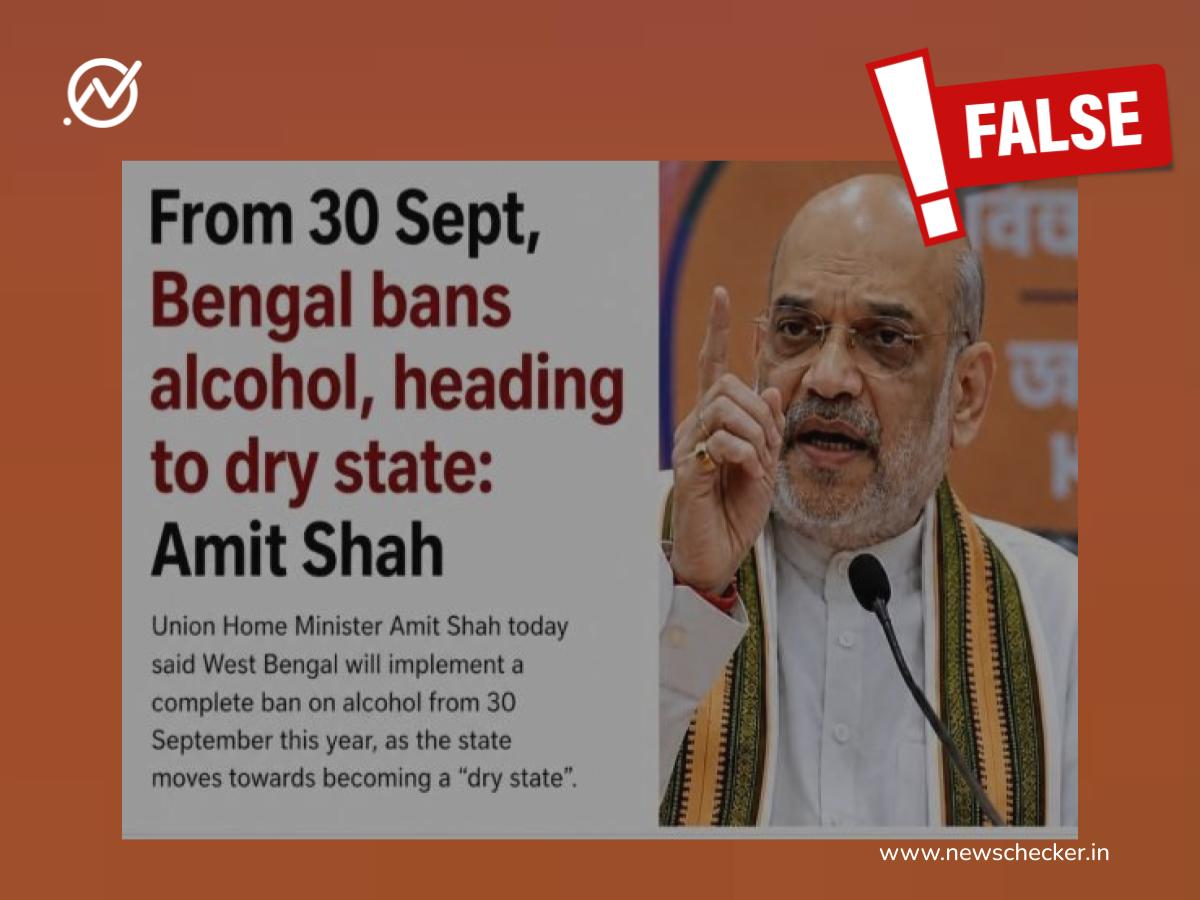
In an era of rapid information spread, a misleading graphic has been making rounds on social media, falsely claiming that Union Home Minister Amit Shah has announced a complete alcohol ban in West Bengal starting September 30. The fabricated news item, designed to mimic the format and branding of India Today, suggests that the eastern state would soon become a “dry state” following the alleged announcement.
The graphic was brought to attention when several concerned citizens forwarded it to Newschecker’s WhatsApp tipline for verification, highlighting the growing public awareness about potential misinformation in circulation.
Upon thorough investigation, no evidence supports this purported announcement. Extensive keyword searches combining “West Bengal,” “Amit Shah,” and “alcohol ban” yielded no credible news reports corroborating the claim. This absence is particularly telling, as a policy shift of this magnitude would typically generate substantial media coverage across multiple outlets.
Further scrutiny of India Today’s official platforms—including its website, YouTube channel, and various social media accounts—revealed no trace of the graphic or any reporting on such a significant policy announcement. The media organization has made no statement regarding West Bengal’s alcohol policies in recent communications.
Most definitively, the Press Information Bureau (PIB) Fact Check division has officially labeled the image as fake. In a post on X (formerly Twitter), the government fact-checking body categorically stated that Union Home Minister Amit Shah had made no such announcement regarding alcohol prohibition in West Bengal.
“This is a fake image. Union Home Minister Amit Shah has not made any such announcement,” the PIB Fact Check division clarified in their official statement dated May 6, 2026.
The fabricated news comes during a politically sensitive time in West Bengal, where liquor policies have historically been contentious issues. Several Indian states, including Gujarat, Bihar, and parts of Manipur, currently enforce prohibition laws, making alcohol sales and consumption illegal. However, West Bengal has traditionally maintained more liberal policies regarding alcohol.
The circulation of such misinformation could potentially create unnecessary public confusion and economic uncertainty, particularly for businesses in the hospitality and beverage industries. West Bengal’s excise revenue from alcohol sales constitutes a significant portion of the state’s income, and any drastic policy change would have far-reaching economic implications.
This incident underscores the growing challenge of misinformation in the digital age, particularly when it involves high-profile political figures and significant policy matters. The convincing design of the fake graphic—complete with news channel branding and formatting—demonstrates the sophisticated nature of modern misinformation.
Media literacy experts emphasize the importance of verifying information through multiple credible sources before accepting or sharing news, particularly regarding significant policy announcements. Official government channels, verified media organizations, and fact-checking platforms serve as crucial resources in distinguishing authentic news from fabricated content.
As digital media continues to evolve, the responsibility falls both on information consumers to practice critical evaluation and on platforms to develop more effective mechanisms for identifying and limiting the spread of false information.
Fact Checker
Verify the accuracy of this article using The Disinformation Commission analysis and real-time sources.

6 Comments
Interesting. I hadn’t heard about this alleged alcohol ban announcement in West Bengal. It’s good to see fact-checking efforts to verify claims like this, especially around policy changes that could have a big impact on the public.
You’re right, major announcements like this should be backed by credible news reporting from multiple sources. The lack of coverage is definitely telling.
Alcohol bans are a sensitive topic, so it’s not surprising that a fabricated announcement like this would gain traction. I appreciate the diligence of the fact-checkers in tracing the origins of this misleading graphic and setting the record straight.
Yes, the lack of coverage from reputable news outlets is a clear sign that this was likely a hoax. Kudos to the fact-checking team for the thorough investigation.
This seems like classic misinformation designed to spread quickly on social media. I’m glad the Newschecker team investigated it thoroughly and debunked the claims. Fact-checking is crucial these days to combat the spread of false information.
Absolutely. With the speed of information sharing online, it’s important to verify claims, especially those that could have significant political or policy implications.