


Listen to the article
Scotland’s universities have expanded their presence in China significantly, with at least 15 joint educational ventures currently operating across the country. While these partnerships promise academic collaboration and cultural exchange, concerns are mounting about the political influences shaping these campuses.
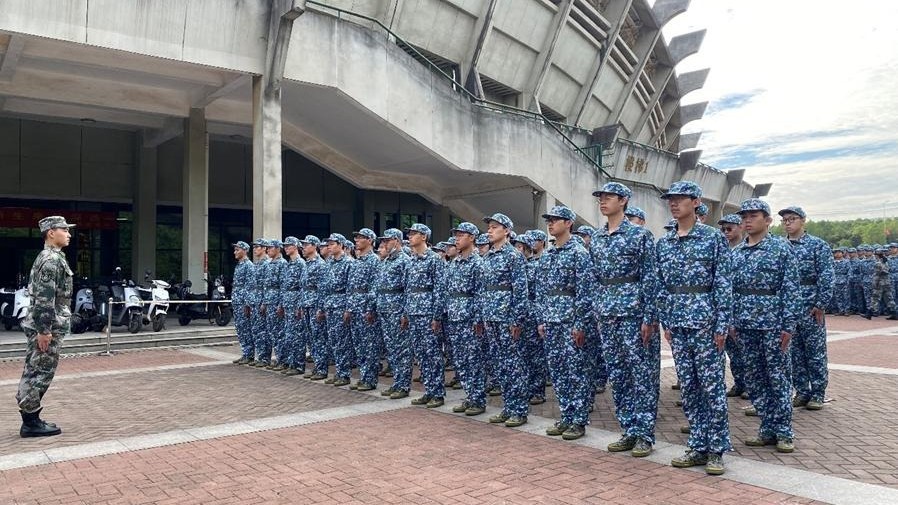
Recent observations reveal a growing military presence at Scottish university campuses in China. Students at these institutions are routinely participating in military drills, receiving weapons training, and studying Chinese Communist Party (CCP) ideology alongside their regular academic programs.
At the University of Glasgow’s joint college with the University of Electronic Science and Technology of China (UESTC) in Chengdu, students undergo mandatory military training for up to two weeks at the beginning of their academic year. The training, conducted by People’s Liberation Army instructors, includes marching drills and political education sessions focused on patriotism and loyalty to the Chinese government.
Similar activities occur at Edinburgh Napier University’s partnership with Shandong Normal University, where students engage in military exercises while dressed in camouflage uniforms. The university’s social media accounts regularly showcase these military activities, presenting them as integral parts of campus life.
The University of Strathclyde’s collaboration with North China University of Technology has also embraced military training as part of its educational model. These programs operate against a backdrop of increased political indoctrination that permeates Chinese higher education institutions.
Dr. Catherine Owen, an expert on China at the University of Exeter, explained that these military drills are standard practice across Chinese universities. “Military training for university freshmen has been mandatory in China since 1985. It’s seen as a way to instill discipline and loyalty to the state,” she noted.
The influence extends beyond physical training into the academic curriculum itself. All students at these joint ventures must complete coursework on Xi Jinping Thought and Marxist theory, regardless of their primary field of study. These ideological components have become increasingly prominent following President Xi’s tightening of control over educational institutions since 2012.
Scottish universities maintain that their academic standards remain uncompromised despite these requirements. A spokesperson for the University of Glasgow stated, “We ensure that all programs delivered at our joint college meet the same rigorous academic standards as those at our main campus. Students receive a world-class education while gaining international experience.”
However, critics argue that the integration of Scottish institutions into this system raises significant questions about academic freedom and institutional values. Professor Kerry Brown, director of the Lau China Institute at King’s College London, commented, “Universities need to be transparent about the compromises they’re making to maintain these partnerships. There’s a balance to be struck between engagement and complicity.”
The economic incentives for these partnerships are substantial. Scottish universities have welcomed thousands of Chinese students to their home campuses, generating significant revenue through international tuition fees. The joint ventures in China provide additional income streams and enhance the universities’ global profiles.
The Scottish government has actively encouraged these educational links as part of its broader strategy to strengthen economic ties with China. A government representative emphasized that “educational partnerships build bridges between cultures while creating opportunities for Scottish institutions to share their expertise globally.”
Critics, including Hong Kong Watch and other human rights organizations, have called for greater scrutiny of these arrangements. They question whether Scottish universities are inadvertently legitimizing a system that restricts academic freedom and political expression.
The situation reflects broader tensions in international higher education, as institutions worldwide navigate the complex relationship between global engagement and upholding core academic values. As China continues to assert greater ideological control over its educational system, Scottish universities face challenging questions about how to maintain these partnerships while preserving their commitment to academic freedom and critical inquiry.
For now, the military drills and ideological education continue at these joint campuses, representing a stark contrast to the academic environment found in Scotland. As these partnerships evolve, the balance between educational cooperation and maintaining institutional values remains a pressing concern for university administrators, policymakers, and academic freedom advocates alike.
Fact Checker
Verify the accuracy of this article using The Disinformation Commission analysis and real-time sources.

7 Comments
While international collaboration is valuable, these reports of mandatory military training and political indoctrination are very troubling. Scottish universities need to thoroughly investigate these allegations and ensure their China partnerships align with core academic principles.
Mandating military drills and political education on university campuses is unacceptable, regardless of the institutional partnership. Scottish universities must take immediate action to protect the academic freedom and safety of their students studying in China.
This is a troubling development that deserves close scrutiny. While international collaboration is important, the reported military and ideological activities on these campuses cross a line and undermine academic integrity.
The presence of military drills and CCP propaganda on Scottish university campuses in China is extremely concerning. These joint programs must be evaluated to ensure they are not compromising academic freedom and the values of higher education.
This is certainly concerning. Military drills and propaganda on university campuses raise serious questions about the extent of CCP influence over these joint programs. I’d like to know more about the specific safeguards and oversight measures in place to protect academic freedom and integrity.
The fact that students are receiving weapons training and studying CCP ideology as part of their studies is extremely alarming. Universities must prioritize maintaining their independence and preventing undue foreign political influence, even in the name of international cooperation.
This is a complex issue, but the concerns raised deserve rigorous scrutiny. The line between academic exchange and political interference seems to have been crossed. Transparency and strong governance are essential to uphold the integrity of these joint programs.