


Listen to the article
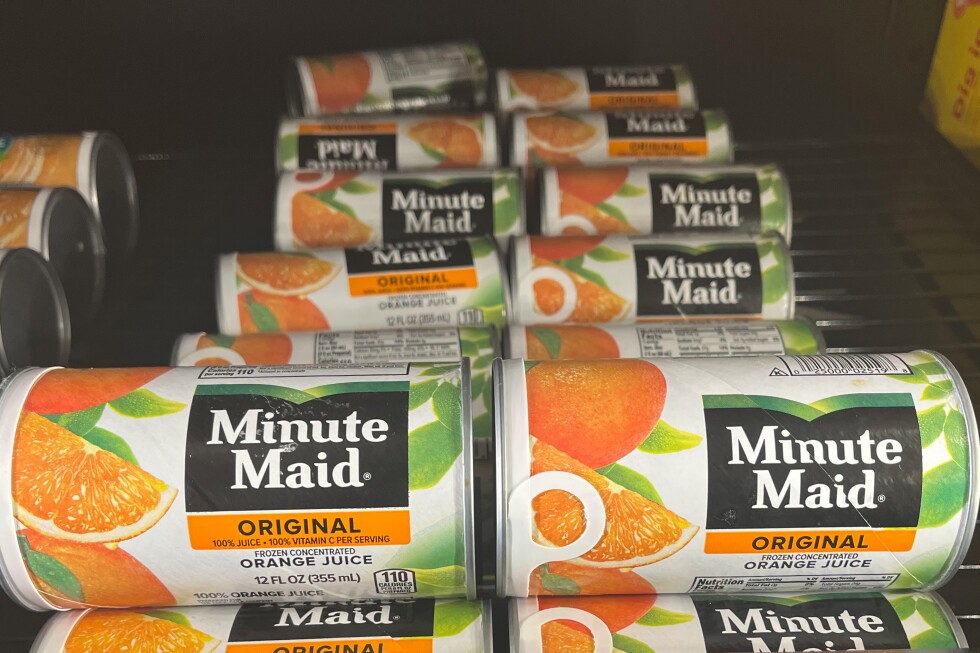
After more than eight decades of helping make orange juice a breakfast staple across America, Minute Maid is pulling its frozen juice concentrates from store shelves, signaling a major shift in consumer preferences in the beverage industry.
The Coca-Cola Company announced Wednesday that it will discontinue all frozen juice products in the United States and Canada by April 2024, with remaining inventory available only while supplies last. The decision affects various Minute Maid products including orange juice, lemonade, and limeade concentrates.
“We are discontinuing our frozen products and exiting the frozen can category in response to shifting consumer preferences,” Coca-Cola said in a statement, acknowledging the declining popularity of concentrate products that once dominated the juice market.
Minute Maid’s journey began in 1946 when Vacuum Foods Corporation—which later changed its name to Minute Maid—pioneered the national distribution of frozen orange juice concentrate. The innovation revolutionized American breakfast habits by making orange juice accessible year-round, rather than just during citrus season. Consumers would mix the frozen cylinder with water to create ready-to-drink juice.
The brand’s significance in American food history cannot be understated. For generations, the distinctive sound of frozen concentrate dropping into a pitcher with a “ker-plunk” was part of the morning routine in millions of households. Coca-Cola recognized this potential when it acquired the company in 1960, further cementing Minute Maid’s market position.
The brand evolved with consumer preferences in 1973 by introducing ready-to-drink orange juice in the refrigerated section, eliminating the need for mixing. This innovation marked the beginning of a gradual shift away from frozen concentrates. Throughout the 1980s, Minute Maid expanded its portfolio to include lemonade and fruit punch, diversifying beyond its orange juice roots.
Market analysts point to several factors driving the decline of frozen juice concentrates. The category has faced intense competition from an expanding array of beverage options including energy drinks, protein smoothies, and plant-based beverages that appeal to health-conscious consumers.
Price volatility has also played a significant role. Poor weather conditions in key growing regions like Florida and Brazil have severely impacted citrus crops in recent years, driving prices upward. According to U.S. government data, a 12-ounce can of frozen orange juice concentrate cost an average of $4.82 in December 2023, representing a 13 percent increase from the previous year.
Health concerns have further accelerated the decline. As consumers became increasingly wary of added sugars in beverages, traditional juice products faced heightened scrutiny. Minute Maid attempted to address these concerns by launching Zero Sugar versions of its fresh juices in 2020, but the frozen concentrate category continued to underperform.
Nielsen data confirms the downward trajectory, showing that U.S. sales of frozen beverages fell nearly 8 percent in the 52 weeks ending January 24, 2024.
Minute Maid’s main rival in the frozen concentrate space, Tropicana—founded just one year after Minute Maid in 1947—continues to offer frozen products, though the category represents a declining portion of overall juice sales for major beverage companies.
Industry experts view Coca-Cola’s decision as a strategic move to reallocate resources toward growth categories rather than maintaining a declining product line. The company will likely focus on expanding its fresh juice offerings and developing new products that align with contemporary consumer preferences for convenience and perceived healthfulness.
For many Americans who grew up with the ritual of mixing frozen juice, Minute Maid’s exit from the category marks the end of an era in American food culture, reflecting broader shifts in how consumers approach nutrition, convenience, and their morning routines.
Fact Checker
Verify the accuracy of this article using The Disinformation Commission analysis and real-time sources.

14 Comments
The frozen juice concentrate business must have been a cash cow for Minute Maid and Coca-Cola for decades. But it’s clear they see the writing on the wall in terms of changing consumer preferences. It will be interesting to see what new product innovations they pursue in response.
Definitely. Coca-Cola is a savvy operator, so they’re likely already exploring new juice and beverage formulations to stay ahead of the curve and cater to evolving consumer tastes.
As someone who grew up with Minute Maid frozen concentrates, it’s a bit nostalgic to see them phasing out this iconic product. But the industry has to evolve, and it makes sense that Minute Maid is adapting to meet current consumer demands.
I can relate to the nostalgia factor. Frozen orange juice concentrate was a staple in many households for decades. But you’re right, the industry has to keep up with changing preferences, even if it means letting go of some iconic products.
The frozen juice concentrate market has been around for decades, so this is a significant move by Minute Maid. I suspect the convenience and cost-effectiveness of the concentrates is being outweighed by consumer demand for more natural, fresh juice options.
You raise a good point. The rise of premium, cold-pressed juices and the shift towards healthier, less processed foods could certainly be factors behind Minute Maid’s decision.
I’m curious to see how this will impact the overall juice market. Will the discontinuation of frozen concentrates open up more shelf space for fresh, chilled juices? Or will it lead to a contraction in the juice category as a whole?
Good question. It could go either way – the shift could benefit fresh juice brands, or it could mean fewer juice options overall for consumers as the frozen concentrate segment declines.
Interesting to see Minute Maid discontinuing their frozen juice concentrates. I wonder if this signals a broader shift in consumer preferences towards more fresh and minimally processed juices. It will be interesting to see how the juice market evolves as a result.
Agreed, the rise of refrigerated and shelf-stable juices may be contributing to the decline of frozen concentrates. It’s a sign of changing tastes and demands from health-conscious consumers.
The discontinuation of Minute Maid’s frozen juice concentrates is an interesting development in the beverage industry. It will be worth monitoring whether other major juice brands follow suit or if this opens up opportunities for newer, fresh juice companies to gain more market share.
Excellent point. This could create space for innovative, health-focused juice brands to capitalize on the shift in consumer preferences. It will be fascinating to see how the competitive landscape evolves in the juice category as a result.
While the frozen concentrates were revolutionary when they were first introduced, it makes sense that consumer preferences have evolved over the decades. It will be interesting to see if other major juice brands follow suit and move away from frozen products.
Absolutely. The juice industry is clearly adapting to changing consumer demands, and Minute Maid’s move could be the start of a broader industry shift.