


Listen to the article
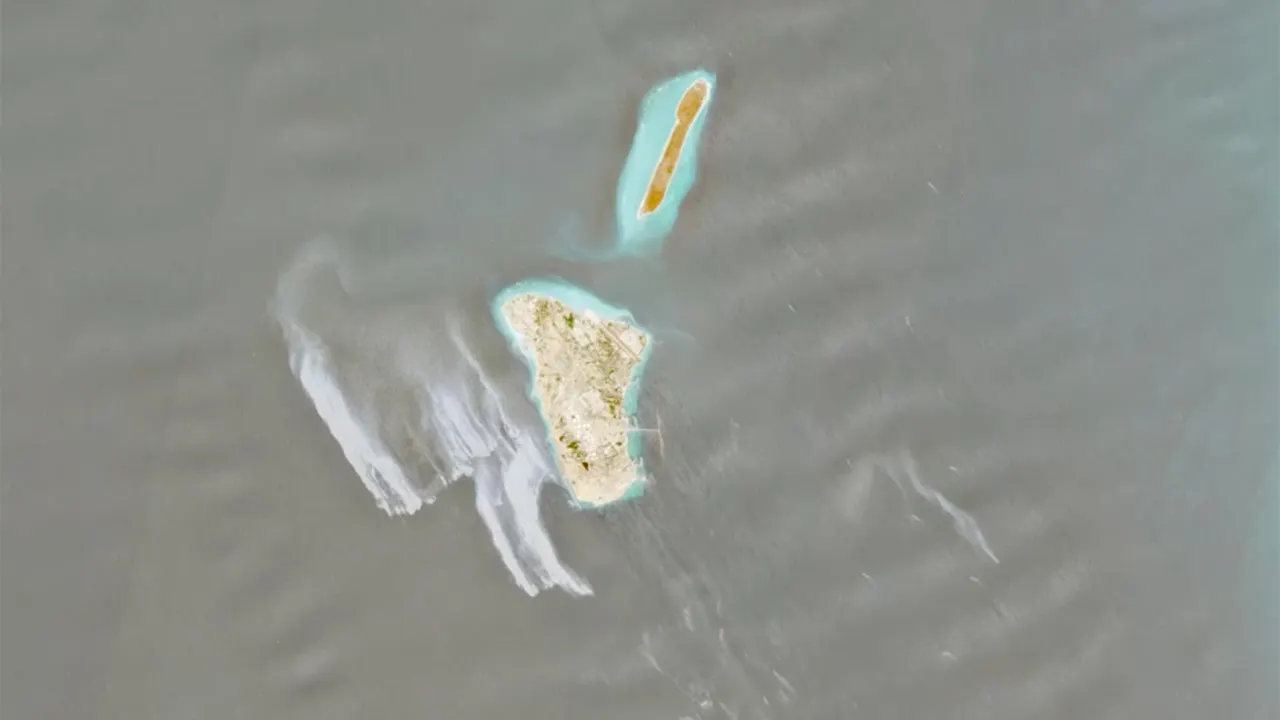
A second oil slick has been detected near Iran’s Kharg Island export hub, intensifying concerns about a potential environmental catastrophe in the Persian Gulf region. Maritime intelligence firm Windward AI reported the new slick on Sunday, estimating its visible area between 12 to 20 square kilometers.
This development follows the discovery of a much larger oil spill on May 8, which now covers approximately 65 square kilometers and contains tens of thousands of barrels of crude oil, according to the U.N. University Institute for Water, Environment and Health. The original slick continues drifting southwest toward Saudi Arabian waters.
“Another possible oil spill was detected today at 11 a.m. local time,” Windward told Fox News Digital, as U.N. officials warned that oil spills in the region could trigger an environmental disaster amid the ongoing Strait of Hormuz crisis.
While Iranian officials have blamed foreign vessels for the spills, maritime experts suggest the main slick is more likely linked to aging infrastructure, pipeline ruptures, or the “war mode” environment that has threatened the strategic waterway since February.
Dr. Kaveh Madani, a U.N. official, expressed serious concern about the situation. “We should worry about the cause of the slick and monitor things carefully to see if there are new developments,” he said. “If this slick gets bigger, we should be seriously worried about there being a leakage of aging infrastructure.”
The environmental implications could be severe. Water circulation in the Persian Gulf is notably slow, meaning pollution can persist for extended periods. This could impact coastal communities, fishing industries, marine life, and even the operation of desalination plants that supply fresh water to millions in the region.
“If it gets closer to centers of population, desalination operations must be halted,” Madani warned, though he noted the immediate risk remains relatively low.
The spill’s location is particularly concerning because it sits near a zone with a heavy concentration of pipelines and energy infrastructure. Madani explained that maintaining these systems has been challenging for Iran even during peacetime due to international sanctions. In the current conflict environment, “a major accident is very likely,” he cautioned.
According to Windward AI, the larger oil slick first detected on May 8 “is believed to be crude rather than bunker fuel and unlikely to have come from a ship, possibly originating from pipeline issues or a failed ship-to-ship transfer.” Tracking data suggests the spill could pass through Qatar’s exclusive economic zone within about four days, with possible landfall near Al Mirfa in the United Arab Emirates in approximately two weeks.
The incident occurs against the backdrop of heightened tensions in the region, as the United States intensifies its “Economic Fury” campaign, tightening sanctions and increasing naval presence near the Strait of Hormuz to curb Iran’s oil exports. Since Iran effectively closed the strait in late February following the outbreak of hostilities, oil tankers have created a bottleneck across the region as the vital oil chokepoint remains largely shut.
“As long as the closure of the Strait of Hormuz continues and the region is in a war mode, the environment would not be a priority,” Madani noted.
Iranian officials have denied responsibility for the spills. Jafar Pourkabgani, a lawmaker representing Bushehr province, claimed the slick was caused by “oil residue and ballast water waste from European tankers” discharged into the sea. Iran’s Oil Terminals Company also rejected reports of leaks near Kharg Island, with its chief executive stating that inspections found no evidence of leaks from storage tanks, pipelines, loading facilities, or nearby tankers.
As the situation develops, environmental monitoring remains crucial in a region where previous conflicts, including the Gulf wars and Iran-Iraq War, resulted in significant ecological damage that impacted coastal communities and marine ecosystems for years.
Fact Checker
Verify the accuracy of this article using The Disinformation Commission analysis and real-time sources.

17 Comments
This is a troubling development that requires immediate attention. The Strait of Hormuz is a crucial global energy chokepoint, so even a relatively small spill could have far-reaching consequences. I hope the relevant authorities can quickly identify the source, contain the damage, and put measures in place to prevent similar incidents in the future.
The news of a second oil slick is extremely worrying, as the Strait of Hormuz is a critical global chokepoint. Addressing the underlying causes, whether geopolitical tensions or infrastructure issues, will be crucial to prevent future environmental disasters in this strategically important region.
This is a concerning development, as the Strait of Hormuz is a critical global oil choke point. Aging infrastructure and geopolitical tensions appear to be contributing factors. I hope the authorities can contain the spill and mitigate the environmental impact.
You’re right, the potential for a major disaster in this vital energy corridor is alarming. Proactive containment and cleanup efforts will be crucial.
Oil spills in the Strait of Hormuz pose a serious threat to marine life and regional economies. Improved monitoring, maintenance of aging infrastructure, and stronger regional cooperation will be crucial to mitigating the risks in this vital global energy artery.
While geopolitical tensions may be a factor, it’s concerning that aging oil infrastructure also appears to be contributing to these spills. Careful monitoring and proactive maintenance will be essential to avoid environmental catastrophe.
Repeated oil spills in this region pose grave risks to marine ecosystems and local communities. Strengthening infrastructure and regional cooperation will be key to preventing future incidents and safeguarding this strategic waterway.
Absolutely. Responsible stewardship of the Strait of Hormuz is critical given its global economic importance. Comprehensive contingency planning and investment in preventative measures are needed.
Oil spills in the Strait of Hormuz are a serious concern, as this region is a vital global energy corridor. Strengthening regional cooperation, upgrading aging infrastructure, and improving environmental safeguards will be essential to mitigating the risks and protecting this sensitive marine ecosystem.
The news of a second oil slick near Iran’s export hub is very concerning. The Strait of Hormuz is a critical global chokepoint, so any disruption or environmental damage in this region can have far-reaching consequences. I hope the authorities can quickly identify the source and take decisive action to contain the spill.
Oil spills in this sensitive region pose serious risks to marine ecosystems and local communities. Strengthening regional cooperation, upgrading aging infrastructure, and improving environmental monitoring and response capabilities will be essential to mitigating the threats and safeguarding the Strait of Hormuz.
This is a concerning development that requires immediate action. The Strait of Hormuz is a vital global energy corridor, so even a relatively small spill could have far-reaching impacts. I hope the relevant authorities can quickly identify the source, contain the damage, and put robust safeguards in place to prevent similar incidents in the future.
The potential for an environmental disaster in this strategic energy corridor is deeply concerning. I hope the relevant parties can work together to thoroughly investigate the causes, contain the spill, and put robust safeguards in place to prevent future incidents.
This is a worrying situation. The Strait of Hormuz is a vital global chokepoint, so even a relatively small spill could have far-reaching consequences. I hope the authorities can quickly identify the cause and contain the damage.
This is a complex issue with significant geopolitical and environmental implications. I’m curious to learn more about the specific factors contributing to these spills and what measures are being taken to address the root causes and prevent future incidents.
Agreed, a deeper understanding of the underlying issues is needed to develop effective solutions. Transparent investigation and collaborative efforts across stakeholders will be key.
Repeated oil spills in the Strait of Hormuz are alarming, as this strategic waterway is vital for global energy security. Addressing the root causes, whether aging infrastructure or geopolitical tensions, will be crucial to prevent future environmental disasters in this sensitive region.