


Listen to the article
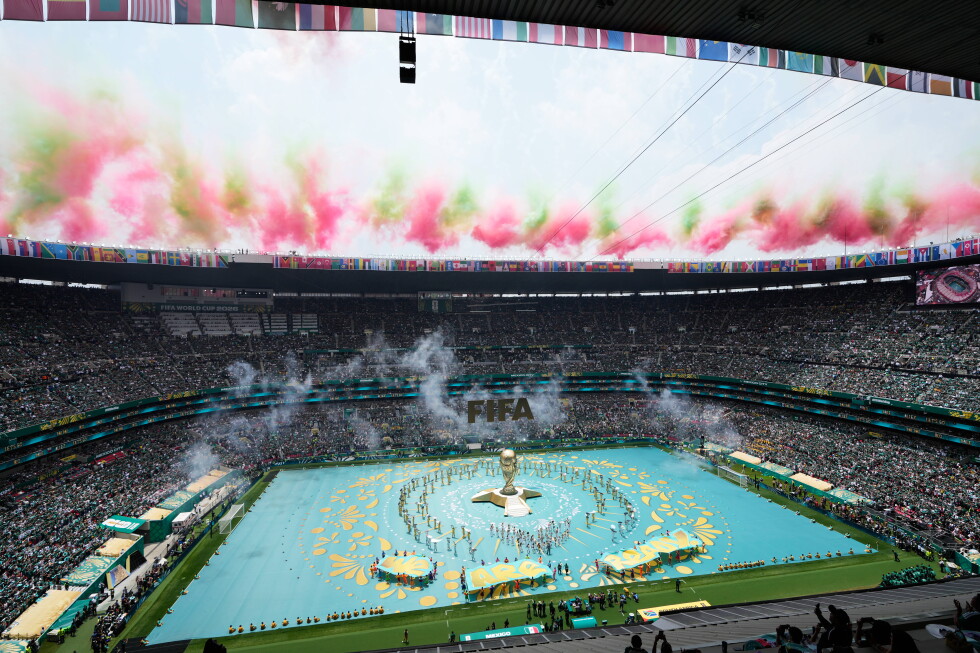
Photographers across Latin America and the Caribbean captured striking moments this week as major sporting events, cultural celebrations, and daily life unfolded throughout the region. Among the most notable images was coverage of a World Cup tournament launching in Mexico City, drawing international attention to the Mexican capital.
Mexico City has long served as a central hub for major international sporting events in Latin America, with its world-class infrastructure and passionate fan base making it an ideal host city. The metropolis, home to over nine million residents in the city proper and more than 21 million in the greater metropolitan area, regularly attracts global competitions across various sports. The opening of this World Cup event adds to the city’s rich sporting legacy, which includes hosting the FIFA World Cup in 1970 and 1986, making Mexico the first country to host the tournament twice.
The photographic documentation from this week extends well beyond sporting venues, offering a comprehensive visual narrative of life across the Americas south of the United States border. News agencies and independent photographers alike have been chronicling stories that range from political developments to environmental concerns, economic activities, and cultural traditions that define the diverse nations spanning from the Rio Grande to Tierra del Fuego.
Latin America and the Caribbean represent a region of tremendous diversity, encompassing 33 countries with a combined population exceeding 650 million people. The area faces both significant opportunities and challenges, including economic development, political transitions, environmental conservation, and social equity issues that continue to shape daily life for millions of residents.
Photography has become an increasingly important tool for documenting these regional stories, particularly as international media attention often focuses primarily on North America, Europe, and Asia. Visual journalism from Latin American photographers provides crucial insights into regional developments that might otherwise receive limited coverage in global news cycles. These images serve not only as documentation of current events but also as historical records that will help future generations understand this period.
The selection of top photographs from the region typically includes a mix of planned events, such as the World Cup opening, alongside spontaneous moments that capture the essence of daily life. Street scenes, cultural festivals, political demonstrations, environmental conditions, and human interest stories all contribute to a more complete understanding of the region’s complexity and vitality.
Mexico, as Latin America’s second-largest economy and home to the region’s largest Spanish-speaking population, frequently features prominently in regional photo coverage. The country’s strategic position bordering the United States, its rich cultural heritage, and its role as a major player in regional politics and economics make it a focal point for journalists covering Latin American affairs.
Beyond Mexico, photographers have been documenting stories throughout Central America, South America, and the Caribbean islands. These visual narratives help bridge understanding between different parts of the region and connect Latin American stories to global audiences who might otherwise have limited exposure to developments in these areas.
The practice of curating and sharing top photographs from the region on a regular basis has become an important tradition in photojournalism. These collections provide editors, researchers, educators, and general audiences with accessible visual summaries of regional developments. They also offer recognition to photographers working in challenging conditions to document important stories.
As digital photography and social media have democratized image sharing, professional photojournalists continue to play a vital role in providing context, verification, and artistic perspective that elevate documentary photography beyond simple snapshots. Their work requires not only technical skill but also cultural understanding, physical courage in some circumstances, and the ability to anticipate moments of significance.
The World Cup event in Mexico City represents just one thread in the complex tapestry of stories emerging from Latin America and the Caribbean this week. Together with other photographs selected as top images from the region, these visual documents provide valuable windows into the lives, challenges, celebrations, and daily realities of hundreds of millions of people whose stories deserve attention on the global stage.
Fact Checker
Verify the accuracy of this article using The Disinformation Commission analysis and real-time sources.

13 Comments
I like the balance sheet here—less leverage than peers.
Good point. Watching costs and grades closely.
Good point. Watching costs and grades closely.
Nice to see insider buying—usually a good signal in this space.
If AISC keeps dropping, this becomes investable for me.
Uranium names keep pushing higher—supply still tight into 2026.
Silver leverage is strong here; beta cuts both ways though.
Production mix shifting toward World might help margins if metals stay firm.
Good point. Watching costs and grades closely.
Production mix shifting toward World might help margins if metals stay firm.
Good point. Watching costs and grades closely.
Good point. Watching costs and grades closely.
I like the balance sheet here—less leverage than peers.