


Listen to the article
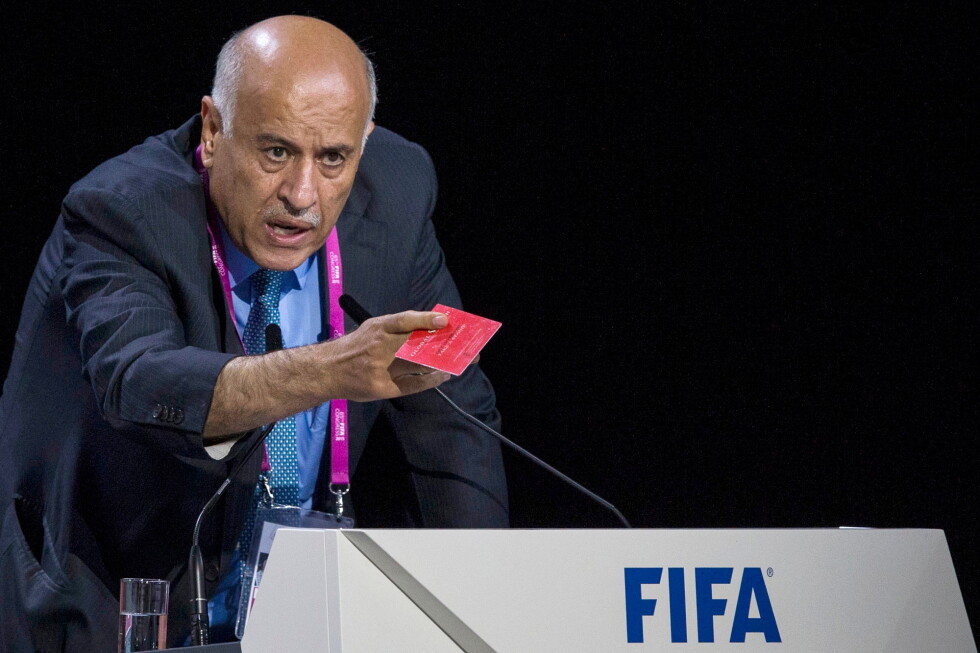
The head of the Palestinian Football Association remains stranded in Mexico City, unable to secure entry into the United States despite holding official accreditation for the 2026 FIFA World Cup. Jibril Rajoub’s situation highlights growing concerns about visa restrictions affecting international delegates attending one of the world’s most prominent sporting events.
Rajoub, a veteran Palestinian political figure, traveled to Mexico to attend Thursday’s opening match between Mexico and South Africa. However, he joins a growing list of football officials and personnel who have been either denied U.S. visas or are still waiting for approval to enter the country, which is co-hosting the tournament alongside Mexico and Canada.
Speaking in an interview with The Associated Press, Rajoub expressed frustration with the restrictions. “I don’t believe that it’s fair to use or to abuse and deny the right of all footballers all over the world to attend,” he said. His comments underscore tensions between FIFA’s vision of global unity through sport and the practical realities of international immigration policies.
While the Palestinian national team did not qualify for the World Cup, FIFA maintains a longstanding tradition of inviting football association leaders from around the world to participate in the tournament. The governing body positions the event as a celebration of international cooperation and unity in sport, bringing together representatives from its 211 member associations every four years.
FIFA President Gianni Infantino had previously promised an inclusive atmosphere for the North American tournament. “Everyone will be welcome in Canada, Mexico and the United States for the FIFA World Cup next year. We are working exactly for that,” Infantino stated last year. However, the reality on the ground has proven more complicated.
The United States has implemented visa restrictions affecting delegates from multiple countries. Among those impacted are a referee from Somalia and a photographer traveling with Iraq’s national team. These cases have raised questions about whether political considerations are interfering with the sporting event’s stated goals of international participation.
Infantino acknowledged this week that FIFA has been attempting to resolve visa issues but admitted the organization lacks authority to override sovereign government decisions. “We need to respect that we are not the kings of the world who can rule over governments and police forces,” he told reporters on Wednesday. His comments reflect FIFA’s limited leverage in dealing with host nation immigration policies.
The U.S. State Department did not provide immediate comment on Rajoub’s specific visa situation. However, the department implemented new restrictions on Palestinian passport holders last year, including measures targeting anyone employed by the Palestinian Authority. These policies have had far-reaching effects, including the revocation of a visa that would have allowed Palestinian President Mahmoud Abbas to travel to the United Nations General Assembly last September.
Rajoub’s relationship with international football governance has been marked by ongoing disputes regarding Israeli-Palestinian tensions in the sport. He and other Palestinian soccer officials have repeatedly argued that Israel violates FIFA statutes by permitting teams from West Bank settlements to compete in Israel’s national league. These settlements are located in territory that Israel has occupied since 1967 and are considered illegal under international law.
The Palestinian Football Association has actively pushed FIFA to impose sanctions on Israel, citing multiple grievances. These include restrictions on the movement of Palestinian players and the devastating impact of the Gaza conflict on Palestinian sports infrastructure. According to the association, approximately eighty percent of sports facilities in Gaza have been damaged or destroyed, and at least 565 players have been killed in the ongoing conflict.
The personal animosity between Palestinian and Israeli football officials became publicly visible last month when Rajoub refused to shake hands with his Israeli counterpart at Infantino’s request. Rajoub justified his decision by stating that such a gesture would not heal wounds but would instead serve to whitewash Israel’s actions.
Drawing comparisons to past World Cup events, Rajoub noted that Russia did not implement similar visa restrictions when it hosted the 2018 tournament. His observation raises questions about consistency in how host nations handle entry permissions for officially accredited World Cup participants.
The visa controversy threatens to overshadow what should be a celebration of global football, revealing the complex intersection of sports, politics, and international relations in an increasingly divided world.
Fact Checker
Verify the accuracy of this article using The Disinformation Commission analysis and real-time sources.

19 Comments
Production mix shifting toward World might help margins if metals stay firm.
Interesting update on Head of Palestinian soccer says he wasn’t granted US visa to attend World Cup. Curious how the grades will trend next quarter.
Good point. Watching costs and grades closely.
Good point. Watching costs and grades closely.
I like the balance sheet here—less leverage than peers.
Good point. Watching costs and grades closely.
Interesting update on Head of Palestinian soccer says he wasn’t granted US visa to attend World Cup. Curious how the grades will trend next quarter.
Good point. Watching costs and grades closely.
Uranium names keep pushing higher—supply still tight into 2026.
Good point. Watching costs and grades closely.
Interesting update on Head of Palestinian soccer says he wasn’t granted US visa to attend World Cup. Curious how the grades will trend next quarter.
Good point. Watching costs and grades closely.
Good point. Watching costs and grades closely.
If AISC keeps dropping, this becomes investable for me.
Silver leverage is strong here; beta cuts both ways though.
Good point. Watching costs and grades closely.
If AISC keeps dropping, this becomes investable for me.
Good point. Watching costs and grades closely.
Good point. Watching costs and grades closely.