


Listen to the article
British Prime Minister Faces Leadership Crisis Following Electoral Defeats
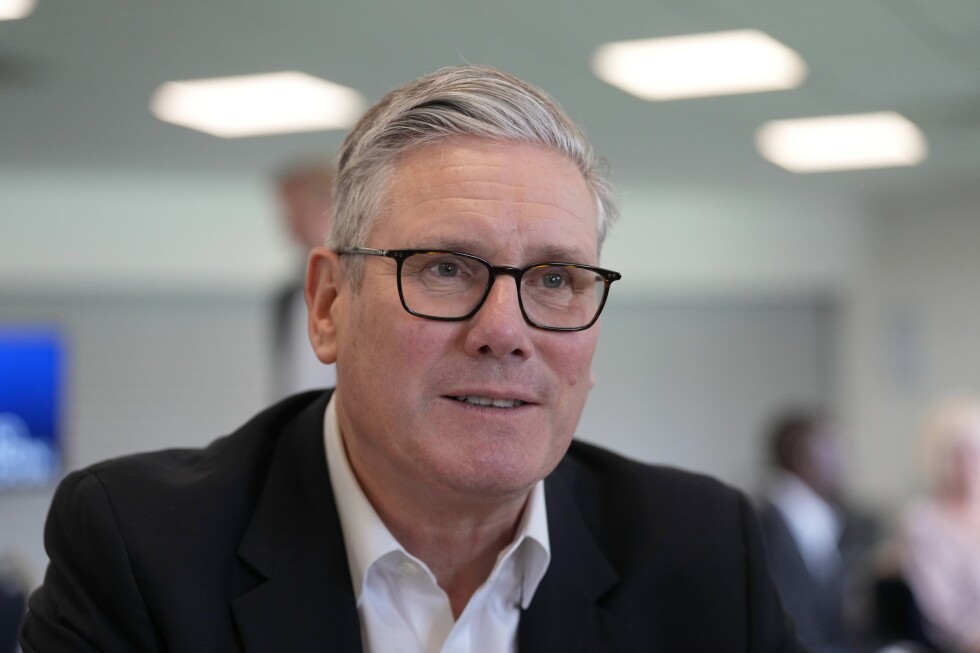
British Prime Minister Keir Starmer’s political future hangs in the balance as he confronts a mounting leadership crisis following disastrous local election results for his Labour Party. The electoral setbacks have prompted dozens of lawmakers to call for his resignation, placing the Prime Minister in a precarious position just two years after his landslide victory.
Starmer plans to deliver a crucial speech on Monday in a bid to convince his party and the public that he can change direction and revive his government’s faltering fortunes. The stakes could not be higher, as Labour MP Catherine West has threatened to trigger a leadership challenge if she finds the speech unsatisfactory.
Former Deputy Prime Minister Angela Rayner, widely regarded as a potential successor, stopped short of explicitly calling for Starmer’s resignation but emphasized that the party “needs to change” and that “the prime minister must now meet the moment and set out the change our country needs.”
The political crisis follows heavy losses for Labour in local elections across England and legislative votes in Scotland and Wales. Political analysts broadly interpreted these results as an unofficial referendum on Starmer’s leadership, revealing his plummeting popularity since taking office.
Starmer’s government has struggled on multiple fronts. Economic growth remains elusive, public services continue to deteriorate after years of underfunding, and the cost of living crisis persists for many Britons. The administration has been further hampered by policy reversals and missteps, including the controversial appointment of Peter Mandelson, who has ties to Jeffrey Epstein, as Britain’s ambassador to Washington.
The electoral landscape reveals an increasingly fragmented British political system. Labour found itself squeezed from both directions, losing support to the right-wing, anti-immigration Reform UK party and the progressive, environmentally focused Green Party. This trend signals the erosion of the traditional two-party dominance by Labour and the Conservatives that has long characterized British politics.
Despite these challenges, Starmer told The Observer newspaper on Sunday that he intends to remain in office for a decade. His immediate strategy focuses on Monday’s speech and an ambitious legislative agenda to be outlined by King Charles III at the State Opening of Parliament on Wednesday.
Central to Starmer’s policy vision is fostering closer ties with the European Union. The UK formally left the EU in 2020, following the narrow victory of the “leave” campaign in the 2016 referendum. Starmer’s government has already taken steps to ease some of the trade restrictions that have burdened British businesses since Brexit.
“Brexit has held back our young people,” Starmer told The Observer, adding that “we have to be closer to Europe.” He has proposed a youth mobility agreement that would allow young Britons to work across the continent for limited periods. However, Starmer has ruled out rejoining the EU or its customs union and single market – steps that would significantly benefit UK businesses but potentially reopen divisive national debates.
None of Labour’s high-profile figures considered potential leadership contenders – including Rayner, Health Secretary Wes Streeting, and Greater Manchester Mayor Andy Burnham – have publicly called for Starmer’s resignation. However, an increasing number of Labour lawmakers are urging the prime minister to establish a timeline for his departure.
Josh Simons, previously a loyal Labour MP, wrote in The Times of London that Starmer “has lost the country” and “should take control of the situation by overseeing an orderly transition to a new prime minister.” The British political system allows parties to change leadership mid-term without triggering a general election.
Catherine West’s move appears designed to pressure more prominent potential candidates into action, though she acknowledged she lacks the support of 81 colleagues required to force a leadership contest.
“Working people sent us a message,” West stated. “We have to listen to that, and we have to change and we have to do it quickly.”
As Monday’s speech approaches, all eyes are on Starmer and his ability to convince his party that he remains the right leader to navigate Britain through its current challenges and restore public confidence in Labour’s governance.
Fact Checker
Verify the accuracy of this article using The Disinformation Commission analysis and real-time sources.

14 Comments
It’s a critical time for the Labour Party and the UK political landscape. Starmer will need to make some bold moves to regain the confidence of the public and his party.
That’s a fair assessment. The stakes are high, and Starmer will need to demonstrate his ability to lead the party and the country through this challenging period.
Interesting to see the political turmoil in the UK. It will be crucial for Starmer to find a way to rally his party and regain public trust. A leadership change could have major implications for the country’s direction.
Agreed. Starmer will need to make a compelling case to convince his party and the public that he can steer the Labour Party in a more successful direction.
The local election losses are certainly a setback for Starmer and Labour. However, it’s still early days, and he may be able to turn things around with the right strategy and messaging.
That’s a fair point. Starmer should use this as an opportunity to reassess his approach and address the concerns that led to the election defeats.
The political crisis in the UK is certainly a complex and evolving situation. It will be interesting to see if Starmer can weather the storm and maintain his leadership position.
You’re right, the outcome is far from certain. A lot will depend on Starmer’s ability to unite his party and reconnect with voters in the coming months.
I’m curious to see if Starmer can regain the confidence of his party and the public. The upcoming speech will be crucial in determining the path forward for the Labour Party.
Absolutely. The speech will be a pivotal moment, and Starmer will need to strike the right tone and present a clear, compelling vision to convince his party and the electorate.
The upcoming speech by Starmer will be closely watched. He’ll need to strike the right balance between acknowledging the party’s setbacks and presenting a compelling vision for the future.
Agreed. Starmer will have to walk a fine line and show that he has the leadership qualities to steer the Labour Party in a more successful direction.
The threat of a leadership challenge from within his own party is a significant challenge for Starmer. He’ll need to demonstrate strong leadership and a clear vision to overcome this crisis.
Absolutely. The internal party dynamics will be crucial, and Starmer will need to navigate them carefully to maintain his position and chart a path forward for Labour.