


Listen to the article
Spanish Cruise Ship Passengers Fear Stigma Amid Hantavirus Outbreak
As the MV Hondius makes its way to Spain’s port of Tenerife, Spanish passengers aboard the hantavirus-stricken cruise ship are increasingly worried – not about contracting the illness, but about the reception awaiting them on land.
Two Spanish passengers who spoke to The Associated Press by phone on Friday described seeing alarming social media posts and sensationalist news coverage that has stoked public fear. Both insisted on anonymity due to concerns about being stigmatized upon their return.
“You go onto social media — they want to dynamite the boat. They want to sink the boat,” said one Spanish male passenger. “You see what’s out there and you realize you’re heading into the eye of a hurricane.”
The female passenger expressed similar concerns, reminding the public that real people are affected. “Many people forget that in here there are more than 140 passengers. In reality, there are 140 human beings.”
Health experts have been working to dispel misconceptions about the outbreak, emphasizing crucial differences between hantavirus and COVID-19. Maria Van Kerkhove, the World Health Organization’s head of epidemic and pandemic preparedness, stated definitively on Thursday: “This is very different virus. I want to be unequivocal here. This is not the start of a COVID pandemic.”
Unlike the highly transmissible coronavirus, hantavirus is typically spread through inhalation of contaminated rodent droppings. The Andes virus strain identified in the cruise ship outbreak is unusual in that it may spread between humans, but such transmission is rare and requires close contact.
Despite these scientific reassurances, the situation has rekindled pandemic-era divisions in Spain. Iustitia Europa, an anti-establishment group that gained prominence opposing COVID restrictions, has called for the cruise ship to be barred from Spanish waters.
“The Canary Islands cannot become Europe’s health laboratory,” the group posted on X. “We demand transparency, responsibility, and protection for Spaniards to avoid repeating the mistakes of the past.”
Regional political leaders have also expressed reservations. Fernando Clavijo, president of the Canary Islands, told Spain’s El País newspaper on Friday that he won’t feel at ease until the ship departs Spanish waters and passengers reach their quarantine destinations. Meanwhile, Madrid regional leader Isabel Díaz Ayuso publicly opposed the decision to transfer the 14 Spanish passengers to a military hospital in the capital for quarantine.
The cautious political response has further fueled passengers’ anxieties about their homecoming. “We’ve seen news that no one wants this boat. That it’s a boat of infected people, a boat of multimillionaires, full of rats,” said the Spanish male passenger. “Society is in some way contaminated with a lot of noise and a lot of lies.”
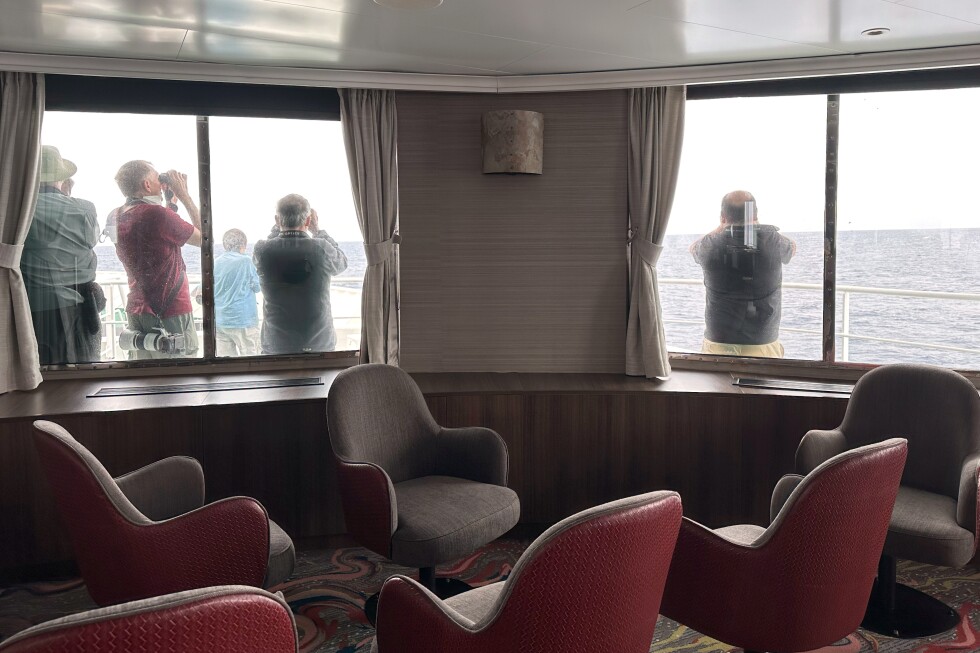
Despite concerns about their reception, passengers have found the ship’s daily routine manageable and relatively calm. Those who leave their cabins for common areas wear masks and maintain social distancing while reading, attending talks, or participating in a 7:30 a.m. exercise group on one of the upper decks. Some venture out for fresh air and birdwatching – originally hoping to return with wildlife photos rather than becoming the focus of global media attention.
Port workers in Tenerife have also expressed concerns, protesting what they describe as insufficient information about safety protocols for the ship’s arrival. Nevertheless, disembarkation could begin as early as Sunday, with Spanish authorities promising official escorts for returning passengers.
Despite the unexpected turn of events, both Spanish passengers interviewed maintained that the experience hasn’t deterred their love of travel. “For me, personally, traveling is a means to… live out what I’m passionate about – which is observing nature and documenting nature,” said the female passenger. “Of course I would go on a cruise again.”
The situation highlights how public health emergencies can quickly become politicized, with scientific facts often overshadowed by fear and misinformation – a pattern distressingly familiar from the COVID-19 pandemic. For the 140 passengers and crew aboard the MV Hondius, the journey has become as much about navigating public perception as returning home safely.
Fact Checker
Verify the accuracy of this article using The Disinformation Commission analysis and real-time sources.

5 Comments
It’s understandable that the passengers are worried, but I hope the authorities and media will handle this situation sensitively. Hantavirus is not nearly as contagious as COVID-19, and demonizing these people is not the answer. Clear, science-based communication is key to preventing unnecessary hysteria.
I agree. Maintaining perspective and compassion should be the priority here. These passengers are already facing a difficult situation – they don’t deserve to be further marginalized upon their return.
This is a challenging scenario, but it’s crucial that the public response is measured and humane. Hantavirus is not easily spread person-to-person, so irrational fear-mongering will only make things worse. The authorities need to provide accurate information and support the passengers, not turn them into pariahs.
This is a concerning situation, but I hope the passengers will be treated with compassion and care upon their return. Hantavirus is not as easily transmitted as COVID-19, and they should not be scapegoated or stigmatized. Public health officials need to provide clear, factual information to allay unwarranted fears.
You’re absolutely right. Spreading misinformation and stoking public panic isn’t helpful. The focus should be on supporting the passengers and containing the outbreak responsibly.