


Listen to the article
The U.S. economy faces a growing threat from adversaries targeting critical undersea cables, potentially enabling nations like China to “inflict devastating economic chaos almost at will,” according to former intelligence officials.
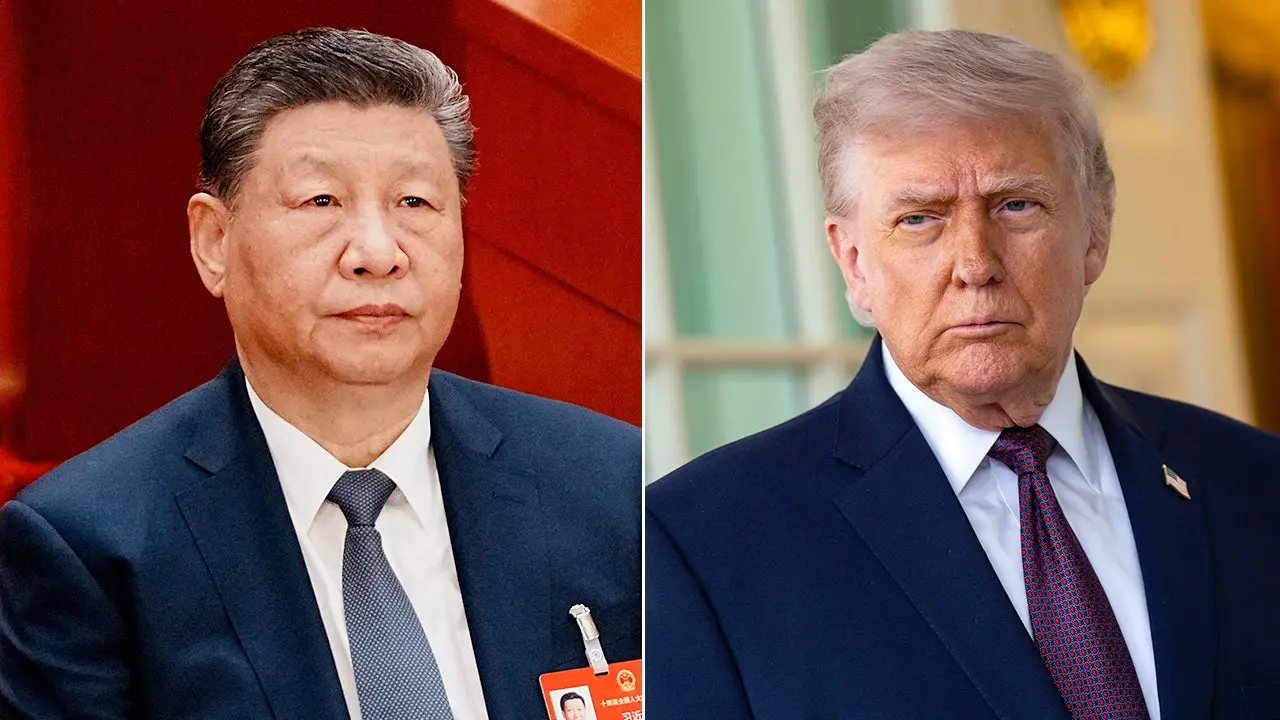
These underwater cables, which carry 99% of global data and support up to $10 trillion in daily financial transactions, represent a vulnerable lifeline for America’s economic and national security infrastructure. The warning comes as President Donald Trump prepares to meet with Chinese President Xi Jinping in Beijing for high-stakes discussions on trade, artificial intelligence, and Taiwan.
Andrew Badger, chief strategy officer at defense tech startup Coalition Systems and a former Pentagon official, told Fox News Digital that “America depends on the fragile nervous system of subsea cables for modern life,” while warning that U.S. adversaries “seek to turn the bottom of the ocean into a battlefield.”
The threat has become increasingly apparent around Taiwan, a major flashpoint in U.S.-China relations. Taiwanese authorities have reported approximately 30 subsea cable incidents in recent years, including episodes where Chinese vessels allegedly severed cables, disrupting communications for months.
“The asymmetric threat — China and Russia are devoting far more resources to attacking undersea infrastructure than the U.S. or its allies are to defending it,” Badger said. “They’ve identified one of our greatest vulnerabilities, and we haven’t caught up.”
Security experts warn that the potential damage from coordinated strikes against American subsea infrastructure would extend far beyond immediate financial costs. Such attacks could disrupt internet access, banking systems, energy markets, and military communications, potentially triggering widespread chaos and political instability.
In response to these concerns, U.S. lawmakers have begun taking legislative action. In April, Senate Republican Whip John Barrasso of Wyoming and Democratic Senator Jeanne Shaheen of New Hampshire introduced the bipartisan Strategic Subsea Cables Act of 2026, aimed at strengthening the security and resilience of these critical underwater systems.
“Undersea cables are important for a variety of reasons. They carry 99% of the world’s internet traffic. They also support $10 trillion in financial transactions each and every day,” Barrasso stated.
The threat appears to be evolving rapidly. In April, China’s Ministry of Natural Resources confirmed a successful deep-sea mission testing an advanced “electro-hydrostatic actuator” capable of cutting through armored submarine cables at depths of 3,500 meters. This technological development suggests a growing capacity to target these vital infrastructure components.
Similar suspicious disruptions have been reported across Europe, raising concerns about “gray-zone” operations—actions designed to probe Western responses while remaining below the threshold of open conflict.
“This is hybrid warfare in its purest form, designed to weaken the adversary below the threshold of declared war,” Badger explained, noting that incidents like anchors dragging across seabeds can provide plausible deniability for what might actually be deliberate acts of sabotage.
The strategic implications are particularly concerning regarding Taiwan. China claims the self-governing island as its own territory, while the United States serves as Taiwan’s largest unofficial ally, supplying defensive weapons under U.S. law. The Taiwan Strait is also a critical artery for resources essential to the global artificial intelligence revolution.
“Beijing could simultaneously target cables landing in the U.S., not to win militarily, but with the goal of breaking the American public’s will to intervene in Taiwan,” Badger warned, suggesting that cable attacks could be used as leverage to deter U.S. engagement in potential Taiwan conflicts.
Not all cable damage can be attributed to adversarial action, experts caution. The International Cable Protection Committee estimates that 150 to 200 cable breaks occur annually worldwide, with most being accidental. However, the growing strategic focus on these vulnerabilities by nations like China and Russia represents a significant shift in security threats.
As AI technologies continue to advance, requiring greater data transmission capacity, the importance of these submarine cables is only expected to increase, making their protection an increasingly critical national security priority.
Fact Checker
Verify the accuracy of this article using The Disinformation Commission analysis and real-time sources.

8 Comments
This is a concerning report on the vulnerability of critical undersea infrastructure. The potential economic impact of disrupting these cables is staggering. I hope the Trump-Xi talks can lead to productive cooperation on securing these vital global networks.
You’re right, the stakes are very high. Protecting these cables should be a top priority for both countries to ensure economic stability and national security.
As an investor in mining and energy stocks, I’m watching this situation closely. Any disruptions to undersea cables could have significant impacts on commodity markets, supply chains, and financial transactions. Proactive risk mitigation will be key.
As someone who follows the mining and energy sectors, I’m curious to see how this undersea cable threat impacts things like commodity trading, energy infrastructure, and financial transactions. It highlights the need for robust cybersecurity measures.
Absolutely, the vulnerability of these cables is a major risk factor that companies and investors will need to closely monitor. Safeguarding this critical infrastructure should be a key focus.
This report highlights the need for robust contingency planning and redundancy measures to ensure the resilience of our critical data and financial infrastructure. Diversification of cable routes and hardening of existing systems should be a top priority.
The geopolitical tensions around Taiwan make this issue even more concerning. I hope the US and China can find a way to cooperate on securing these cables and avoiding any accidental or intentional disruptions.
Me too. Maintaining open communication channels and information sharing will be crucial to mitigating this threat, which could have severe consequences for the global economy.