


Listen to the article
Data Challenges Claims of Gaza Famine as Aid Delivery Increases
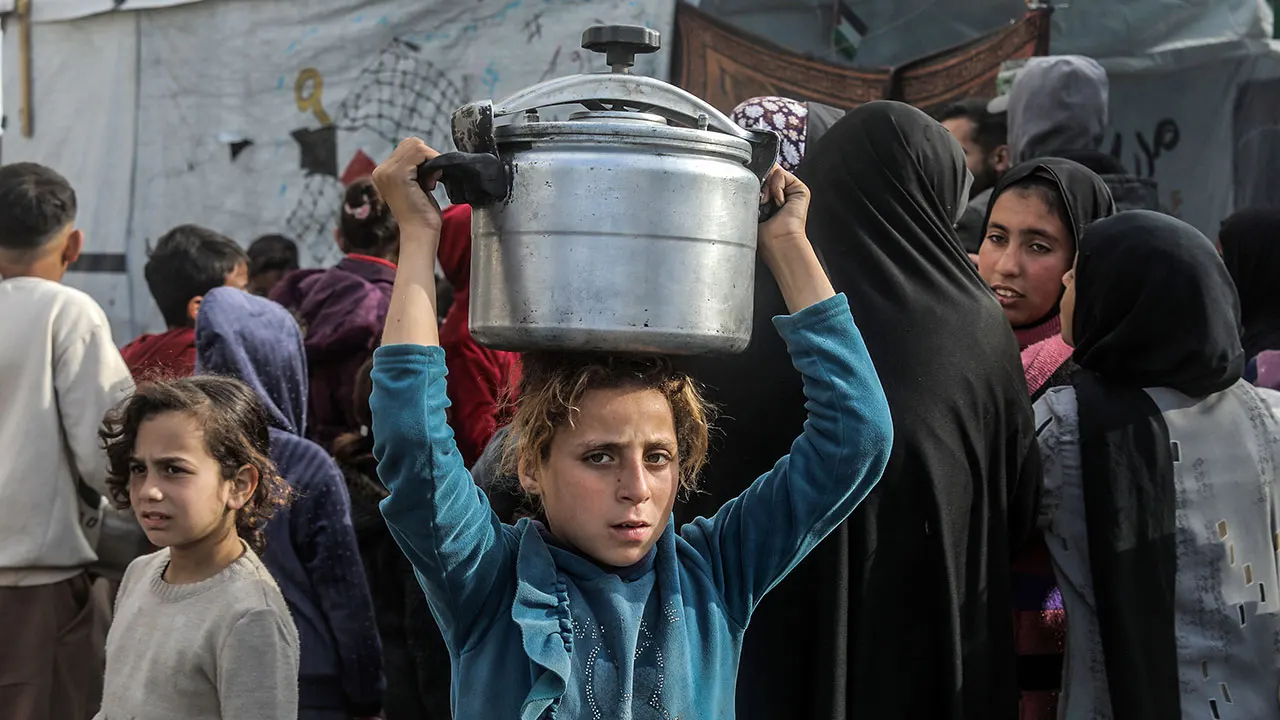
New United Nations data is contradicting widespread claims of famine in Gaza, revealing a significant decrease in childhood malnutrition cases and improved humanitarian aid distribution throughout the region.
According to figures presented at a recent meeting of the Ad Hoc Liaison Committee, which coordinates international aid to Palestinians, cases of acute malnutrition among children aged 6 to 59 months declined by approximately 83% between August 2025 and March 2026. The data shows admissions for malnutrition treatment peaked at 17,384 in August before steadily falling to 3,043 by March.
The Board of Peace, which shared the findings based on UN reporting, noted that most remaining cases are now classified as “moderate” or linked to chronic medical and genetic conditions that require ongoing support rather than acute hunger.
These statistics stand in stark contrast to a surge in social media messaging and international news coverage claiming widespread famine in Gaza—a narrative that has gained significant traction in recent weeks and intensified pressure on Israel.
“What we’re seeing is a recurring pattern in this conflict where the humanitarian narrative is being weaponized,” said Richard Goldberg, senior adviser at the Foundation for Defense of Democracies, in an interview. He suggested the timing of renewed famine claims coincides with diplomatic efforts to pressure Hamas to disarm.
Aid distribution has improved dramatically following the October 2025 establishment of the U.S.-led Civil-Military Coordination Center (CMCC), a multinational hub located in Israel designed to manage post-war Gaza stabilization. The center oversees aid delivery while monitoring a U.S.-brokered ceasefire and coordinating with 60 nations and organizations.
Statistics show weekly truck deliveries into Gaza increased from approximately 1,300 to 4,200 after the CMCC began operations. Equally significant, the percentage of aid trucks diverted en route dropped from roughly 90% to just 1%. The number of people receiving food assistance rose from about 400,000 before the CMCC to approximately 2.1 million after its establishment.
Despite these improvements, April has seen a spike in messaging alleging “engineered starvation” in Gaza. HonestReporting, a U.S.-based pro-Israel media watchdog, identified a pattern where such claims spread from Hamas-linked channels to mainstream platforms within days.
“On April 13, our team began seeing posts about soda and Nutella entering Gaza at the same time that Doctors Without Borders accused Israel of trying to ‘destroy the conditions of life,'” said Jacki Alexander, CEO of HonestReporting. “Content claiming mass starvation has reached millions of views, and the narrative has expanded to include allegations about blocked medical supplies.”
A senior Israeli military official told Fox News Digital that during the ceasefire, humanitarian aid into Gaza has averaged roughly 600 trucks per day—far exceeding the UN’s estimated requirement of 115-130 trucks daily needed to meet baseline food needs.
“It’s impossible with the amount of aid that is going in,” the official said regarding famine allegations. “There is no shortage of food in the Gaza Strip for an extended period.”
Israel’s Coordinator of Government Activities in the Territories (COGAT) suggested Hamas is attempting to exploit global attention shifting toward Iran and Lebanon by pushing renewed narratives about humanitarian collapse in Gaza. According to COGAT, Hamas has repeatedly sought throughout the conflict to portray “a deliberately false narrative of the collapse of the humanitarian system” to increase international pressure on Israel and influence negotiations.
Goldberg noted that the current environment makes it harder for such claims to gain traction compared to earlier stages of the conflict. “You now have months of ceasefire, and the UN and other partners have been directly involved in the humanitarian effort,” he said. “They all have the data…and they are all in a position where there’s a brick wall Hamas is going to find for its disinformation tactics.”
A security official added that Hamas intensifies such campaigns whenever diplomatic pressure rises: “Hamas is trying to stall for time and is using all means to maintain its grip on power. Whenever negotiations over an agreement take place, Hamas intensifies false campaigns about the humanitarian situation in the Gaza Strip in order to secure international support through fabricated crises.”
Fact Checker
Verify the accuracy of this article using The Disinformation Commission analysis and real-time sources.

8 Comments
While the decline in acute child malnutrition is encouraging, the report notes many remaining cases are still classified as ‘moderate’ or linked to chronic conditions. The situation likely remains tenuous, and ongoing support will be needed. Digging into the nuances of the data is important.
That’s a fair point. The data doesn’t necessarily paint a complete picture, and there are likely still significant challenges facing the population. Continuing to provide aid and closely monitor the evolving situation will be crucial.
The UN data seems to contradict the narrative of a dire famine situation in Gaza. While the decline in acute child malnutrition is encouraging, the report notes ongoing chronic issues that require continued support. It will be important to closely monitor the situation and ensure aid is effectively reaching those in need.
Interesting to see UN data challenging the narrative of a Gaza famine. The decline in child malnutrition rates suggests aid distribution and nutrition levels may be improving, contrary to recent reports. It’s important to look at credible data sources when evaluating complex humanitarian situations.
You raise a good point. Digging into the underlying data is crucial to get an accurate picture, rather than relying solely on headlines or social media narratives.
The data highlighting reduced acute malnutrition cases among children in Gaza is certainly noteworthy. It will be important to continue monitoring the situation closely and ensure aid is reaching those in need. Transparency around humanitarian efforts in the region is important.
I agree, sustained monitoring and data-driven assessments are key to understanding the evolving conditions on the ground. Balancing different perspectives and data sources is prudent when dealing with complex, politically-charged issues.
This report provides an interesting counterpoint to the recent social media and news coverage claiming widespread famine in Gaza. It highlights the importance of relying on credible data sources and not jumping to conclusions based on inflammatory rhetoric. Nuanced analysis is needed on complex humanitarian issues.