


Listen to the article
In a decisive move that has rippled through America’s political landscape, the Supreme Court’s ruling in Callais v. Louisiana has effectively lowered barriers for states to implement district maps that dilute Black voting power. The conservative majority decision now requires challengers to prove racist intent behind gerrymandering, a significantly higher bar than previous standards.
Republican lawmakers, particularly in Southern states where most Black Americans reside, have quickly embraced the ruling as validation for redistricting efforts that critics say undermine minority voting strength. The decision comes at a critical juncture, with numerous states already engaged in contentious battles over congressional and state legislative maps.
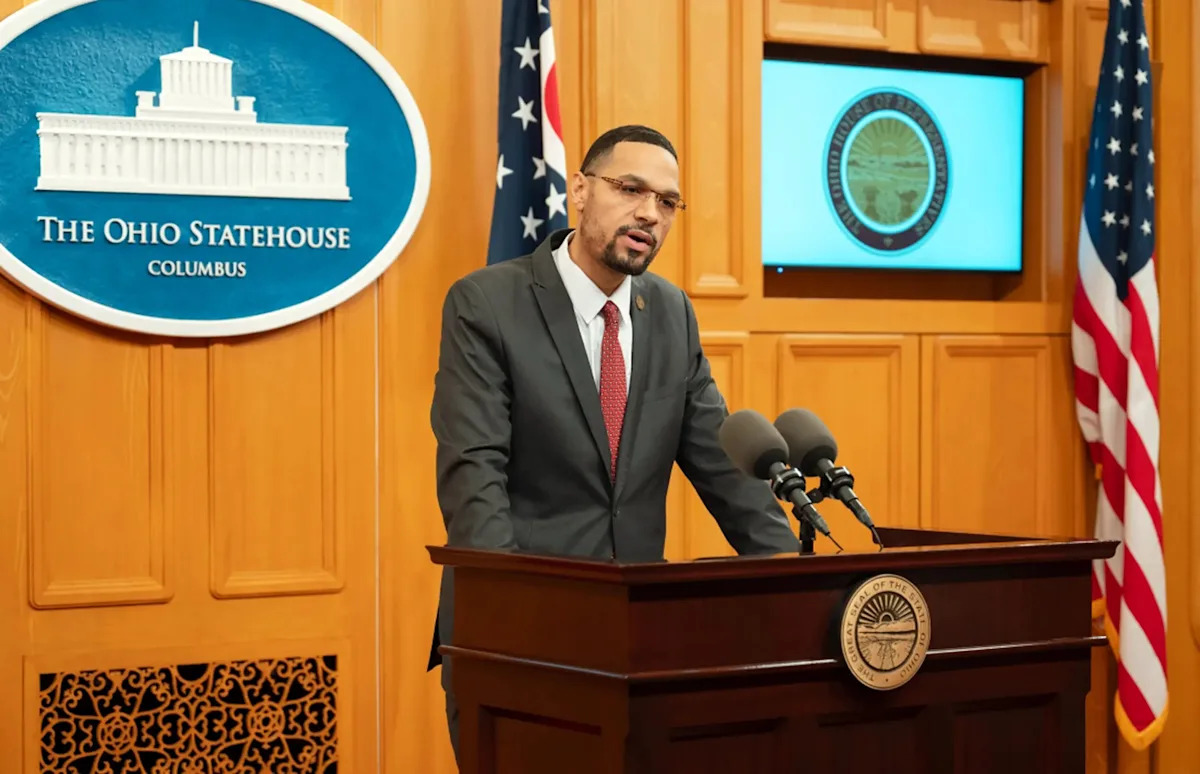
Ohio State Representative Josh Williams, a Black Republican congressional candidate, publicly celebrated the ruling on social media. “I’m a black Republican who currently represents a majority-white district in the Ohio State House and is running to represent a majority-white district in Congress,” Williams wrote on X. “The idea that black Americans need special districts carved out just for them is complete nonsense. It’s a violation of the law and blatantly unconstitutional.”
Critics were quick to point out that Williams himself represents a district shaped by Republican-led gerrymandering in Ohio, where the state’s redistricting process has faced multiple legal challenges in recent years. The irony was not lost on voting rights advocates who noted that Williams’ own political career has benefited from the very redistricting practices he now criticizes when applied to protect minority voting rights.
Williams’ statement aligns with rhetoric from other Black Republican lawmakers who have frequently downplayed systemic racism while promoting the idea that their individual electoral success proves discrimination no longer significantly impacts American politics.
This narrative gained prominence in 2023 when Senator Tim Scott of South Carolina hosted “America’s Starting Five,” a video series featuring Black Republican congressmen Wesley Hunt of Texas, Byron Donalds of Florida, Burgess Owens of Utah, and John James of Michigan. During the program, Hunt suggested their elections in majority-white districts demonstrated that America had overcome racial division, stating they were “literally being judged by the content of our character and not by the color of our skin.”
What Hunt’s statement overlooked is that nearly all participants in the program were elected in states where Republicans had implemented controversial redistricting plans that have faced legal challenges for diminishing Black voter influence. Even Michigan’s map, created by an independent commission rather than partisan lawmakers, has faced scrutiny over its impact on Black representation.
Voting rights experts point to a sobering alternative interpretation of these lawmakers’ success: rather than proving racial progress, it may demonstrate that Black politicians can find electoral success in the current system when they align with the policy agenda of a party that critics say has increasingly embraced policies that disadvantage minority communities.
The Supreme Court’s decision marks a significant reversal from decades of voting rights jurisprudence. Since the 1960s, courts have generally evaluated redistricting plans based on their effects on minority voting power, not just the intent behind them. The new standard makes it substantially more difficult to challenge maps that reduce minority representation, as proving discriminatory intent requires evidence that is rarely documented explicitly.
Civil rights organizations have condemned the ruling as a rollback of hard-won protections under the Voting Rights Act, with some comparing it to the return of Jim Crow-era voter suppression tactics. Meanwhile, Republican officials across multiple states have indicated they will move swiftly to implement new districting plans that could reshape political representation for years to come.
As the 2024 elections approach, the full impact of this decision remains to be seen, but voting rights advocates warn it could significantly alter the political landscape, particularly in states with large Black populations where representation has historically been contested.
Fact Checker
Verify the accuracy of this article using The Disinformation Commission analysis and real-time sources.

7 Comments
As a Black Republican candidate, I can understand the perspective that majority-minority districts aren’t always necessary. However, this ruling seems to weaken important legal tools for combating discriminatory gerrymandering. I hope there will still be strong oversight to protect voting rights.
It’s disappointing to see this ruling potentially making it harder to challenge gerrymandering that disenfranchises minority voters. Ensuring fair, nonpartisan redistricting is crucial for preserving the integrity of our elections.
This decision is concerning and seems to make it more difficult to challenge discriminatory gerrymandering. Protecting the voting rights of all citizens, regardless of race or ethnicity, should be a top priority for policymakers.
While I understand the desire for politicians to have districts that reflect their constituents, this decision could open the door to concerning practices that undermine the democratic process. I hope there are still strong legal safeguards to protect minority voting rights.
That’s a good point. Maintaining robust voting rights protections should be a priority, regardless of partisan interests.
While I respect the lawmaker’s viewpoint, this ruling appears to make it harder to challenge gerrymandering that dilutes minority voting power. Ensuring fair, nonpartisan redistricting is crucial for our democracy.
This ruling seems concerning, as it could make it easier for partisan gerrymandering that diminishes minority voting power. I hope lawmakers will still prioritize fair, non-discriminatory district maps that give all citizens an equal voice.