


Listen to the article
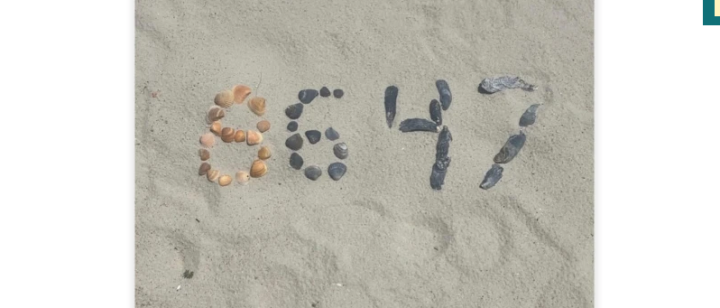
Federal prosecutors have indicted former FBI Director James Comey on charges of threatening President Donald Trump, focusing on Comey’s Instagram post showing seashells arranged to spell “86 47” on a North Carolina beach in May 2025. The case has sparked debate about language interpretation and legal standards for prosecuting threats.
The Department of Justice claims the message constituted a criminal threat, with “86” being interpreted as a directive to kill Trump, who is the 47th president. According to the two-page indictment released April 28, Comey “did knowingly and willfully make a threat to take the life of, and to inflict bodily harm upon, the President of the United States.”
Comey faces two charges: threatening the president and transmitting a threat in interstate commerce via Instagram. Combined, these charges carry a maximum sentence of 10 years imprisonment.
“Threatening the life of the president of the United States will never be tolerated by the Department of Justice,” acting Attorney General Todd Blanche declared at a press conference announcing the charges.
The case hinges on the interpretation of “86,” a term with multiple meanings. While the Justice Department maintains it indicates a threat of physical harm, linguistic experts point out its more common definition is “to throw out” or “to get rid of something.”
Merriam-Webster dictionary defines “eighty-six” primarily as slang meaning “to throw out,” “to get rid of,” or “to refuse service to,” originating from 1930s soda-counter terminology indicating an item was sold out. The dictionary notes that while the term has occasionally been used to mean “to kill,” this usage is “relatively recent and sparse.”
The Oxford English Dictionary similarly defines it as restaurant and bar slang indicating an item is unavailable or a customer shouldn’t be served, without including the definition “to kill.”
Comey removed the post the same day he shared it, explaining: “I posted earlier a picture of some shells I saw today on a beach walk, which I assumed were a political message. I didn’t realize some folks associate those numbers with violence. It never occurred to me but I oppose violence of any kind so I took the post down.”
In a subsequent MSNBC interview, Comey maintained there was “no dark intention on my part” and that he viewed it as “a silly picture of shells that I thought was a clever way to express a political viewpoint.”
President Trump rejected Comey’s explanation, stating on Fox News: “He knew exactly what that meant. A child knows what that meant. If you’re the FBI director, and you don’t know what that meant, that meant assassination, and it says it loud and clear.”
Legal experts have expressed skepticism about the strength of the case. Jimmy Gurulé, a University of Notre Dame law professor and former federal prosecutor, told the Washington Post: “Posting numbers constitute a threat? I just don’t accept that. They are going to have to prove that to a jury — beyond a reasonable doubt… I don’t think they are going to be able to satisfy that legal threshold.”
CNN legal analyst Elie Honig characterized the indictment as “deeply flawed” and “probably fatally flawed,” noting that prosecutors must prove intent to kill or physically injure beyond reasonable doubt—a difficult standard given the ambiguity of the message.
Even Fox News legal analyst Jonathan Turley, a self-described vocal critic of Comey, wrote that the indictment appears “facially unconstitutional absent some unknown new facts.”
When questioned about proving intent given Comey’s denial of any violent meaning, Attorney General Blanche stated that the Justice Department had conducted “a tremendous amount of investigation” and would prove intent “with witnesses, with documents, with the defendant himself.”
This marks the second time Trump’s Justice Department has pursued charges against Comey. In September, he was indicted on two criminal counts alleging false statements to Congress and obstruction, but a federal judge dismissed that case in November, ruling the prosecutor was unlawfully appointed. The Justice Department has appealed that decision.
Responding to the latest charges, Comey released a video statement: “Well, they’re back. This time about a picture of seashells on a North Carolina beach a year ago. And this won’t be the end of it. But nothing has changed with me. I’m still innocent. I’m still not afraid, and I still believe in the independent federal judiciary. So let’s go.”
Fact Checker
Verify the accuracy of this article using The Disinformation Commission analysis and real-time sources.

3 Comments
This case highlights the complexity of evaluating potential threats, especially when coded language is involved. The DOJ’s interpretation of ’86’ as a directive to kill seems quite aggressive. I hope the legal process examines all perspectives objectively.
Interesting case about interpreting coded language. The FBI’s definition of ’86’ seems central to determining if Comey’s Instagram post was a threat against the president. I wonder what other contextual factors could shed light on his intent.
The Comey indictment raises important questions about free speech and how the government defines threats, especially in the digital age. I’ll be following this case closely to see how the courts navigate these nuanced legal and linguistic issues.