


Listen to the article
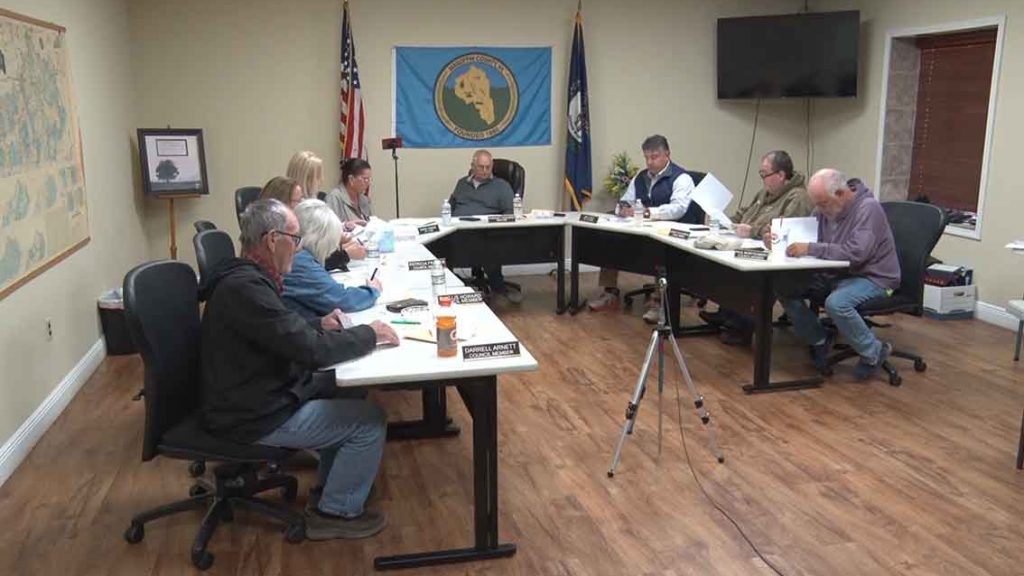
In the eastern Kentucky city of Salyersville, questions have emerged about the process used to select streets for state-funded resurfacing projects, particularly after Mayor Stanley Howard announced during a recent city council meeting that five city roads would receive funding through the Local Assistance Road Program (LARP).
The Independent newspaper, conducting a fact-checking investigation through Open Records Requests, has uncovered discrepancies between the mayor’s public statements and official documentation regarding how the roads were selected and prioritized.
During the council meeting, Mayor Howard stated he had submitted approximately 15 roads for LARP funding consideration, claiming the state ranked each road by need, with the worst sections receiving funding priority. However, documentation obtained through records requests shows a different process may have been followed.
In February 2024, Hinkle Contracting provided quotes for portions of 15 roads in Salyersville: Allen Drive, Auxier Branch, Back Street, Coal Branch, Combs Street, Conley Street, Dixie Avenue, Flint Street, Henry Arnett Branch, Howard Street, Jeff Lovely Hill, Lee Prater, Patrick Drive, Sugar Camp Road, Ward Road, and the walking track at Ramey Memorial Park. The estimates did not include any ranking system for road conditions and were valid for only 15 days.
The application submitted to the Kentucky Transportation Cabinet’s Department of Rural and Municipal Aid for the County Priority Projects Program, dated April 2025, shows the city requested funding for just five streets, affecting a claimed 68 constituents. Those streets included Sugar Camp Road, Henry Arnett Branch, Flint Street, Allen Drive, and Conley Street.
Notably, Henry Arnett Branch is Mayor Howard’s own street, while Flint Street is where his brother resides. Both streets appeared on the first page of the application, prioritizing roads for LARP funding despite being in low-population, low-traffic areas.
The Local Assistance Road Program was established by House Bill 546 to provide local governments with an additional avenue for securing state funding for road projects. The program is administered by the Department of Rural and Municipal Aid within the Kentucky Transportation Cabinet, with a maximum state contribution of $500,000 per project. Local governments can supplement with additional funding.
LARP applications are evaluated using standardized scoring criteria based on safety, congestion relief, asset management, and cost-effectiveness. Projects also require a 10% funding match from the requesting municipality.
Despite Mayor Howard’s announcement that the city had been awarded funding, The Independent has found no documentation of an official LARP funding award or award letter to the city. Instead, the mayor appears to have been referencing projects included in the state’s biennial transportation budget.
The 2026 Legislative Session resulted in a state biennial transportation budget that includes $67,400 for Salyersville city streets in fiscal year 2027. The funded projects include $16,000 for Henry Arnett Street, $19,000 for Sugar Camp Road, three portions of Allen Drive at $5,300 each (with only one section listed as addressing a “hazardous condition”), $6,100 for Conley Street, and $10,400 for Flint Street.
The Independent continues to await responses to additional Open Records Requests seeking documentation of the scoring rubric used to evaluate the roads submitted in the application. Currently, no evidence has been found to support the mayor’s claim that the state ranked each road by need, with the worst sections receiving funding priority.
This situation raises questions about transparency and fairness in the selection process for publicly funded infrastructure improvements in Salyersville, particularly given that roads connected to city leadership received priority in the funding application. The newspaper has indicated it will continue to monitor this developing story and provide updates as more information becomes available.
Fact Checker
Verify the accuracy of this article using The Disinformation Commission analysis and real-time sources.

16 Comments
I like the balance sheet here—less leverage than peers.
Good point. Watching costs and grades closely.
The cost guidance is better than expected. If they deliver, the stock could rerate.
If AISC keeps dropping, this becomes investable for me.
Exploration results look promising, but permitting will be the key risk.
Good point. Watching costs and grades closely.
Exploration results look promising, but permitting will be the key risk.
Good point. Watching costs and grades closely.
Good point. Watching costs and grades closely.
Uranium names keep pushing higher—supply still tight into 2026.
Good point. Watching costs and grades closely.
Good point. Watching costs and grades closely.
Nice to see insider buying—usually a good signal in this space.
Good point. Watching costs and grades closely.
Exploration results look promising, but permitting will be the key risk.
Good point. Watching costs and grades closely.