


Listen to the article
Trump’s Controversial Biden Image Resurfaces Amid Comey Indictment
As former FBI Director James Comey faces federal indictment for allegedly threatening President Donald Trump, attention has shifted to the president’s own history of controversial messaging toward political rivals.
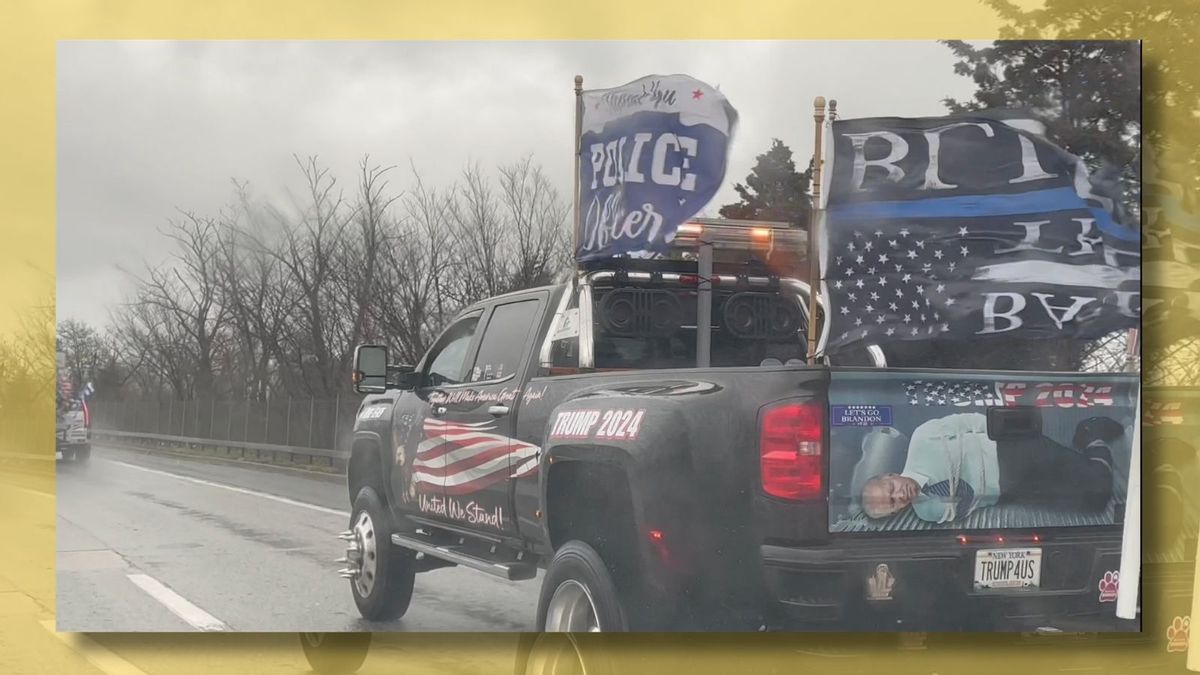
Fact-checkers have confirmed that in March 2024, while campaigning for his second term, then-candidate Trump shared a video on his Truth Social platform that included an image depicting then-President Joe Biden bound and gagged in the back of a pickup truck.
The video, posted on March 29, 2024, showed a convoy of vehicles displaying pro-Trump messages driving along a Long Island, New York, highway. Among them was a pickup truck adorned with “Trump 2024” signs and thin blue line flags. In the truck bed was a large image showing President Biden restrained with what appeared to be ropes or zip ties.
Archives preserving Trump’s past social media activity confirm the authenticity of the post, which was captioned “3/28/24 | LONG ISLAND, NEW YORK.” The video remained on Trump’s account without apology or removal, according to multiple sources who have tracked the former president’s social media presence.
The image has resurfaced in public discourse following the April 2026 indictment of Comey, who was charged by a federal grand jury for allegedly threatening President Trump. The case stems from a May 2025 social media post in which Comey shared a photograph of seashells arranged to form “86 47” on a beach with the caption “Cool shell formation on my beach walk.”
Republican officials interpreted the post as threatening, arguing that “86” – slang often used in food service to indicate removing something – combined with “47” (Trump is the 47th president) constituted a veiled assassination threat.
The contrast between the legal consequences faced by Comey and the apparent lack of repercussions for Trump’s provocative content has sparked intense debate about consistency in how threatening political speech is defined and prosecuted.
The truck in Trump’s video also displayed black-and-white American flags with a blue line, symbols commonly associated with support for law enforcement but which have also been adopted by some white supremacist groups, according to research published by Politico in 2020.
Political analysts note that the incident highlights the increasingly contentious nature of American political discourse, where imagery once considered beyond the pale of acceptable political communication has become more commonplace.
“The normalization of violent imagery in political messaging represents a significant shift in campaign tactics,” said Dr. Elena Ramirez, professor of political communication at Georgetown University. “What would have ended a campaign a decade ago is now often dismissed as merely provocative or attention-grabbing.”
The Department of Justice has not commented on whether Trump’s social media activities have been reviewed under the same legal framework being applied to Comey’s case.
Media watchdogs point out that this incident is part of a broader pattern of inflammatory content shared by political figures across the spectrum, though few examples have featured a sitting president depicted in such a manner.
As Comey’s legal team prepares his defense, the case continues to raise questions about the boundaries of protected political speech and the selective application of laws governing threats against public officials.
Fact Checker
Verify the accuracy of this article using The Disinformation Commission analysis and real-time sources.

10 Comments
The video’s content is troubling, but we must be cautious about jumping to conclusions. Fact-checking and understanding the full context are crucial before forming any opinions on this matter. Inflammatory political imagery is concerning, but a measured, evidence-based approach is warranted.
Well said. Staying objective and avoiding partisan rhetoric is the best way to navigate these sensitive topics. Rigorous fact-checking and a nuanced understanding of the context are essential.
Wow, this is quite a controversial video. While the imagery seems alarming, I’d encourage fact-checking the details before drawing conclusions. Political rhetoric can get heated, but we should strive for civil, fact-based discourse.
I agree, it’s important to remain objective and not jump to conclusions. Fact-checking is crucial, especially with politically-charged content.
This is certainly a concerning image, but I’d caution against drawing conclusions without thoroughly vetting the facts. Inflammatory political rhetoric is worrying, but we need to ensure we have the full context before passing judgment.
Agreed. In these divisive times, it’s easy for tensions to run high. Focusing on the facts and avoiding knee-jerk reactions is the responsible way to approach this sensitive issue.
The video seems provocative, but we should avoid rushing to conclusions. Fact-checking the details and understanding the full context is important before forming an opinion on this matter.
I concur. Given the charged political climate, it’s critical that we analyze this objectively and avoid sensationalism. Maintaining a level-headed, evidence-based perspective is the best way forward.
This is a sensitive topic that deserves a careful, nuanced analysis. I’ll reserve judgment until the facts are fully established. Inflammatory imagery during elections is concerning, but the context matters.
Good point. In these polarized times, it’s easy for emotions to cloud our judgment. Sticking to the facts and avoiding knee-jerk reactions is the wisest approach.