


Listen to the article
The war involving Iran is creating ripple effects far beyond the battlefield, with one of the clearest impacts showing up in global fertilizer markets, and eventually, on grocery store shelves.
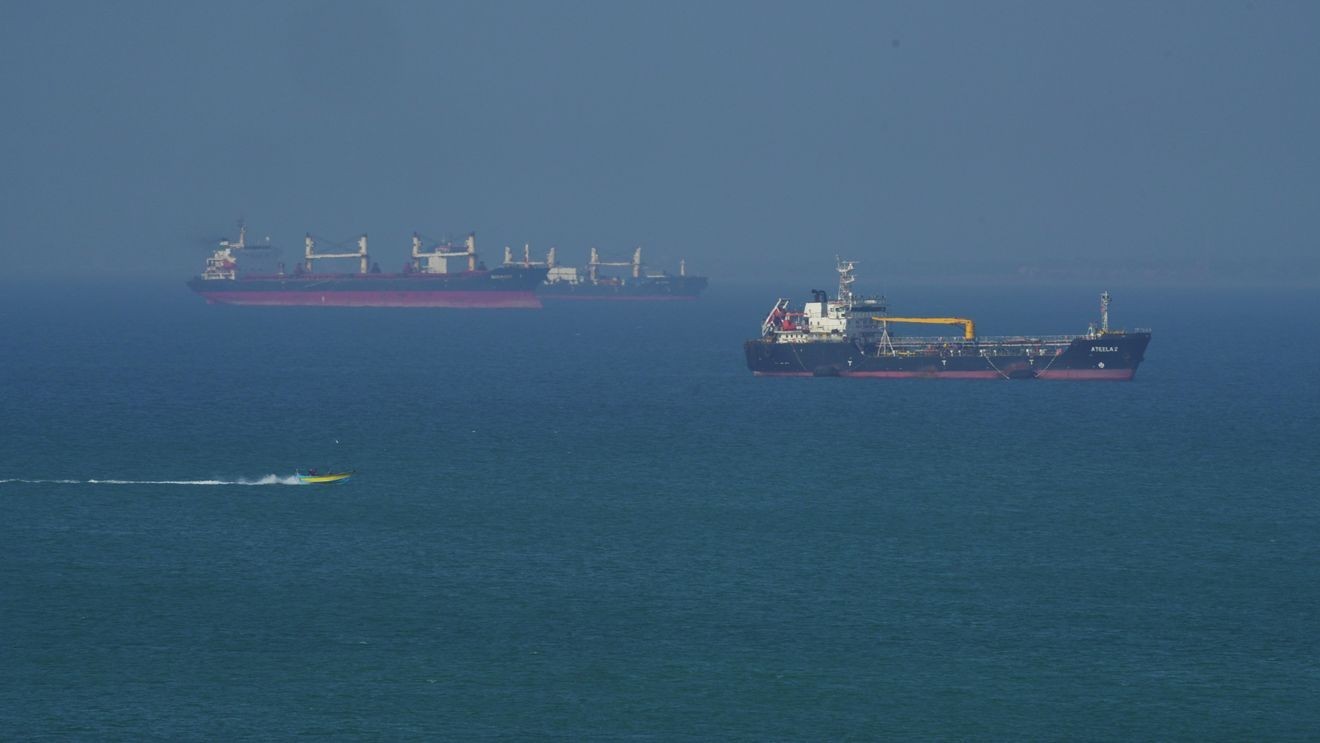
Experts say the issue comes down largely to energy and shipping disruptions centered around the Strait of Hormuz, one of the world’s most critical trade chokepoints. The same natural gas and petroleum infrastructure used to fuel cars is also essential to producing fertilizer, particularly nitrogen-based fertilizers that modern agriculture depends on.
According to the Center for International Environmental Law, roughly 70% of nitrogen fertilizer production relies on natural gas because it is used to create ammonia, the base ingredient for most modern fertilizers. When conflict disrupts energy exports or shipping routes, fertilizer production becomes more expensive almost immediately.
“These cost increases are passed along the entire supply chain,” explains Dr. Sarah Menker, agricultural economist at the University of Illinois. “Farmers pay more to grow crops, and consumers ultimately see those increases at the grocery store checkout.”
The IPES-Food has documented the direct relationship between oil, gas, fertilizer costs, and food prices, demonstrating how spikes in fossil fuel prices quickly translate into higher agricultural input costs. This dynamic has become especially concerning as maritime traffic through the Persian Gulf has dramatically declined.
The United Nations reports that ship traffic through the Strait of Hormuz has collapsed by nearly 95% since late February, delaying millions of tons of fertilizer shipments and driving sharp price increases. The UN has warned that these disruptions are intensifying pressure on both fertilizer availability and food security worldwide.
Urea, the world’s most widely used nitrogen fertilizer, provides a stark example of this market disruption. According to Reuters, urea prices have surged nearly 60% since the conflict began, rising from roughly $450 per ton to more than $700 per ton. Market analysts warn that what began as a shipping crisis could quickly become a broader food crisis if farmers reduce fertilizer application in response to rising costs.
“We’re seeing a concerning scenario developing,” notes James Peterson, commodities analyst at AgriSource Partners. “Fertilizer prices are spiking while crop prices remain relatively flat. That’s a recipe for reduced application rates, which inevitably leads to lower yields.”
The International Food Policy Research Institute (IFPRI) describes this as a poor input-output price ratio – farmers paying more for fertilizer while earning less for their harvests. Historically, such conditions lead farmers to cut fertilizer use, potentially reducing crop yields and weakening future food production.
The countries most exposed to these disruptions are largely in Asia, where dependence on Persian Gulf energy imports remains high. According to The New York Times, Pakistan gets about 81% of its energy imports from Gulf countries, Japan 57%, Thailand 56%, South Korea 55%, and India roughly 50%. China also faces significant exposure, with approximately 35% of its oil imports coming from the region.
Brazil faces particularly severe fertilizer-specific vulnerabilities. Data from Purdue University shows Brazil imports roughly 80% to 90% of its fertilizer supply from the region, making it highly susceptible to prolonged disruption in the Persian Gulf.
The United States is less dependent but not immune. Analysts estimate the U.S. sources roughly 15% to 20% of certain fertilizers from the region, with stronger domestic production helping reduce direct exposure. Still, higher global prices affect American farmers regardless of where fertilizer is produced.
This represents the third major fertilizer market shock in just six years, following the COVID-19 pandemic and the Russian invasion of Ukraine. According to IFPRI, the world recovered from those earlier disruptions by rerouting trade flows, increasing production elsewhere, and implementing government subsidies to stabilize supply chains.
“Those were temporary fixes rather than structural solutions,” explains Dr. Martin Gonzalez, senior researcher at IFPRI. “We’ve been papering over these vulnerabilities rather than addressing them fundamentally.”
IFPRI noted that while the global food system largely adjusted after COVID and the Russia-Ukraine war, the current Middle East conflict introduces a new set of challenges to an already stressed system. The organization says governments managed previous crises by “throwing money at the problem,” but the underlying fragility of fertilizer supply chains was never fully resolved.
That means the current Iran conflict is not just another short-term disruption — it is exposing how dependent the world’s food supply remains on a handful of shipping lanes, energy producers, and increasingly fragile global supply chains.
Fact Checker
Verify the accuracy of this article using The Disinformation Commission analysis and real-time sources.

10 Comments
The relationship between energy, fertilizer production, and food prices is complex but important to understand. This analysis provides valuable insights that can inform discussions around sustainable agriculture and energy policies.
This fact check highlights the vulnerabilities in our modern food system. Policymakers and industry leaders must work together to build more robust and diversified supply chains to ensure food security.
The Iran conflict’s impact on fertilizer markets is a stark reminder of how interconnected our global economy is. Even distant geopolitical events can have significant local consequences.
Absolutely. This underscores the need for greater global cooperation and coordination to ensure the resilience of critical supply chains.
This fact check underscores the need for greater transparency and coordination in global commodity markets. Improved data sharing and early-warning systems could help stakeholders better anticipate and mitigate disruptions.
The reliance on natural gas for fertilizer production highlights the fragility of our modern agricultural system. Diversifying energy sources and supply chains could help strengthen resilience to geopolitical conflicts.
You’re right. Investing in alternative fertilizer production methods, like renewable energy-powered ammonia synthesis, could be a long-term solution to reduce vulnerability.
This is a concerning development. Disruptions to the global fertilizer supply chain could have significant ripple effects on food prices and availability. It’s crucial that policymakers work to ensure stable energy and shipping routes to mitigate these risks.
While the current situation is concerning, it also presents an opportunity to rethink our agricultural practices and supply chains. Perhaps this will spur innovation and more sustainable approaches to food production.
While the current situation is concerning, it’s encouraging to see experts like Dr. Sarah Menker shedding light on these critical issues. Fact-based reporting like this is essential for driving informed decision-making.