


Listen to the article
The Supreme Court’s recent decision in Callais v. Louisiana has ignited fierce debate over voting district maps, with Republicans celebrating what critics view as a significant setback for Black voting rights. The ruling effectively allows racially imbalanced districts to remain unless challengers can prove they were created with discriminatory intent.
The 6-3 decision along ideological lines has immediately sparked reactions from politicians, particularly in Southern states where the majority of Black Americans reside. The ruling represents a substantial shift in how courts will evaluate claims of racial gerrymandering moving forward.
Within hours of the ruling, several Republican lawmakers signaled their readiness to leverage the decision to redraw districts in ways that could diminish Black voting power. This approach has drawn comparisons to Jim Crow-era tactics aimed at suppressing minority representation.
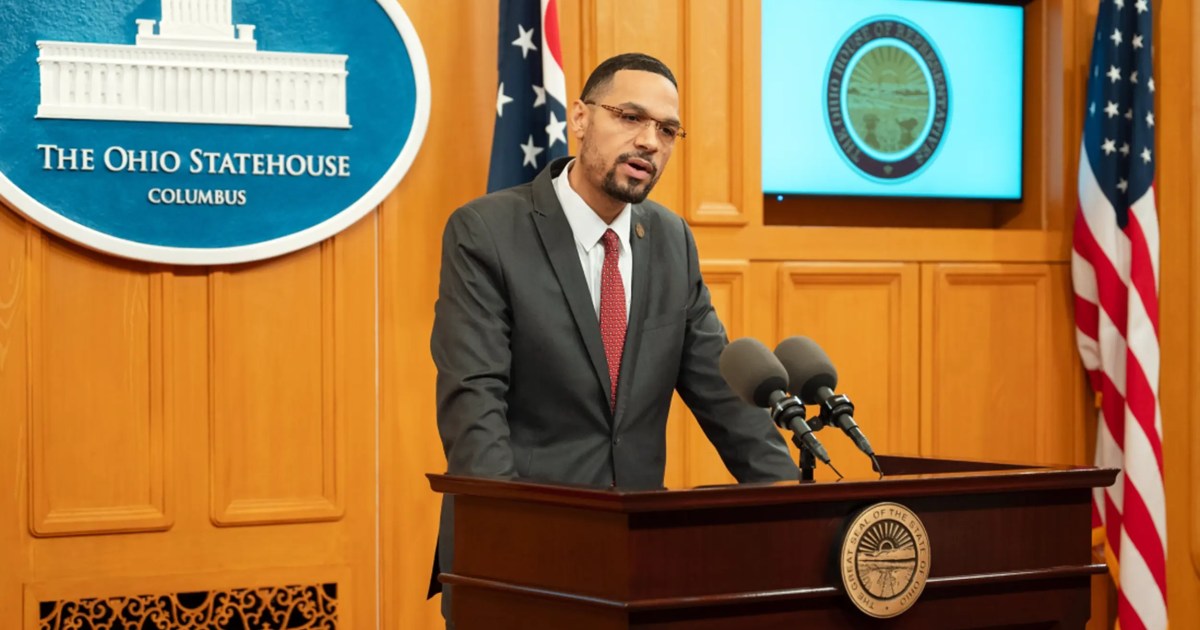
Among those celebrating the decision was Ohio state Representative Josh Williams, a Black Republican currently running for Congress. Williams took to social media platform X to express his support for the ruling.
“I’m a black Republican who currently represents a majority-white district in the Ohio State House and is running to represent a majority-white district in Congress,” Williams wrote. “The idea that black Americans need special districts carved out just for them is complete nonsense. It’s a violation of the law and blatantly unconstitutional.”
Williams’ statement quickly drew criticism, with many observers pointing out that he currently represents a district that critics describe as heavily gerrymandered by Ohio Republicans to favor conservative candidates.
The Supreme Court’s decision marks a significant departure from decades of precedent in voting rights cases. Previously, courts could invalidate district maps that showed discriminatory effects, even without proving intentional discrimination. The new standard requires challengers to demonstrate that mapmakers specifically intended to discriminate based on race.
Civil rights advocates warn this higher burden of proof will make it virtually impossible to challenge discriminatory district maps, as legislators rarely document racist intentions in official records. This change could particularly impact Southern states with histories of voter suppression tactics.
Legal experts note the ruling’s potential to reshape the political landscape across multiple states. Districts currently drawn to ensure minority representation could now face challenges and potential elimination in upcoming redistricting cycles.
The decision comes as several states are already engaged in contentious redistricting battles following the 2020 Census. Alabama, Louisiana, and South Carolina have all been involved in recent court cases over district maps accused of diluting Black voting power.
For Republicans, the ruling represents a victory in their long-standing campaign against what they call “racial preferences” in electoral maps. GOP legislators have consistently argued against districts drawn specifically to create minority-majority constituencies, describing them as a form of reverse discrimination.
Democrats and civil rights organizations have condemned the ruling as a devastating blow to voting rights protections established under the Voting Rights Act of 1965. They argue the decision effectively guts key protections that have helped ensure fair representation for minority communities.
The timing of the decision is particularly significant as it comes ahead of the 2024 presidential election cycle. Changes to district maps in key battleground states could influence not only local and congressional races but potentially impact broader electoral outcomes.
As states consider how to respond to the ruling, the battle over district maps is expected to intensify in the coming months. The decision’s full impact likely won’t be clear until the next major redistricting cycle, but immediate challenges to existing maps are already being prepared in several states.
Fact Checker
Verify the accuracy of this article using The Disinformation Commission analysis and real-time sources.

8 Comments
Redistricting is a thorny issue, with valid arguments on multiple sides. While I may not agree with Rep. Williams, I respect his willingness to defend the court’s decision publicly. Hopefully this spurs constructive dialogue, not just partisan posturing.
This ruling raises serious concerns about voter suppression and racial gerrymandering. While I understand Rep. Williams’ perspective, I worry this decision could further disenfranchise minority communities. We need fair, nonpartisan redistricting to protect the integrity of our elections.
I agree, this ruling seems like a step backwards for voting rights. Curious to hear more about the legal reasoning and potential impacts.
The Supreme Court’s decision is controversial and divisive. I think reasonable people can disagree on the merits, but it’s crucial we have an open, fact-based debate about the implications for voting access and representation.
Well said. It’s a complex issue and I hope lawmakers on both sides will approach it with nuance and concern for all their constituents.
I’m a bit skeptical of Rep. Williams’ stance, given the very real history of racial gerrymandering in this country. But I appreciate him offering his perspective as a Black Republican. This is a complex issue that deserves nuanced discussion.
As a mining and energy investor, I’m more focused on commodity prices and supply chains than redistricting battles. But this ruling could have ripple effects, so I’ll be watching developments with interest.
Fair point. While this is a significant political story, the real-world economic impacts are what matter most for many investors like yourself.