


Listen to the article
Tensions erupted into violence outside an Alice Springs hospital on Thursday as hundreds of angry protesters demanded traditional justice for a man accused of killing a 5-year-old Indigenous girl in Australia’s Northern Territory.
Jefferson Lewis, the suspect in the child’s abduction and death, was being treated at Alice Springs Hospital after suffering severe injuries from a vigilante beating that left him unconscious. The attack occurred when community members discovered Lewis following the recovery of the young girl’s body.
The child, now referred to as Kumanjayi Little Baby in accordance with Indigenous customs that prohibit naming the deceased, was allegedly abducted from an Indigenous community near Alice Springs over the weekend. After an extensive search operation, authorities discovered her body on Thursday, sending shockwaves through the tight-knit Outback communities.
As word spread about Lewis being treated at the hospital, hundreds of community members gathered outside the facility demanding he face “payback” under traditional customary law. In some Indigenous communities, this form of justice can involve physical punishment such as spearing or beating administered by designated community members.
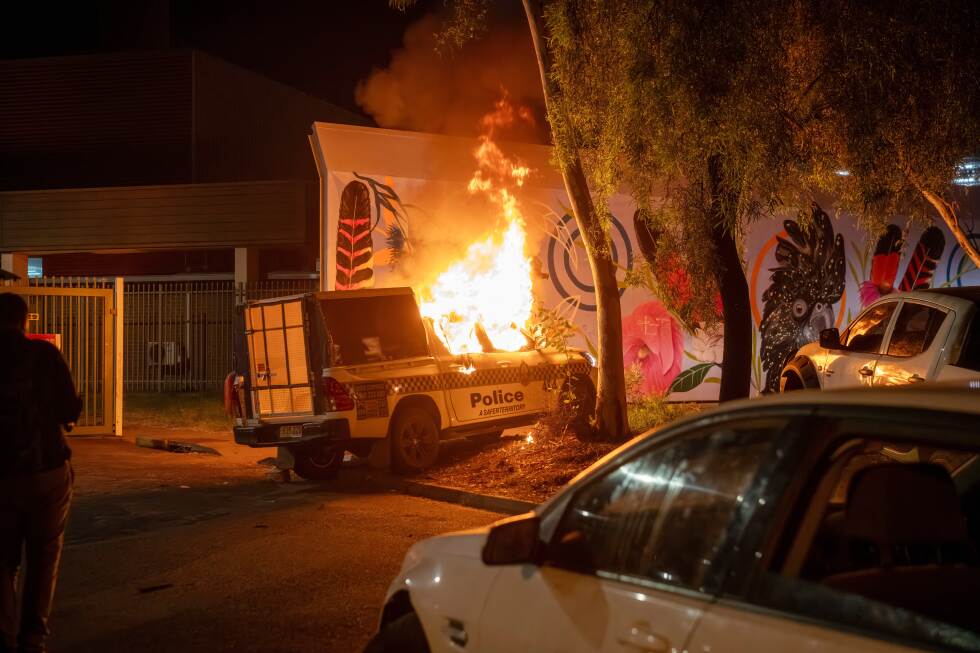
Police were forced to deploy riot control measures, including rubber bullets and tear gas, to disperse the increasingly volatile crowd. Several police vehicles sustained damage during the confrontation, highlighting the intensity of community anger over the child’s death.
Authorities ultimately made the decision to discharge Lewis from the hospital into police custody. Concerned for his safety amid growing unrest, officials transported him approximately 1,500 kilometers (900 miles) north to Darwin, the capital of the Northern Territory, where he is being detained. He is expected to face formal charges on Friday.
The case has highlighted ongoing tensions between Australia’s criminal justice system and traditional Indigenous legal customs, which continue to hold significant importance in many remote communities. While Australia’s legal framework generally does not recognize customary punishments, many Indigenous communities maintain these practices as vital components of their cultural heritage and governance systems.
The incident also underscores the complex challenges facing remote Indigenous communities, which often experience higher rates of violence and limited access to support services. Alice Springs and surrounding areas have previously been flashpoints for discussions about community safety, policing resources, and cultural sensitivity in Australia’s justice system.
Northern Territory Police have increased their presence in the affected communities to prevent further unrest. Community leaders are calling for calm while emphasizing the need for justice through proper legal channels.
The death of the young girl has prompted an outpouring of grief across Australia, with vigils being held in various cities. Indigenous advocacy groups have called for greater attention to the safety and wellbeing of children in remote communities, while emphasizing the importance of culturally appropriate support services for families experiencing trauma.
Authorities have not yet released details about the circumstances of the abduction or the cause of death, citing the ongoing investigation. Social services have deployed additional counselors and support staff to the affected communities to help residents process the tragedy.
As the case moves through the legal system, it will likely continue to raise important questions about justice, cultural respect, and the protection of vulnerable children in Australia’s remote Indigenous communities.
Fact Checker
Verify the accuracy of this article using The Disinformation Commission analysis and real-time sources.

7 Comments
My condolences to the family and community affected by this tragic loss. While I understand the desire for justice, resorting to violence will only lead to more harm. I hope the authorities can work closely with the community to address this case through proper legal channels and traditional practices, with the goal of achieving a just and peaceful resolution.
This is a complex and sensitive situation that requires a delicate balance between respecting cultural traditions and upholding the rule of law. I hope the authorities can find a way to address the community’s concerns while also ensuring a fair and impartial investigation and justice process. The safety and well-being of all involved should be the top priority.
This is a heartbreaking situation that highlights the ongoing challenges faced by Indigenous communities. I hope the authorities can find a path forward that respects cultural traditions while also ensuring a fair and impartial investigation and justice process. The safety and well-being of all parties should be the top priority.
This is a complex situation with competing cultural and legal considerations. I hope the authorities can find a way to balance the community’s need for justice with the rule of law, and provide support and healing for all those affected by this tragic event.
This is a tragic and disturbing incident. While I understand the grief and anger of the community, resorting to violence will only breed more violence. The justice system must ensure a fair and impartial investigation to bring the perpetrator to account through lawful means.
Tragic circumstances like these often bring out strong emotions, but violence is never the right solution. I hope the authorities can work closely with the community to address this case through proper legal channels and traditional justice practices, while prioritizing the safety and well-being of all involved.
The loss of a young life is heartbreaking, and the community’s desire for justice is understandable. However, taking the law into their own hands through vigilante action is not the answer. The authorities need to handle this case with sensitivity and respect for the cultural traditions, while also ensuring due process under the law.