


Listen to the article
European leaders have sharply rebuked Donald Trump’s latest threat to impose higher tariffs on European vehicles, with French President Emmanuel Macron warning that allies should be focusing on cooperation rather than economic confrontation amid global instability.
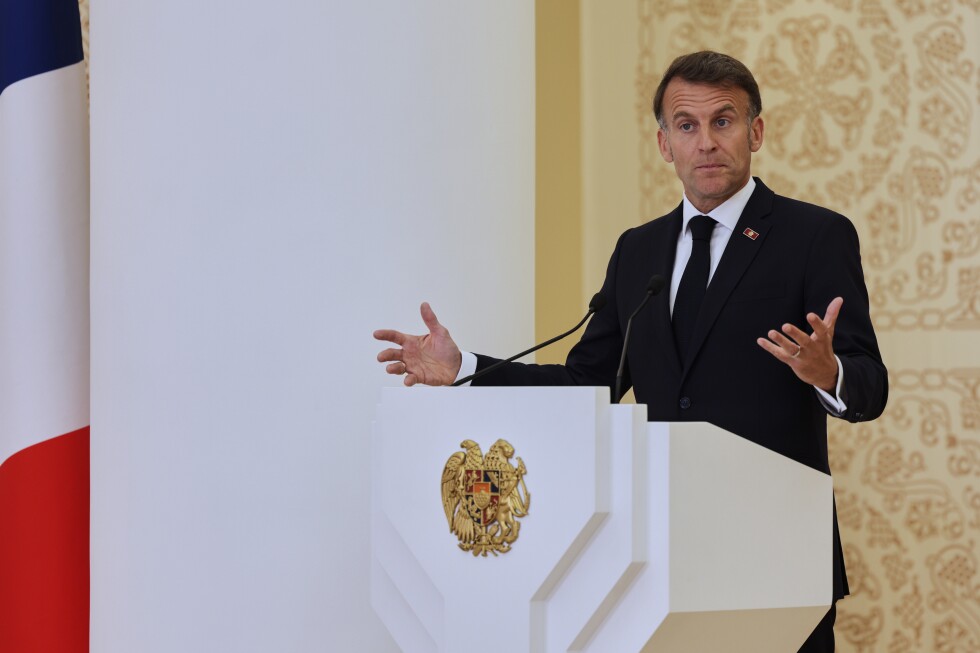
Speaking to reporters in Armenia on Tuesday, Macron emphasized the poor timing of such trade tensions, stating, “Especially in the geopolitical period we are experiencing, allies like the United States of America and the European Union have much better things to do than to stir up threats of destabilization.”
The diplomatic row erupted after Trump announced last Friday his intention to raise tariffs on cars and trucks imported from the European Union to 25%, a significant increase that could further strain a global economy already under pressure from ongoing conflicts in the Middle East and elsewhere.
“For our businesses, our households, our populations, we should rather send a message of stability and confidence,” Macron added, expressing hope that “reason will prevail soon.”
The tariff threats come at a particularly sensitive moment in U.S.-European relations. Trump’s announcement appears to be, in part, a response to recent comments by German Chancellor Friedrich Merz, who reportedly criticized the United States’ handling of negotiations with Iran regarding regional conflicts. Germany, home to automotive giants like Volkswagen, BMW, and Mercedes-Benz, would be particularly vulnerable to increased vehicle tariffs.
In an escalation that moves beyond trade policy, Trump has also threatened to withdraw thousands of U.S. troops stationed in Germany, raising alarm about the future of NATO security arrangements in Europe.
European Commission President Ursula von der Leyen, speaking at the EU-Armenia summit in Yerevan, pushed back against Trump’s claim that Europe wasn’t complying with existing trade agreements. “A deal is a deal, and we have a deal,” she stated firmly. “And the essence of this deal is prosperity, common rules and reliability.”
The dispute centers around a trade arrangement reached between Trump and von der Leyen in July 2025, which established a 15% tariff ceiling on most goods. However, the legal foundation for this agreement has been called into question after the U.S. Supreme Court ruled against the authority Trump had used to implement those taxes.
Von der Leyen, who leads trade negotiations on behalf of all 27 EU member states, assured that the European Union is “prepared for every scenario” should the situation deteriorate further.
Macron echoed this sentiment, warning that if existing agreements were challenged, “it would reopen everything,” and noted that “the European Union has instruments that would then need to be activated” – a veiled reference to potential retaliatory measures the bloc could implement.
Trade officials from both sides were scheduled to meet in Paris on Tuesday to discuss the escalating situation, as both economies face the prospect of a renewed trade war that could impact billions of dollars in commerce.
The automotive industry represents a significant portion of EU exports to the United States, with German manufacturers particularly dependent on the American market. Any substantial increase in tariffs would likely result in higher prices for European vehicles in the U.S., potentially reducing sales and affecting thousands of jobs across the European automotive sector.
This latest trade dispute adds another layer of complexity to transatlantic relations already strained by differences over defense spending, climate policy, and approaches to global conflicts. As both sides prepare for what could be difficult negotiations, the economic implications of heightened trade barriers remain a serious concern for policymakers on both sides of the Atlantic.
Fact Checker
Verify the accuracy of this article using The Disinformation Commission analysis and real-time sources.

10 Comments
Another day, another trade dispute between the US and its allies. Macron makes a fair point that the timing is poor, with so much geopolitical uncertainty already. Allies should be working together, not against each other.
Macron is right that the US and EU have more pressing priorities than escalating trade conflicts right now. Threatening more tariffs on cars and trucks is a risky move that could backfire and hurt everyone.
I agree. Raising tariffs is unlikely to resolve the underlying tensions and may only lead to further retaliation. The US and EU would be better off focusing on areas of potential cooperation.
Raising tariffs on vehicles imported from the EU is a risky move that could backfire and hurt consumers and businesses on both sides. Macron is right to call for stability and confidence, not more threats.
Exactly. Escalating trade conflicts is the last thing the US and EU should be focused on. They’d be wiser to find ways to cooperate and promote economic growth.
It’s concerning to see the US and EU engage in this kind of tit-for-tat tariff threats. Global trade tensions are already high, and this could further destabilize the economy. Macron’s call for reason and stability is prudent.
Macron’s comments highlight the need for the US and EU to take a more measured approach to their trade disputes. Engaging in tit-for-tat tariff threats is a waste of time and energy that could further destabilize the global economy.
While I can understand the US wanting to address perceived trade imbalances, these constant threats of higher tariffs are counterproductive. Macron’s call for stability and cooperation is the wiser path forward.
This trade spat between the US and EU seems ill-timed with so much global instability already. Macron makes a fair point that allies should focus on cooperation, not confrontation, during these turbulent times.
I agree, the last thing the global economy needs right now is more trade tensions and uncertainty. Hopefully reason and diplomacy will prevail.