


Listen to the article
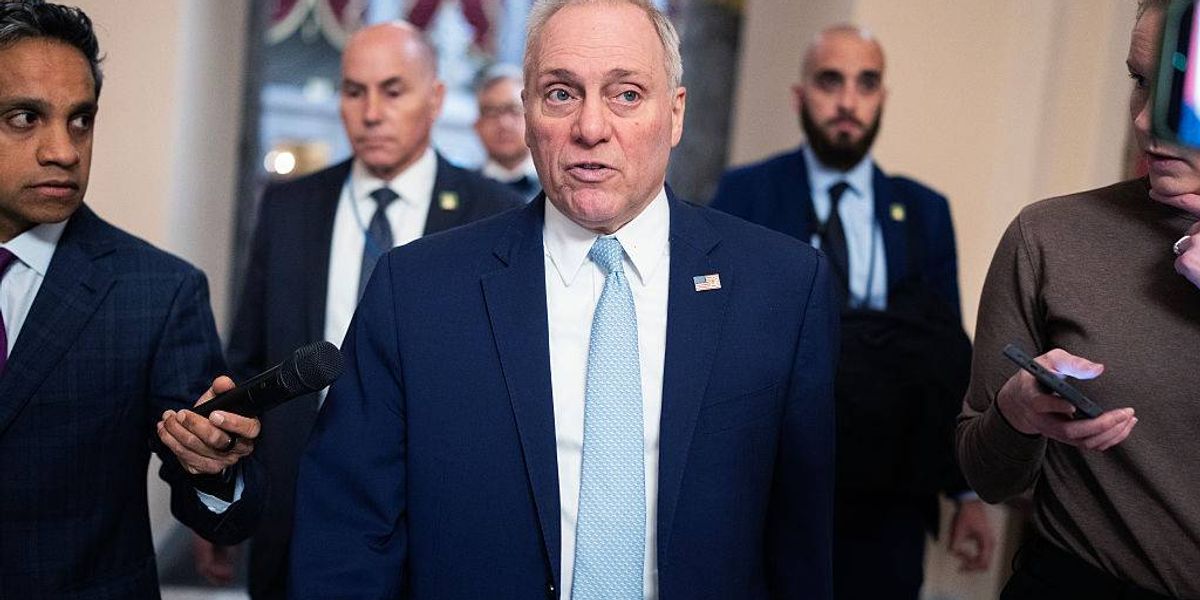
In a heated exchange on CNBC’s “Squawk Box,” House Majority Leader Steve Scalise faced pushback from an unlikely source when host Joe Kernen challenged his claims about historical gas prices.
The Louisiana Republican, defending his party’s economic management amid rising fuel costs, claimed that Americans were paying “almost $6 per gallon” for gasoline two years ago compared to current prices “in the $3 range.” The assertion prompted an immediate fact-check from Kernen, typically seen as sympathetic to Republican positions.
“When were we paying $6 [per gallon]?” Kernen asked, before clarifying, “That wasn’t the average price.”
According to AAA data, the national average for a gallon of gasoline in late October 2023 was $3.53, significantly lower than the current national average of $4.30 per gallon. This represents an increase of nearly 80 cents per gallon over the past year.
The exchange highlights growing tensions as Republicans defend economic policies during a period of increasing oil price volatility. The current spike in fuel costs coincides with escalating military action in the Middle East, which has disrupted global oil markets and created uncertainty for American consumers.
Scalise attributed the recent price surge to “the Iran conflict” but expressed optimism that prices would eventually decline. During the interview, he also claimed Iran was close to acquiring nuclear weapons before recent U.S. military interventions.
“Did anybody want a nuclear-armed Iran?” Scalise said. “I think if you ask most normal people, they would say absolutely not… they were about to get a nuclear weapon, and President Trump stopped that.”
This statement contradicts recent congressional testimony from U.S. Director of National Intelligence Tulsi Gabbard, who told the Senate Select Intelligence Committee that Iran’s nuclear weapons program had been “obliterated” by previous U.S.-led airstrikes and that intelligence showed “no effort since then to try to rebuild their enrichment capability.”
The congressman’s comments on inflation also diverged from recent economic data. While Scalise claimed, “We are lowering inflation, interest rates are starting to come down,” newly released figures from the Bureau of Economic Analysis show the opposite trend. The core personal consumption expenditures (PCE) price index—the Federal Reserve’s preferred inflation gauge—rose to 3.2% in March, reaching its highest level since November 2023.
This uptick in inflation presents a challenge to the administration, which campaigned on promises to immediately address rising costs. During the 2024 campaign, President Trump pledged to end inflation immediately upon taking office, even suggesting grocery prices would begin falling on his first day.
The contentious interview comes as Republicans work to maintain their narrow House majority ahead of the November midterm elections. Scalise expressed confidence in his party’s electoral prospects despite the economic headwinds, suggesting voters would credit Republicans for improvements in the economy compared to previous years.
Energy analysts note that gas price volatility remains largely dependent on global oil markets, which are increasingly sensitive to geopolitical tensions, particularly in the Middle East. While domestic policy can influence energy costs through regulatory approaches and strategic petroleum reserve management, international factors often have a more immediate impact on prices at the pump.
As election season intensifies, economic indicators like gas prices, inflation rates, and interest rates are likely to remain central issues for voters assessing the current administration’s performance against campaign promises.
Fact Checker
Verify the accuracy of this article using The Disinformation Commission analysis and real-time sources.

6 Comments
This exchange highlights the importance of verifying claims, especially on economic issues that affect people’s daily lives. I’m glad the host challenged the GOP leader’s assertions – we need more of that kind of rigorous, impartial scrutiny in the media.
Gas prices are a sensitive topic, but misleading the public is unacceptable, regardless of political affiliation. I hope this episode prompts a closer look at the complex factors driving fuel costs and a more honest, solution-oriented dialogue from our leaders.
It’s concerning to see a GOP leader make false claims about gas prices. Transparency and fact-based dialogue are crucial, especially on important economic issues that impact consumers. I hope this exchange encourages more rigorous scrutiny of political rhetoric.
While I understand the political incentives to spin economic data, providing inaccurate information does a disservice to the public. I’m glad the host pushed back and fact-checked the claims – that’s the kind of accountability we need from the media.
While I understand the political incentives to defend one’s party, spreading misinformation does a disservice to the public. I hope this episode encourages more nuanced, data-driven discussions around energy policy and its impacts. Fact-checking is essential for informed decision-making.
The gas price spike is undoubtedly a complex issue, with global factors at play. I appreciate the host’s pushback and fact-checking – that’s the kind of accountability we need from the media. Curious to hear more analysis on the underlying drivers of the current prices.