


Listen to the article
Pro-Iranian Channels Spread AI-Generated Disinformation About Strikes on Ukraine
False claims of Iranian military strikes against Ukraine are circulating widely across social media platforms through pro-Iranian propaganda channels, security analysts report.
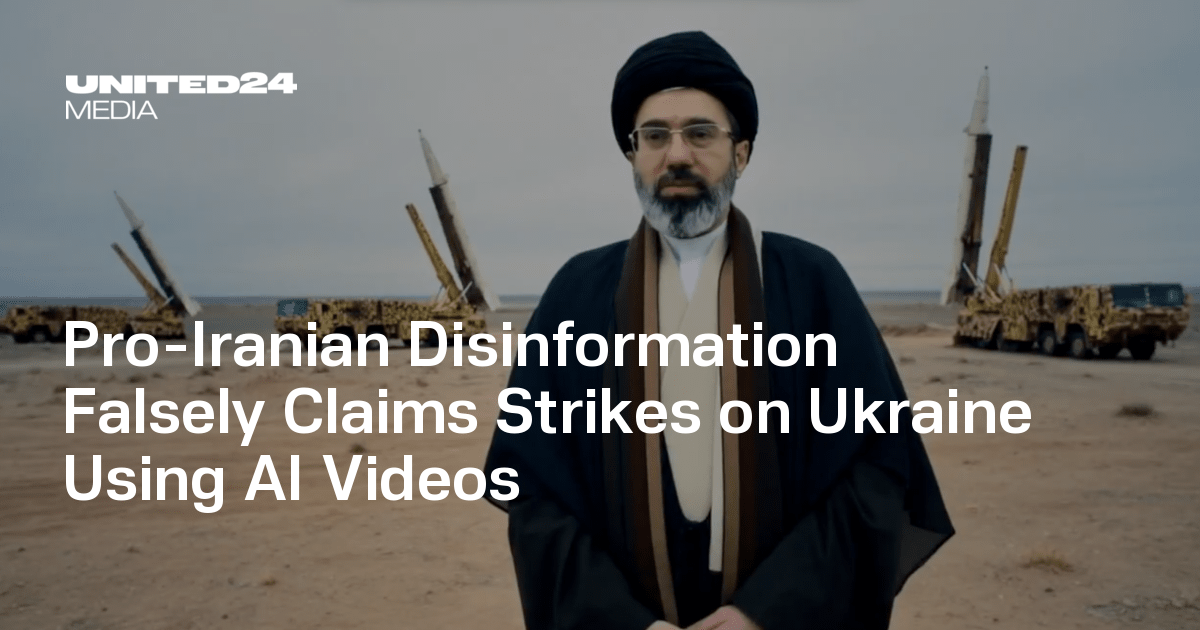
Videos shared widely since April 30 purport to show Iranian attacks on what are described as “Ukrainian intelligence hubs” in Kyiv, Kharkiv, and Dnipro. The propaganda material suggests these Ukrainian facilities were involved in operations targeting Iran’s supreme leader, Ali Khamenei.
Analysts have confirmed all visuals featured in the videos were created using artificial intelligence and do not represent actual events. No Iranian strikes have taken place on Ukrainian territory.
Ukrainian defense media outlet Militarnyi believes this campaign likely represents a coordinated information and psychological operation designed to pressure Ukraine and potentially discourage its cooperation with Middle Eastern allies, particularly those involved in countering Iranian regional influence.
The disinformation effort coincides with intensifying diplomatic engagement between Moscow and Tehran amid escalating regional tensions. Russian President Vladimir Putin recently held high-profile talks with Iranian Foreign Minister Abbas Araghchi in Saint Petersburg, where he expressed strong support for Iran during its “difficult period of trials.”
“We see how courageously and heroically the people of Iran are fighting for their independence, for their sovereignty,” Putin stated during the meeting. “Russia will do everything that serves Iran’s interests and those of the broader region to restore stability as quickly as possible.”
The Kremlin has positioned itself as a potential mediator in the Middle East following recent strikes by the United States and Israel on Iranian targets, which Moscow has publicly condemned. Russian officials have also floated proposals to transfer Iran’s enriched uranium abroad as a tension-reduction measure, though Washington has not embraced this suggestion.
The fabricated videos targeting Ukraine emerge against a backdrop of increasing Iran-Russia cooperation. Security experts have documented extensive Iranian military support for Russia’s war effort in Ukraine, including the supply of Shahed drones and other weaponry that has been used in attacks against Ukrainian civilians and infrastructure.
Meanwhile, tensions continue to mount between Iran and the United States. Iranian officials have reportedly urged citizens to organize “human chains” around power plants nationwide after U.S. President Donald Trump warned that Iran’s infrastructure could become targets if Tehran does not reopen the Strait of Hormuz.
CNN reports that Iran’s Deputy Minister of Youth Affairs, Alireza Rahimi, has announced a nationwide campaign calling on citizens to gather at energy facilities as a symbolic protective measure against potential U.S. strikes.
The spread of AI-generated false information about Iranian military actions highlights the evolving nature of information warfare, with sophisticated visual manipulations increasingly difficult for average viewers to distinguish from authentic footage.
Media analysts warn that such disinformation campaigns are likely to intensify as regional tensions escalate and as artificial intelligence tools become more sophisticated and accessible to state and non-state actors alike.
Ukrainian officials have not formally responded to the fabricated videos, maintaining focus on the ongoing defense against Russian aggression and diplomatic outreach to Western allies for continued military and financial support.
Experts urge social media users to exercise heightened skepticism toward unverified claims of military strikes and to rely on established news sources for information about international security developments.
Fact Checker
Verify the accuracy of this article using The Disinformation Commission analysis and real-time sources.

13 Comments
It’s alarming to see how AI is being leveraged to create fabricated footage and spread disinformation. This underscores the urgent need for robust counter-measures and public education to combat the rise of synthetic media.
This incident serves as a stark reminder of the challenges we face in the digital age. As AI and synthetic media capabilities continue to advance, the need for robust media literacy and fact-checking practices becomes increasingly urgent.
Well said. Staying informed and maintaining a critical eye when consuming information online is crucial in this era of rapidly evolving disinformation tactics. Fact-checking must be a priority for both individuals and institutions.
As technology advances, the battle against disinformation becomes increasingly challenging. Fact-checking, source verification, and critical thinking are essential skills for navigating the modern information landscape.
The coordination between pro-Iranian channels and the timing of this disinformation campaign suggest it’s likely a calculated attempt to influence the information landscape and sway public opinion. We must be wary of such propaganda efforts.
You’re right, the goal appears to be putting pressure on Ukraine and discouraging its cooperation with Iran’s regional rivals. Careful analysis of the sources and motives behind these claims is crucial.
The overlap between this campaign and the growing diplomatic ties between Moscow and Tehran is worth noting. Could this be an attempt to further inflame regional tensions and undermine Ukraine’s international partnerships?
That’s an interesting point. The timing of this disinformation push does seem to coincide with the escalating regional dynamics. Understanding the geopolitical context is crucial in evaluating the potential motivations behind this propaganda effort.
This is a concerning development, as AI-generated disinformation can be highly effective at spreading false narratives. It’s crucial to remain vigilant and verify information from trusted sources, especially regarding military conflicts and geopolitical tensions.
Absolutely, the ability to fabricate realistic-looking footage using AI poses serious risks. Fact-checking and media literacy are more important than ever in this age of advanced manipulation techniques.
It’s disheartening to see how disinformation campaigns can leverage advanced technologies to undermine the truth. Vigilance, critical thinking, and a commitment to factual reporting are our best defenses against such malicious efforts.
The use of AI to fabricate video footage is a concerning development that highlights the need for robust digital forensics and media authentication tools. Maintaining trust in information sources is crucial for informed decision-making.
Absolutely. Developing effective countermeasures against AI-generated disinformation should be a top priority for governments, tech companies, and the media industry. Staying ahead of these evolving threats is essential.