


Listen to the article
The Sultan of Perak has issued a stark warning about the growing threat of artificial intelligence-driven disinformation targeting young people, emphasizing that traditional religious approaches are failing to compete with sophisticated digital manipulation tactics employed by extremists.
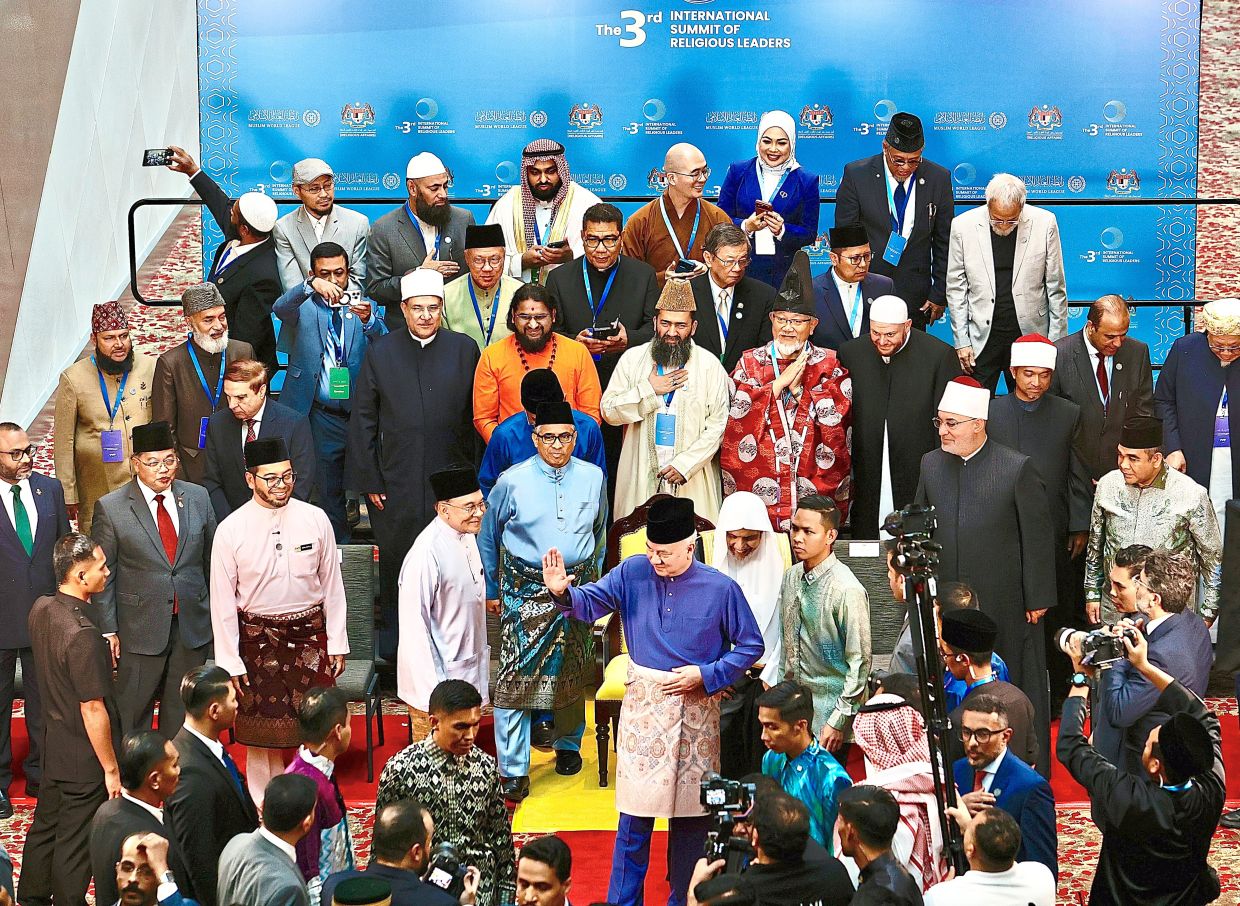
Speaking at the Third International Summit of Religious Leaders in Kuala Lumpur yesterday, Sultan Nazrin Shah delivered a pointed message to religious leaders gathered at the event, which was also attended by Prime Minister Datuk Seri Anwar Ibrahim. The Perak Ruler cautioned that conventional sermons and traditional methods of religious education are proving inadequate in protecting youth from radicalization in the digital age.
“If all we offer in return is a sermon young people find remote, in a language they have stopped speaking, delivered inside a building they have stopped entering, then we have come armed with a manuscript to a contest being fought on iPhones,” Sultan Nazrin said, highlighting the disconnect between traditional religious teaching methods and the digital reality young people inhabit today.
The Sultan emphasized that teenagers are being systematically targeted through digital platforms by algorithms designed to promote divisive narratives. These sophisticated systems present worldviews that pit communities against each other, portraying neighbors as enemies and framing faith as requiring rage rather than peace. Critically, Sultan Nazrin noted that these algorithms are often deployed for profit by individuals who profess the very religions they are weaponizing for extremist purposes.
With the global youth population reaching an unprecedented 1.8 billion people, the scale of potential vulnerability is massive. Muslim youth, being the youngest demographic among all faith communities, face particular risk from digital manipulation tactics. The Perak Ruler described a troubling competition unfolding between violent extremists and legitimate religious teachers for the hearts and minds of young people, with both sides utilizing the same sacred vocabulary and scriptural references.
“The extremist does not approach the young with a dry political manifesto. He comes clothed in scripture, quoting the very verses we quote. He offers the sense of belonging that comes from having an imagined enemy,” Sultan Nazrin explained, illustrating how extremist messaging is deliberately crafted to appear religiously authentic while promoting harmful ideologies.
The speed and reach of AI-generated disinformation represents an unprecedented challenge for traditional religious leadership. These algorithmically driven messages, packaged in language that appeals to grievances and resentments, now reach hundreds of millions of young people at a scale no conventional sermon could match. Sultan Nazrin warned that religious leaders are losing ground in platforms they do not control and using communication methods they have been too slow to adopt.
To address this crisis, the Sultan called for religious leadership that is both rooted in authentic tradition and responsive to contemporary realities. He challenged the common practice of referring to young people solely as “the future,” suggesting this perspective implies their time has not yet arrived and that the present belongs exclusively to those currently holding authority.
Instead, Sultan Nazrin argued that young people are in many ways ahead of their elders, demonstrating greater comfort with diversity and maintaining connections across borders. They are actively organizing movements, driving innovation, and reshaping public discourse in both digital and physical spaces. Rather than viewing youth as passive recipients of wisdom, religious leaders should nurture their idealism and prevent it from deteriorating into cynicism or being exploited by those with destructive intentions.
Prime Minister Anwar Ibrahim reinforced these themes in his own address, presenting Malaysia as a model of religious harmony for the Muslim world. He highlighted that while Islam is the official religion under the Federal Constitution, Malaysia functions successfully as a multi-religious nation where all citizens feel safe and equally protected.
However, Anwar expressed concern about the politicization of religion, acknowledging that major transgressions have been committed in religion’s name despite its fundamental purpose of promoting peace. He noted that religion has been misused to promote discord, intolerance, and injustice while condoning violence.
The Prime Minister shared his personal participation in Wesak and Thaipusam celebrations, emphasizing that engaging with different religious traditions does not diminish one’s own faith. “Different religious celebrations do not deter us from being good Muslims. Interfaith dialogue completes the ecosystem. It does not in any way deter us as steadfast practising Muslims,” Anwar stated, advocating for pluralism as complementary to, rather than conflicting with, sincere religious practice.
The summit’s discussions underscore growing international recognition that combating extremism requires religious leaders to modernize their approach while remaining authentic to their traditions, particularly in addressing the digital-native generation increasingly vulnerable to sophisticated online manipulation.
Fact Checker
Verify the accuracy of this article using The Disinformation Commission analysis and real-time sources.

16 Comments
If AISC keeps dropping, this becomes investable for me.
Exploration results look promising, but permitting will be the key risk.
Exploration results look promising, but permitting will be the key risk.
Exploration results look promising, but permitting will be the key risk.
Nice to see insider buying—usually a good signal in this space.
The cost guidance is better than expected. If they deliver, the stock could rerate.
Good point. Watching costs and grades closely.
Interesting update on
Faith in an Age of Algorithms: How Religion and Technology Intersect in Modern Society
. Curious how the grades will trend next quarter.
The cost guidance is better than expected. If they deliver, the stock could rerate.
Good point. Watching costs and grades closely.
If AISC keeps dropping, this becomes investable for me.
Good point. Watching costs and grades closely.
Nice to see insider buying—usually a good signal in this space.
Good point. Watching costs and grades closely.
Exploration results look promising, but permitting will be the key risk.
Good point. Watching costs and grades closely.