


Listen to the article
In the tense villages and towns of southern Lebanon, the ominous ping of a text message or ring from an unknown number can send families into immediate panic. These are Israel’s evacuation warnings, arriving at all hours as part of its military campaign against Hezbollah, and they’ve become a dreaded feature of daily life for Lebanese civilians.
The warnings come through various channels – text messages to thousands of phones simultaneously, automated calls from strange numbers, sometimes with international country codes, and often confusing maps shared on social media by the Israeli military’s Arabic-speaking spokesperson. The evacuation orders vary dramatically in scope and timing, with some targeting specific buildings while others demand the evacuation of entire regions.
“A legal tool is being used to achieve forced displacement,” explains Hussein Badreddine, a Lebanese expert in international law at the University of Sydney. “When you evacuate entire areas and keep the orders open-ended, that’s when the legality comes into question.”
Since March 2, when Hezbollah launched a surprise missile barrage into northern Israel, breaking a previous truce, Israel has posted 132 online alerts – including seven covering over 50 towns in southern Lebanon since a nominal ceasefire took effect on April 17. These warnings have sparked mass evacuations, with over a million people fleeing their homes at the height of the fighting.
The Israeli military maintains that these warnings aim to protect civilians, claiming Hezbollah has positioned fighters, tunnels, and weapons throughout civilian areas in southern Lebanon. Israel says these warnings comply with “principles of distinction, proportionality and feasible precautions” under international law.
Yet human rights observers have raised serious concerns. Kristine Beckerle of Amnesty International points out critical flaws in the system: “When warnings are issued in the middle of the night, on platforms that not everyone uses, you can’t expect everyone to get up and leave immediately. You have people stuck on the road for 12, 13 hours trying to leave. You have elderly people who can’t move quickly.”
The evacuation orders have emptied entire villages and even Beirut’s southern suburbs, a stronghold of Hezbollah. According to UN spokesperson Stephane Dujarric, over 115,000 displaced people remain in collective shelters across Lebanon.
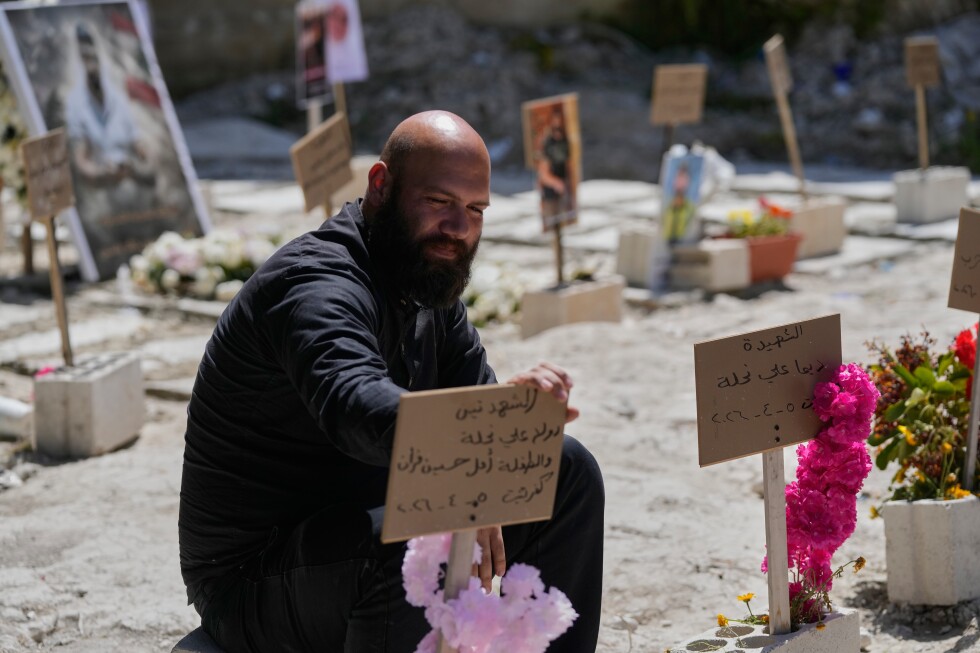
The human cost of these evacuations – and of missed or ignored warnings – can be devastating. Hussein Farran lost his wife Rola Nahleh, their 4-year-old daughter Amal, and several family members when Israeli missiles struck their apartment around 3 a.m., hours after a late-night evacuation order for their area. The family had decided to wait until daybreak to escape the chaotic midnight exodus.
“Even if they gave us a warning, how does it justify killing a civilian family?” Farran asked, looking at the makeshift graves of his family members, marked with handwritten cardboard signs because wartime conditions prevented proper burials.
The warnings are inconsistent and sometimes nonexistent. On April 8, one of the deadliest days in Lebanon’s recent history, Israel struck a hundred targets in rapid succession without warning, killing more than 350 people including over 100 women and children. The strikes hit multiple locations, including downtown Beirut.
Adding to the confusion, some warnings never result in strikes. Earlier this month, Israel warned it would attack the main border crossing between Lebanon and Syria, forcing its closure for several days, but no strike materialized.
For civilians, determining which warnings to trust presents another challenge. Roland Abi Najem, a Lebanese cybersecurity expert, notes that the Israeli military often uses randomly generated international numbers since direct calls between the two countries aren’t permitted. “There is no way to know if a call is real or fake,” he said. “The Israeli military benefits from the chaos that helps create a mass exodus.”
Unlike Israel, Lebanon has no air raid sirens, missile defenses, or designated bomb shelters. The warnings come as Israel has stated plans to establish a 10-kilometer buffer zone along the border, preventing Lebanese citizens from returning to their homes until the Hezbollah threat is eliminated.
The nominal ceasefire that took effect on April 17 has provided little relief. Mohammad Shahadat, forced to flee his southern hometown of Shaqra when the war erupted, waited a week into the ceasefire before attempting to return home. Days later, after another Israeli warning, he was back in a flimsy tent in Beirut.
“We didn’t know where to go,” he said, capturing the ongoing uncertainty faced by hundreds of thousands of Lebanese civilians caught between evacuation orders and the hope of returning home.
Fact Checker
Verify the accuracy of this article using The Disinformation Commission analysis and real-time sources.

13 Comments
The constant barrage of evacuation warnings must be incredibly disruptive and stressful for Lebanese civilians. Protecting innocent lives should be the top priority, no matter the military objectives.
Absolutely. Civilian welfare must be the foremost concern during armed conflicts. All parties involved should make every effort to minimize harm and displacement of local populations.
Concerning to see the chaos and civilian displacement caused by these evacuation warnings. While Israel may view them as a legal tool, the open-ended nature and broad scope seem to raise questions about protecting Lebanese civilians.
Agreed. Maintaining a balance between military necessity and civilian protection is crucial during armed conflicts. Hopefully all sides can prioritize minimizing harm to non-combatants.
This conflict highlights the complex dynamics between Israel and Hezbollah, with civilians caught in the middle. The use of mass evacuation orders as a ‘legal tool’ is concerning and merits closer examination.
You raise a good point. The legality and proportionality of these tactics should be scrutinized to ensure they comply with international laws and norms around the protection of civilians.
Civilian displacement and disruption should always be a last resort in armed conflicts. The broad and open-ended nature of these evacuation orders seems to prioritize military objectives over the protection of innocent lives.
These evacuation orders seem to be a tactic to create fear and instability among the Lebanese populace. While Israel may view them as a legitimate military tool, the widespread impact on civilians is deeply concerning.
While Israel may claim a legal justification for these evacuation warnings, the real-world impact on Lebanese civilians is deeply troubling. Warring parties have a moral obligation to safeguard non-combatants to the greatest extent possible.
Absolutely. Maintaining the distinction between military and civilian targets, and proportionality in the use of force, are fundamental principles of international humanitarian law.
The chaos and panic caused by these sudden evacuation orders must be incredibly distressing for Lebanese families. Hopefully all sides can find ways to mitigate the humanitarian toll of this conflict.
The use of open-ended evacuation warnings that target entire regions raises significant humanitarian concerns. This appears to be a tactic to disrupt civilian life rather than a measured military response.
I agree. The scale and indiscriminate nature of these warnings suggest they may be crossing the line into unlawful collective punishment of the Lebanese population.