


Listen to the article
Global Media Leaders Demand Israel End Gaza Press Ban, Citing Crucial Need for Independent Reporting
Leaders from more than two dozen major media organizations worldwide have issued a collective statement calling on the Israeli government to lift its ban on foreign journalists entering Gaza. The restriction has prevented independent international reporting from the territory since the war began in 2023 and continues despite a ceasefire that has been in place for over six months.
The statement, released early Thursday by the local foreign press association, includes prominent news organizations such as The Associated Press, BBC, Sky News, CNN, MS NOW, Reuters, German news agency dpa, The New York Times, and The Washington Post. These media executives emphasized that their previous attempts to discuss the issue with the Israeli government have gone unanswered.
“Being on the ground is essential. It allows journalists to question official accounts on all sides, to speak directly with civilians and report back what they witness firsthand,” the statement read. “That is why news organizations send their reporters into the field, often at great personal risk.”
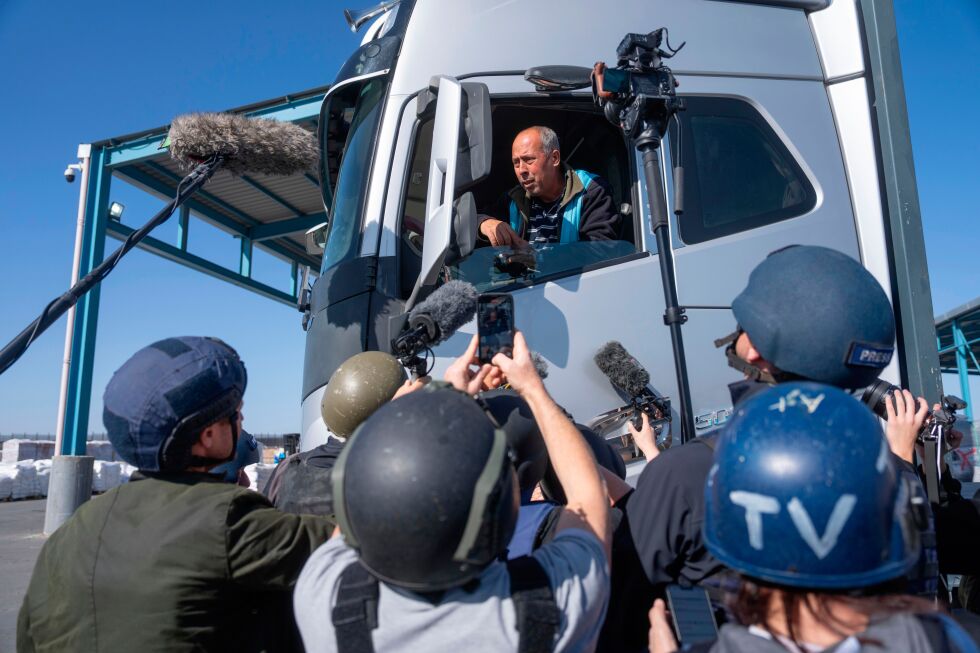
When the ban was initially imposed, Israel cited security concerns, claiming that foreign journalists might inadvertently reveal the positions of Israeli soldiers and put them at risk. The Israeli military has occasionally organized tightly controlled trips for foreign reporters, but media organizations are demanding independent, unfettered access.
The media executives pointed out that the situation in Gaza has significantly changed since these restrictions were first put in place. “The heaviest fighting is over and there is a ceasefire in place,” they noted. “The hostages have come home. Journalists do not pose a threat to Israeli troops. There is a mechanism in place—however restrictive—that allows aid workers to enter and exit the territory. Why not journalists?”
Legal efforts to challenge the ban have been underway. The Foreign Press Association, representing international media in Israel, Gaza, and the West Bank, filed a petition with the Israeli Supreme Court in 2024 seeking independent access to Gaza. However, a ruling has been repeatedly delayed, most recently in January.
In the absence of foreign journalists, coverage of conditions in Gaza has fallen almost entirely to local Palestinian reporters. These journalists have faced extraordinary challenges while reporting on the war, including experiencing it firsthand as their homes were destroyed and family members killed. Many have also struggled with severe food shortages as humanitarian access to Gaza became increasingly restricted.
Last July, Agence France-Presse raised urgent concerns about the survival of their Palestinian colleagues, a sentiment echoed by AP and Reuters for their Gaza-based reporters. “This has pushed the responsibility for covering this devastating war and its aftermath almost entirely on our Palestinian colleagues,” the editors wrote in Thursday’s statement. “They should not have to shoulder this burden alone, and they should be protected.”
The risks facing journalists in Gaza have been lethal. According to the Committee to Protect Journalists, more than 200 journalists and media workers have been killed during the conflict—a death toll far exceeding that of journalists in other ongoing conflicts, such as the Russia-Ukraine war.
Among those killed was Mariam Dagga, a 33-year-old visual journalist who worked as a freelancer for the AP and other news organizations. She died alongside four other journalists, including Reuters cameraman Hussam al-Masri and freelance journalist Moaz Abu Taha, in an Israeli strike on a medical facility last August. The Israeli military has stated that the incident is still under investigation.
The media executives concluded their appeal by connecting it to Press Freedom Week: “Freedom of the press is a basic value in any open society. It is time for the delays to end. Let us into Gaza.”
The Israeli government did not immediately respond to requests for comment on the media leaders’ statement.
Fact Checker
Verify the accuracy of this article using The Disinformation Commission analysis and real-time sources.

12 Comments
This is a complex issue with valid concerns on both sides. However, the public’s right to information should be a top priority. I hope the Israeli government can find a way to safely allow more independent reporting from Gaza.
Agreed. A balance between security and transparency is needed. Constructive dialogue between the government and media organizations may lead to a reasonable compromise that upholds press freedom.
Restricting media access in conflict zones raises red flags. While national security is important, the public deserves comprehensive, first-hand reporting to form their own views on complex geopolitical issues like this.
You raise a good point. Journalists taking personal risks to cover stories is part of their duty to the public. The Israeli government should weigh the value of independent reporting against security concerns.
As someone interested in geopolitics and global affairs, I’m disappointed to see this ongoing restriction on press freedom in Gaza. Objective reporting is essential for shedding light on complex, high-stakes conflicts.
This ban on Gaza reporting is troubling. Even with a ceasefire in place, the public needs to understand the realities on the ground from credible, unbiased sources. I hope a compromise can be reached to allow more press access.
Agreed. Lifting the ban, even partially, could demonstrate a commitment to transparency and help rebuild trust between the Israeli government and the international media community.
The call from global media leaders to lift the Gaza reporting ban is understandable. Unbiased, on-the-ground coverage is crucial for understanding the realities of the conflict, even in times of ceasefire. I hope this issue can be resolved productively.
This is a concerning issue for press freedom. Independent reporting is crucial to ensure objective and balanced coverage of the conflict in Gaza. I hope the Israeli government will reconsider this ban and allow journalists to do their work safely on the ground.
Agreed. Transparency and accountability are essential, especially in areas of ongoing tensions and hostilities. Lifting the ban could help provide greater insight into the situation for global audiences.
As a reader, I’m concerned about the lack of independent reporting coming out of Gaza. While security concerns are valid, the public deserves access to credible, first-hand information from journalists. I hope a solution can be found to address this press freedom issue.
Agreed. Transparency and accountability should be priorities, especially in regions with ongoing tensions. A compromise that balances national security and press freedom would be an ideal outcome.