


Listen to the article
Iran’s Supreme Leader Defies U.S. Pressure as Gulf Crisis Deepens
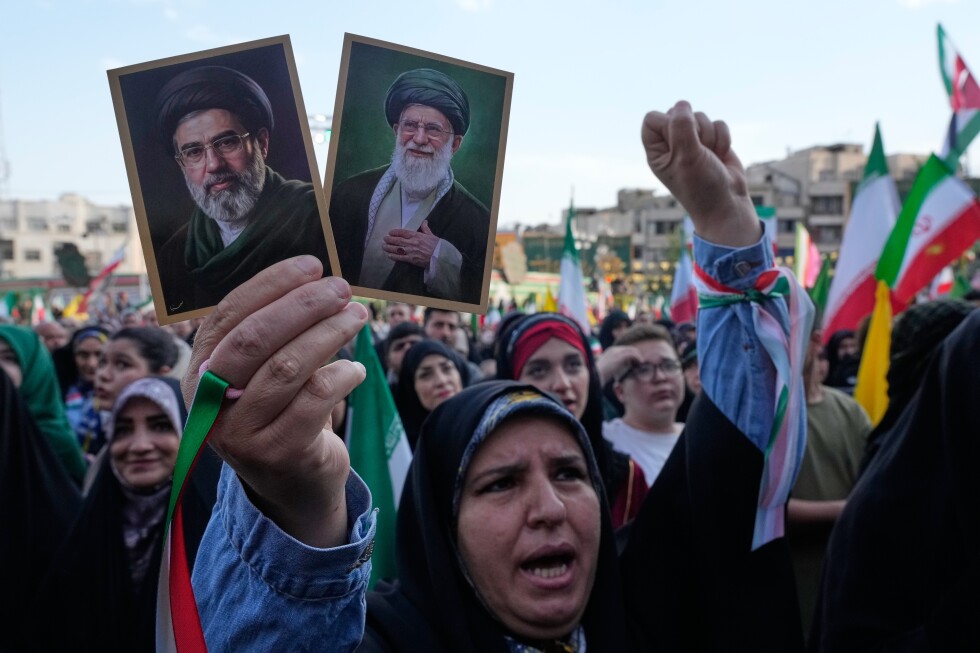
Iran’s supreme leader Ayatollah Mojtaba Khamenei issued a defiant statement Thursday, vowing to protect the Islamic Republic’s nuclear and missile capabilities despite mounting U.S. pressure. In remarks broadcast on state television, Khamenei declared that the only place Americans belonged in the Persian Gulf was “at the bottom of its waters,” signaling a new chapter in the region’s tensions.
Khamenei, who has not appeared in public since assuming leadership following his father’s death in the war’s opening airstrikes, emphasized that Iran considers its technological and defense capabilities as matters of national identity.
The standoff comes as Iran maintains its chokehold on the Strait of Hormuz, through which approximately one-fifth of the world’s crude oil supply passes. The strategic waterway’s closure has sent global oil prices soaring, with Brent crude reaching as high as $126 per barrel on Thursday, creating economic pressure worldwide.
Iran’s economy faces severe challenges under a U.S. Navy blockade that has prevented Iranian tankers from reaching international markets. According to U.S. Central Command, the blockade has intercepted 44 commercial vessels as of Thursday, aimed at cutting off Iran’s crucial oil revenue and potentially forcing a production shutdown due to storage limitations.
President Donald Trump is now proposing a “maritime freedom construct” to reopen this critical passageway while maintaining pressure on Tehran. The State Department has instructed American diplomats globally—excluding those in Belarus, China, Cuba, and Russia—to seek host government support for this initiative.
“This commitment reflects broad international consensus on the need for coordinated action to counter Iranian maritime provocations and ensure navigational rights and freedoms in the Strait of Hormuz,” stated a diplomatic cable obtained by The Associated Press.
The plan would allow U.S. Gulf allies to resume oil and gas exports while the U.S. continues its blockade of Iranian ports. Administration officials describe the approach as “a fundamentally defensive response to protect the rights of all countries to navigate international waters freely.”
Meanwhile, Trump has hinted at potential changes to U.S. troop deployments in Europe. When asked about possibly withdrawing forces from Italy and Spain—countries that have opposed the use of their bases for Iran-related operations—Trump responded bluntly: “Why shouldn’t I? Italy has not been of any help to us, and Spain has been horrible, absolutely horrible.”
The ongoing tensions have complicated ceasefire negotiations. Pakistan confirmed it continues facilitating indirect talks between the U.S. and Iran but emphasized that direct communication between the parties would be beneficial. “If the two parties can engage in real-time conversations, that could ease the sticking points,” said Pakistani Foreign Ministry spokesperson Tahir Andrabi.
In his statement marking Persian Gulf Day, Khamenei suggested Iran will maintain control over the Strait of Hormuz, claiming Tehran’s “legal rules and new management” of the waterway will benefit all regional nations. However, Gulf Arab countries, particularly the United Arab Emirates, have condemned Iran’s actions as tantamount to piracy, insisting the strait should remain an open international waterway without tolls.
The crisis has coincided with intensified domestic crackdowns in Iran. On Thursday, authorities announced the execution of 21-year-old Sasan Azadvar from Isfahan, charged with “effectively cooperating with the enemy by attacking police officers” during January’s nationwide protests. UN Human Rights Chief Volker Turk reported that at least 21 people have been executed since the start of the U.S.-Israel war with Iran, raising concerns about closed-door trials and limited rights for defendants.
Despite a nominal ceasefire between Israel and Hezbollah, fighting continues in southern Lebanon. Israel’s military confirmed one soldier was killed in combat Thursday, bringing troop casualties to 17 since the conflict’s start. Air raid sirens sounded multiple times in northern Israeli communities, and Israeli strikes on Hezbollah targets reportedly killed nine people, including women and children, according to the Lebanese Health Ministry.
As tensions escalate, the United Arab Emirates, which has faced attacks from Iran during the conflict, announced a travel ban for its citizens covering Iran, Lebanon, and Iraq, urging nationals already in those countries to return home immediately.
The multi-front crisis leaves the region balanced on a knife’s edge, with global energy markets, nuclear proliferation concerns, and regional stability all hanging in the balance as U.S. and Iranian leaders continue their dangerous standoff.
Fact Checker
Verify the accuracy of this article using The Disinformation Commission analysis and real-time sources.

8 Comments
This is a complex and volatile situation that defies easy solutions. Iran’s leaders are clearly digging in, but further confrontation could have disastrous consequences. All sides need to step back, lower the rhetoric, and focus on pragmatic steps to reduce tensions and prevent miscalculation.
Iran’s stance reflects its desire to assert its regional influence and resist external pressure. However, the closure of the Strait of Hormuz could have severe global economic consequences. A diplomatic resolution seems preferable to a military confrontation, which would be disastrous for all sides.
I agree, the economic fallout from a closure of the Strait would be catastrophic. Both Iran and the U.S. need to find a way to pull back from the brink and negotiate a solution, even if it’s difficult. The stakes are simply too high for further escalation.
This is a concerning escalation in the long-running tensions between Iran and the U.S. Iran’s vow to protect its nuclear and missile capabilities is likely to raise alarm bells globally. It will be crucial to see how this plays out and whether it leads to further confrontation in the region.
You’re right, the situation remains very tense. Iran seems determined to maintain its technological and defense capabilities, which could lead to more clashes with the U.S. and its allies. Careful diplomacy will be needed to de-escalate the crisis.
Iran’s leader is taking a hardline stance, but I wonder if this is partly for domestic political consumption. Flexing national pride and defiance of the U.S. may play well at home, even if it raises tensions internationally. Ultimately, all sides need to find a way to de-escalate before the situation spirals further out of control.
The continued standoff over Iran’s nuclear and missile programs is deeply concerning. While Iran’s position is driven by its desire for security and regional influence, the risks of miscalculation or accidental conflict remain high. Careful, patient diplomacy will be essential to find a peaceful resolution.
Well said. Diplomacy and de-escalation should be the priority here. The potential economic and humanitarian costs of an armed conflict are simply too high. I hope cooler heads can prevail and find a way to address Iran’s security concerns while upholding international norms.