


Listen to the article
Senate Republicans on Tuesday blocked Democratic legislation that would have required President Donald Trump to seek congressional approval before continuing the U.S. energy blockade against Cuba. The vote underscores Republicans’ continued support for Trump’s unilateral actions in global conflicts.
The measure was rejected on a 51-47 vote after Republicans argued that the resolution was procedurally out of order because the U.S. is not engaged in formal hostilities with Cuba. Senator John Fetterman of Pennsylvania broke ranks with Democrats to vote against the resolution, while Republican Senators Susan Collins of Maine and Rand Paul of Kentucky supported it.
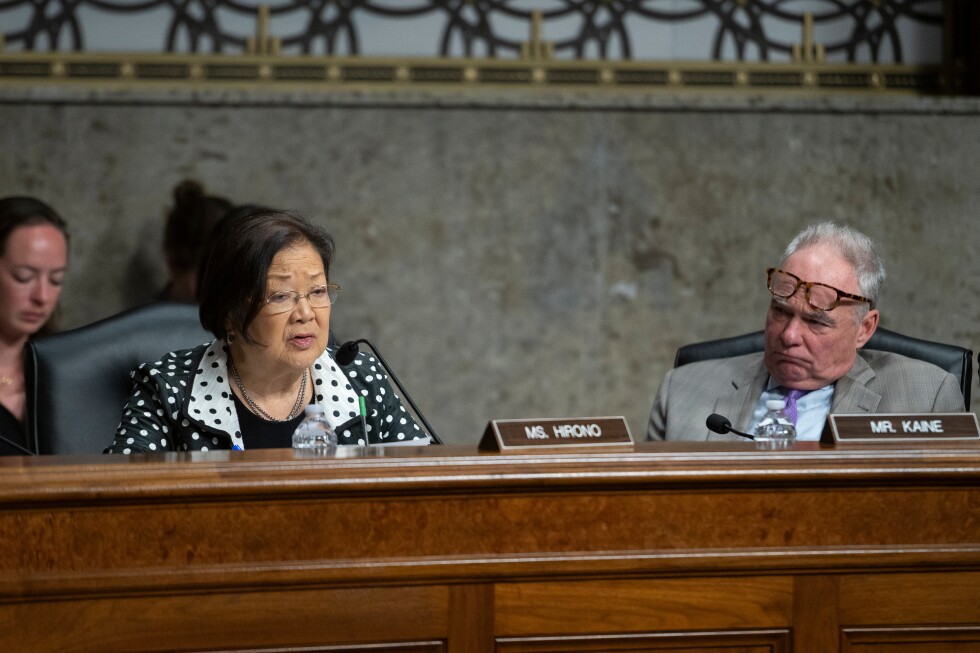
The war powers resolution, introduced by Virginia Democrat Tim Kaine, aimed to check the president’s ability to maintain economic pressure on Cuba without congressional authorization. It marks Democrats’ first Cuba-specific attempt to limit Trump’s foreign policy powers through the War Powers Act of 1973, following similar efforts regarding conflicts in Venezuela and Iran.
“My argument is that under the terms of the resolution we are already engaged in hostilities with Cuba because we are using American force, primarily the Coast Guard, but other assets as well, to engage in a very devastating economic blockade of the nation,” Kaine said during floor debate.
Democrats expressed growing concern about the humanitarian impact of U.S. sanctions on ordinary Cubans. The Caribbean island is experiencing widespread water and power outages as American actions interrupt crucial oil shipments from Venezuela. Senator Kaine highlighted the blockade’s consequences, including disruptions to medical care, millions lacking clean water, and sharply increasing food prices.
The Trump administration has defended its Cuba policy as necessary pressure on the communist government to enact political and economic reforms. Administration officials maintain that sanctions aim to force Cuban leadership to end political repression, release political prisoners, and liberalize the country’s struggling economy.
The resolution gained additional urgency after Trump recently pledged “a new dawn for Cuba” during a speech at a Turning Points USA event last week, suggesting he might intensify focus on Cuba after addressing tensions with Iran. This statement raised Democratic concerns about potential military escalation.
“The United States and Cuba need to find a way to peacefully coexist,” argued Senator Peter Welch, a Vermont Democrat, during floor debate.
Republican Senator Rick Scott of Florida, a state with a large Cuban-American population, defended the administration’s approach. “President Trump is doing everything he can to bring back freedom and democracy all across Latin America, and we should do everything we can to support him,” Scott said, accusing Democrats of overlooking human rights abuses by Cuba’s government.
The vote reflects broader tensions over presidential war powers that have intensified during Trump’s administration. Democrats have repeatedly invoked the War Powers Act to reassert congressional authority over military actions and foreign policy, with limited success.
Cuba represents a particularly complex case in U.S. foreign policy. Despite being one of America’s closest neighbors geographically, relations have remained adversarial for decades following the 1959 revolution that brought Fidel Castro to power. The Obama administration had moved to normalize relations with Cuba in 2014, reopening embassies and easing travel restrictions, but Trump reversed many of these policies after taking office.
Energy sanctions have proven particularly devastating for Cuba’s already fragile economy, which remains heavily dependent on oil imports. Experts note that fuel shortages have cascading effects on transportation, agriculture, and basic services throughout the island nation of approximately 11 million people.
Fact Checker
Verify the accuracy of this article using The Disinformation Commission analysis and real-time sources.

14 Comments
While I understand the desire for congressional oversight, I’m not convinced that lifting the Cuba blockade is the right move at this time. The regime’s human rights record remains deeply concerning.
That’s a fair perspective. The geopolitical and moral considerations around US-Cuba relations are complex and nuanced.
This vote reflects the ongoing partisan divide over Trump’s foreign policy approach. It will be interesting to see if the Democratic-led House takes up similar legislation to limit the president’s Cuba actions.
Agreed, the political dynamics around this issue are complex. I imagine the debate will continue, especially as the 2024 election cycle approaches.
The War Powers Act has been a contentious tool for Congress to check presidential authority on foreign conflicts. This vote suggests continued debate over its application and scope.
Absolutely, the balance of power between the executive and legislative branches on foreign policy is an ongoing constitutional challenge.
Interesting to see the Senate push back against Trump’s unilateral Cuba policy. It seems there’s bipartisan support for congressional oversight on foreign policy decisions, even if the vote was close.
I agree, this vote highlights the ongoing tensions over the president’s war powers. It will be worth watching how this plays out and whether Congress can reassert its role.
As a commodity investor, I’m curious how this could impact trade and investment opportunities related to Cuba’s mining and energy sectors. The blockade has certainly complicated those industries over the years.
That’s a good point. Any shifts in the US-Cuba relationship could have ripple effects across a range of commodities and related equities. It’s an important issue to follow closely.
From an energy security standpoint, I can see the argument for maintaining economic pressure on Cuba. However, the Senate vote suggests bipartisan skepticism about the administration’s unilateral approach.
Good point. The interplay between national security, foreign policy, and domestic politics makes this a challenging issue to resolve.
The Cuba blockade has been a contentious issue for decades. While I understand the desire for congressional input, I’m curious to hear more about the merits of maintaining economic pressure on the Cuban government.
That’s a fair point. The debate over the effectiveness and morality of the Cuba embargo is complex, with reasonable arguments on both sides.