


Listen to the article
Defense Secretary Faces Sharp Criticism Over Iran War Costs and Strategy
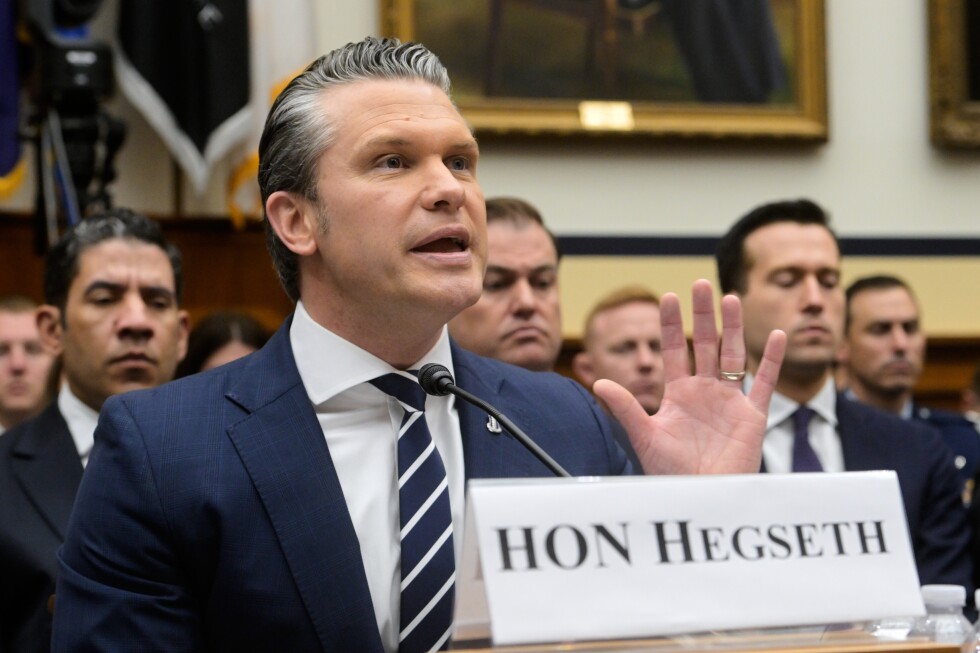
Defense Secretary Pete Hegseth encountered fierce questioning from Democratic lawmakers Wednesday in his first congressional appearance since the Trump administration initiated military action against Iran. The contentious House Armed Services Committee hearing, nominally focused on the administration’s proposed $1.5 trillion defense budget for 2027, quickly became dominated by concerns over the ongoing conflict.
Pentagon officials revealed the war has already cost American taxpayers $25 billion. While Republican committee members largely expressed support for the military campaign, Democrats grilled Hegseth and Joint Chiefs Chairman Gen. Dan Caine about escalating costs, depleted U.S. munitions stockpiles, civilian casualties including children killed in a school bombing, and what they characterized as shifting justifications for the conflict.
Hegseth dismissed the criticism as politically motivated. “The biggest challenge, the biggest adversary we face at this point are the reckless, feckless and defeatist words of congressional Democrats and some Republicans,” he stated during the nearly six-hour hearing.
In one particularly tense exchange, Rep. Adam Smith, the committee’s ranking Democrat, pressed Hegseth on the administration’s war rationale. When Hegseth noted that Iran’s nuclear facilities had been “obliterated” in 2025 strikes by the U.S., Smith questioned why the administration initiated a new conflict less than a year later citing imminent nuclear threats.
“We had to start this war, you just said 60 days ago, because the nuclear weapon was an imminent threat,” Smith said. “Now you’re saying that it was completely obliterated?”
Hegseth responded that Iran “had not given up their nuclear ambitions” and still possessed thousands of missiles, to which Smith countered that the war “left us at exactly the same place we were before.”
The economic impact of the conflict took center stage as Democrats highlighted Iran’s closure of the Strait of Hormuz, a critical oil shipping corridor. This strategic blockade has sent fuel prices skyrocketing worldwide, creating political challenges for Republicans ahead of midterm elections. The U.S. has responded with a naval blockade of Iranian shipping and has deployed three aircraft carriers to the Middle East—the first such triple deployment in over two decades.
California Rep. John Garamendi delivered perhaps the sharpest critique, accusing Hegseth and the president of “lying to the American public about this war from day one” and calling the conflict “a geopolitical calamity,” a “strategic blunder,” and a “self-inflicted wound to America.”
Hegseth fired back, asking Garamendi: “Who are you cheering for here? Your hatred for President Trump blinds you” to the war’s successes.
The defense secretary also faced questioning about his controversial dismissal of several top military leaders. Rep. Chrissy Houlahan, a Pennsylvania Democrat, pressed Hegseth on his decision to remove Army Chief of Staff Gen. Randy George, widely respected across military and congressional circles. Hegseth’s repeated explanation that “new leadership” was needed failed to satisfy Houlahan’s concerns.
This leadership purge has included Navy Secretary John Phelan, Navy Chief Admiral Lisa Franchetti, Air Force Vice Chief Gen. Jim Slife, and others. President Trump separately fired Gen. Charles “CQ” Brown Jr. as Joint Chiefs chairman. While Republican Rep. Don Bacon acknowledged Hegseth’s authority to make personnel changes, he expressed “bipartisan concern” about the dismissals.
“We had a huge bipartisan majority here that had confidence in the Army chief of staff and the secretary of the navy,” Bacon noted. “And I would just point out it may be constitutionally right… but it doesn’t make it right or wise.”
Hegseth has defended these changes as part of building a “warrior culture” at the Pentagon, and found support from Rep. Nancy Mace, who stated, “I’m glad that you’re firing people. There are people there that are getting in your way. They need to go.”
While a fragile ceasefire currently holds, the U.S. and Israel launched the war on February 28 without formal congressional approval. House and Senate Democrats have unsuccessfully attempted to pass multiple war power resolutions that would require Trump to halt operations until Congress authorizes further action.
Most Republicans continue backing Trump’s wartime leadership, citing Iran’s nuclear ambitions and the strategic risks of withdrawal. However, some GOP lawmakers are reportedly eyeing future votes that could test the president’s war authority if the conflict continues.
The U.S. and Iran appear deadlocked, with Trump telling Axios Wednesday he is rejecting Iran’s proposal to reopen the Strait of Hormuz in exchange for lifting the American naval blockade.
Fact Checker
Verify the accuracy of this article using The Disinformation Commission analysis and real-time sources.

10 Comments
This hearing sounds contentious, with Democrats grilling Hegseth over the high costs and civilian casualties of the Iran conflict. It’s important to have robust oversight and accountability, but the rhetoric on both sides seems quite heated.
The revelation of $25 billion in costs for US taxpayers is staggering. Policymakers on both sides of the aisle should scrutinize this spending and ensure it aligns with America’s strategic interests.
Absolutely. Transparency and fiscal responsibility must be top priorities, especially for such a high-stakes foreign intervention.
This hearing underscores the complexity and challenges of conducting foreign policy in the Middle East. I hope our leaders can move past partisan rhetoric to find pragmatic solutions that protect US interests and uphold democratic values.
As an energy and commodities observer, I’m curious how this prolonged Iran conflict may be impacting global oil and mineral markets. The potential disruptions to supply chains are worth monitoring closely.
The civilian casualties, including children, are truly tragic. Upholding international humanitarian law and minimizing harm to innocent lives should be a paramount consideration in any military campaign.
It’s concerning to hear about depleted US munitions stockpiles. Maintaining military readiness and deterrence capabilities should be a key priority, regardless of one’s views on the specific Iran conflict.
Regardless of one’s political leanings, the escalating costs and depleted munitions stockpiles from this prolonged conflict are concerning. I hope both sides can find a way to have a more constructive dialogue to address these issues.
Agreed. Partisan bickering rarely leads to productive solutions on complex foreign policy challenges like this.
Hegseth’s dismissal of the criticism as ‘politically motivated’ is an oversimplification. There appear to be legitimate concerns about the strategic direction and human toll of this conflict that deserve serious consideration.