


Listen to the article
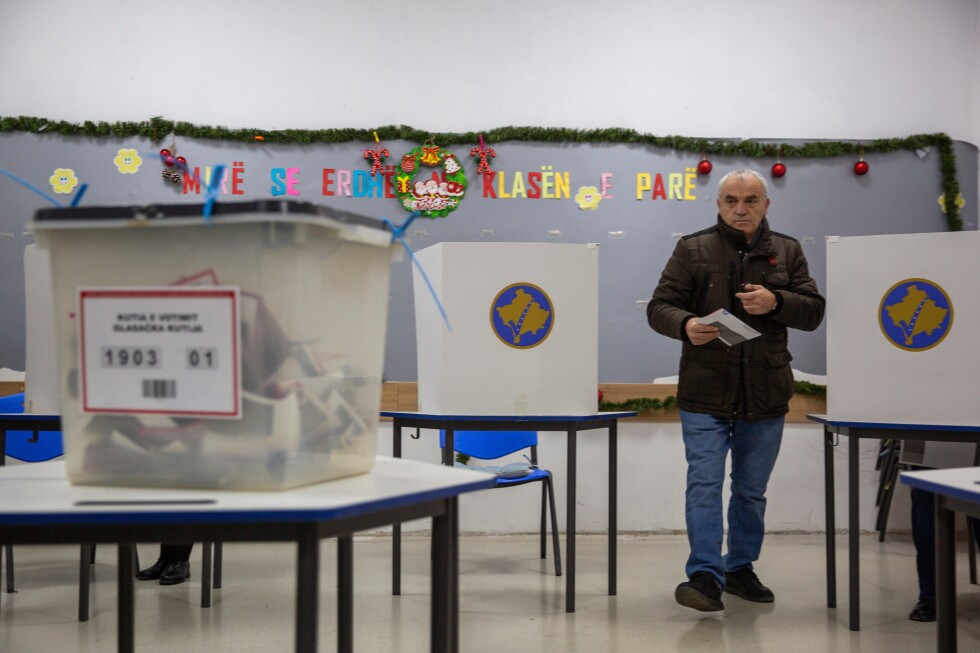
Kosovo has plunged into a new political crisis, facing its third parliamentary election in just over a year after lawmakers failed to elect a new president before a crucial deadline.
The parliament was automatically dissolved Tuesday night when it couldn’t choose a successor to President Vjosa Osmani by midnight. According to Kosovo’s constitution, early elections must now be held within 45 days, though officials have not yet announced a specific date.
Political analyst Ilir Deda suggested the vote will likely take place in June, noting that the upcoming election will serve as a test of public patience. “This election will determine whether people are willing to hold politicians accountable,” Deda said, highlighting growing voter frustration with the repeated political deadlocks.
The small Balkan nation of approximately 2 million people has weathered continuous political instability since February 2023, when an inconclusive election failed to produce a stable government. While Prime Minister Albin Kurti formed a new administration following early elections on December 28, the leadership crisis quickly pivoted to the presidential succession.
Kosovo’s complex electoral system requires a quorum of at least 80 lawmakers in the 120-member assembly to elect a president. However, opposition parties boycotted the session due to disagreements over suitable candidates, effectively blocking the vote from proceeding.
The presidential role, while largely ceremonial, carries significant symbolic importance in Kosovo, representing national unity and serving as the commander-in-chief of the armed forces. The position also plays a key role in foreign policy and diplomatic relations, particularly crucial for a young nation still seeking broader international recognition.
This prolonged political uncertainty has already taken a toll on Kosovo’s developing economy. Foreign investment has slowed amid concerns about governmental stability, while crucial infrastructure projects face delays. The situation has also deepened public cynicism toward political institutions, with many citizens expressing frustration over what they see as self-serving political maneuvering.
Kosovo’s political crisis unfolds against a backdrop of ongoing regional tensions. The country declared independence from Serbia in 2008 following a brutal war in 1998-99 that ended after NATO intervention. However, Belgrade has steadfastly refused to recognize Kosovo’s sovereignty, and the unresolved relationship between the two remains a significant source of instability in the Balkans.
The European Union has made it clear that both Kosovo and Serbia must normalize relations if they hope to advance in their EU membership aspirations. Both nations have expressed desire to join the 27-member bloc, but progress has been hindered by their ongoing dispute.
For Kosovo, EU integration represents a path to economic development and international legitimacy. The country remains one of Europe’s poorest, with high unemployment and substantial emigration of young people seeking opportunities abroad.
As Kosovo prepares for yet another election, many citizens question whether the outcome will break the cycle of governmental dysfunction or merely reshuffle the political deck. The repeated electoral processes have also strained the country’s budget and administrative resources.
Regional observers note that Kosovo’s political instability could potentially benefit hardliners in Belgrade who oppose any normalization of relations, while also undermining Western efforts to promote democracy and stability across the Western Balkans.
With campaigning set to begin soon, political parties will need to convince an increasingly skeptical electorate that they can deliver the leadership and stability that has proven elusive over the past year.
Fact Checker
Verify the accuracy of this article using The Disinformation Commission analysis and real-time sources.

8 Comments
Repeated elections and leadership crises are rarely a positive sign for a country’s governance and economic prospects. I hope Kosovo is able to find a more stable path forward after this upcoming vote.
This ongoing crisis in Kosovo demonstrates the challenges of building stable political institutions, especially in smaller nations with complex ethnic and regional dynamics. I wonder what the key issues will be that drive voter sentiment in the upcoming election.
The political instability in Kosovo is concerning, especially as the country tries to strengthen its democratic institutions and economy. This election will be an important test of the public’s patience and trust in the political process.
Agreed. Kosovo’s ability to navigate this crisis and deliver effective governance will be crucial for the country’s long-term development and regional influence.
Interesting to see such political instability in Kosovo. It sounds like this will be a critical election to determine if voters are ready to hold their leaders accountable. Curious to see what the election results will mean for the country’s future direction.
Kosovo’s political instability could have broader implications, both regionally and globally. This election will be an important test of the country’s democratic institutions and processes. I’ll be curious to see how it unfolds.
Absolutely, Kosovo’s political situation is closely watched given its strategic location and history of tensions in the Balkans region. This election could have ripple effects beyond the country’s borders.
It’s concerning to see Kosovo facing another early election, especially given the prolonged political turmoil. I hope the voters are able to select leaders who can provide more consistency and direction for the country.