


Listen to the article
Russia’s disinformation campaigns against Canada require stronger national response, Senate warns
Russia is deploying sophisticated disinformation and propaganda campaigns targeting Canadians to advance its geopolitical and military interests, while Ottawa fails to adequately combat these threats, according to a Senate report released Thursday.
The Senate committee on national security’s investigation revealed Moscow is deliberately disseminating false information to Western audiences, particularly to justify its invasion of Ukraine. These efforts aim to undermine the NATO alliance and destabilize Western democracies, creating fractures in international solidarity.
Witnesses who testified before the committee—including government officials, academics, and civil-society representatives—warned that Russia’s disinformation strategies have weakened Western responses to Russian aggression and contributed to declining support for Ukraine. They cited specific instances where Canadian politicians were targeted by false narratives originating from Moscow, particularly during the COVID-19 pandemic.
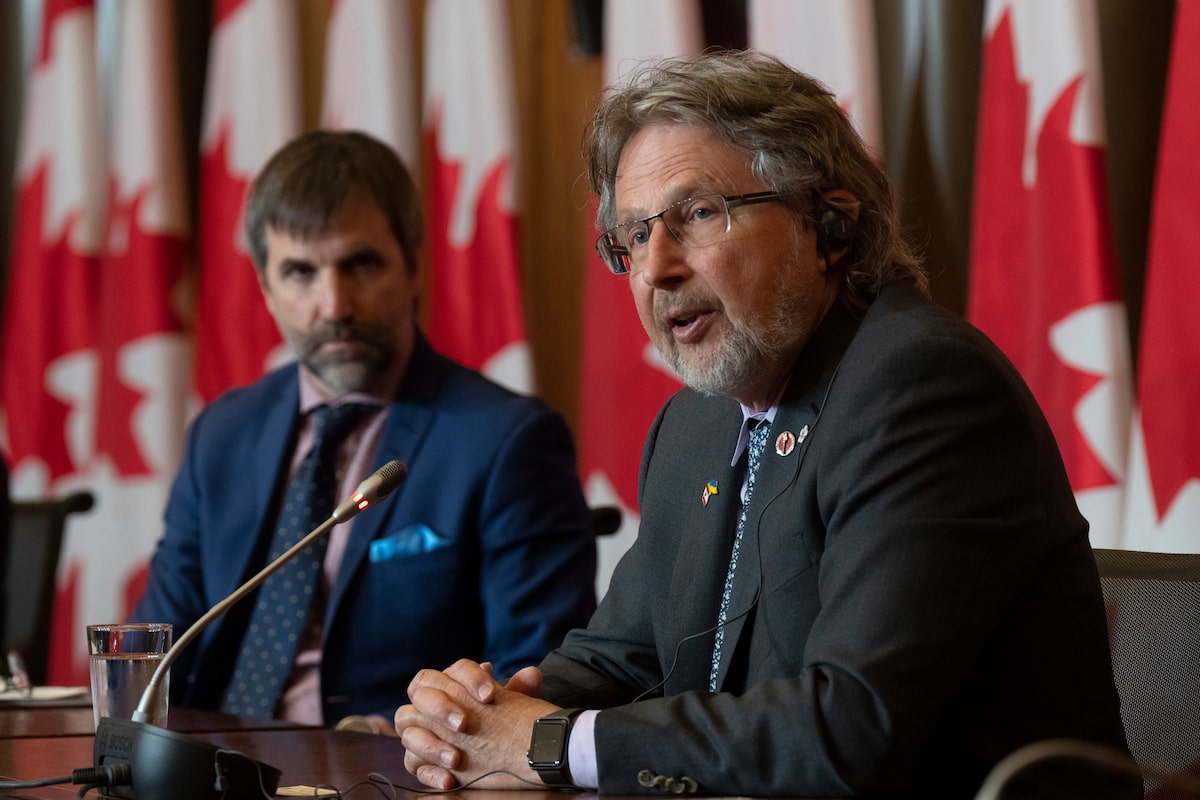
“Many Canadians don’t realize that Russia is a hostile state and its use of disinformation is highly complex,” said Senator Stan Kutcher, a committee member and English spokesperson for the report. “The Kremlin utilizes numerous tactics to disseminate mass quantities of disinformation to unsuspecting Western audiences and erodes public trust in information.”
The report highlights Russia’s increasingly sophisticated methods, including leveraging artificial intelligence technology and recruiting Western influencers to spread propaganda. These campaigns flood information channels with misleading content designed to exploit existing social and political divisions within democratic societies.
“The purpose of many of these campaigns is to overwhelm us with information and to push at the fractures that are normal within any democratic society, but with the intent to cause distrust of democratic institutions,” Kutcher explained. “This is part of this very complex strategy that Russia is pushing, to get democracies, to weaken them from within, so that they won’t be able to stand up to the threat that Russia poses to the rest of the world.”
To strengthen Canada’s defenses against these threats, the Senate committee recommends a comprehensive approach promoting media literacy and critical thinking skills through increased collaboration between governments, communities, civil-society organizations, and academic institutions.
“That means bringing together the groups that are already doing it, so that they are working in a coordinated way—identifying where we have gaps and filling those gaps—and part of that is actually educating the Canadian population about the challenges that are being faced,” Kutcher said.
The report points to Finland and Ukraine as models for combating Russian disinformation. Finland’s educational approach to building media literacy skills has proven particularly effective, while Ukraine has successfully centralized civil-society organizations to counter Russian propaganda. The committee suggests Canada should adopt and fund similar measures.
Kutcher emphasized that international cooperation is essential, recommending Canada work closely with G7 and NATO allies to develop “a more collaborative response” to Russian disinformation.
The committee found that the Canadian government currently lacks a strategic plan to combat these threats, and called for the inclusion of a dedicated disinformation defense strategy within Canada’s National Security Policy.
Drawing a historical parallel, Kutcher described this as Canada’s “modern Gouzenko moment,” referencing the 1945 defection of Igor Gouzenko, a Soviet embassy cipher clerk who exposed a massive Soviet spy ring operating in Canada. Just as that incident revealed physical espionage threats, today’s disinformation campaigns represent a digital form of foreign interference requiring urgent attention.
“What we really need to do, primarily, is to wake up that this is happening,” Kutcher concluded, underscoring the critical need for Canadian awareness and action against Russian information warfare.
Fact Checker
Verify the accuracy of this article using The Disinformation Commission analysis and real-time sources.

10 Comments
Concerning to see Russia using disinformation tactics to target Canada. We must remain vigilant against these attempts to sow discord and undermine our democratic institutions.
Agreed. A robust national response is crucial to combat these threats and protect the integrity of our information landscape.
I’m curious to learn more about the specific instances where Canadian politicians were targeted by false narratives. Understanding these tactics will help us develop effective countermeasures.
Agreed, the report should provide more details on the nature and scale of these attacks to inform a comprehensive response strategy.
The report’s findings highlight the need for improved coordination and information-sharing between government, tech companies, and civil society to counter Russian disinformation efforts.
Russia’s attempts to undermine international solidarity and destabilize Western democracies through disinformation are deeply troubling. We must stand united in our defense of truth and democratic values.
This is a timely and important issue. Protecting our information landscape from foreign interference should be a top national security priority for Canada.
Absolutely. Strengthening our resilience against disinformation campaigns is crucial for safeguarding our democratic processes and institutions.
This report highlights the need for greater media literacy and critical thinking skills among the public to identify and resist Russian propaganda. Strengthening our resilience is key.
You’re right. Educating citizens on recognizing and countering disinformation should be a top priority for the government and civil society.