


Listen to the article
In the early hours of February 14, 2025, a Russian drone struck the Chernobyl nuclear facility, rekindling fears nearly four decades after one of history’s worst nuclear disasters. While not catastrophic, the attack on this symbolic site has raised new concerns about nuclear safety amid the ongoing Russia-Ukraine conflict.
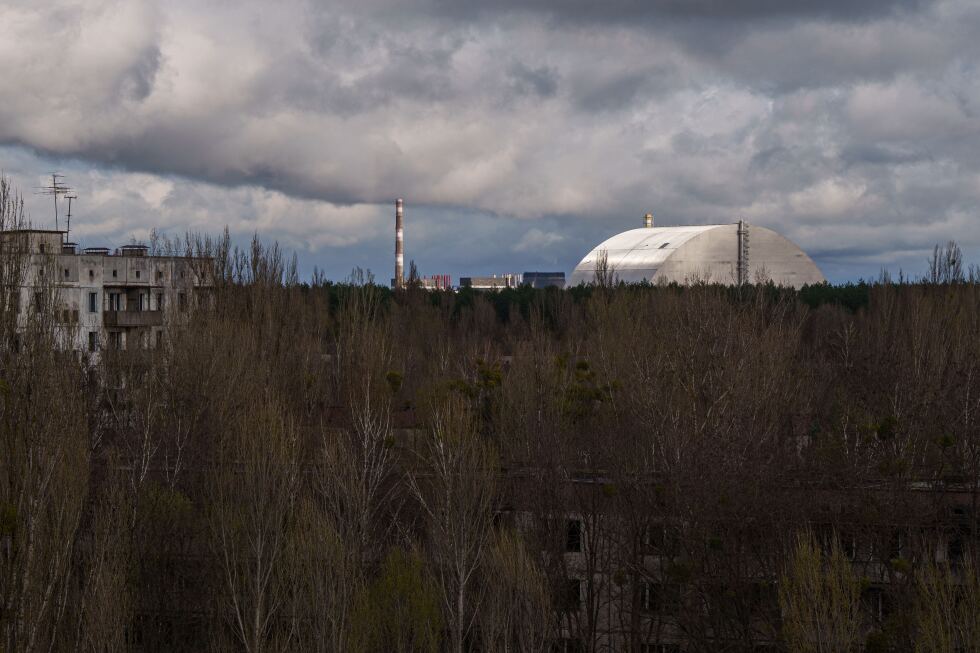
The drone hit the New Safe Confinement (NSC) structure at 1:59 a.m., the $2.1 billion arch designed to contain radiation from the damaged Reactor No. 4. Ukrainian officials blamed Russian forces for the attack, while Moscow denied responsibility, claiming Kyiv staged the incident.
“What once seemed unthinkable — strikes on nuclear facilities and other hazardous sites — has now become reality,” said Oleh Solonenko, head of a radiation safety shift at Chernobyl, which Ukrainians transliterate as Chornobyl.
The strike sparked a fire on the outer layer of the massive structure, which stands taller than the Statue of Liberty. Though the blaze was contained to an area with low contamination and monitoring detected no increase in radiation levels beyond the arch, the International Atomic Energy Agency (IAEA) has warned that the damage could significantly reduce the structure’s intended 100-year lifespan.
For Klavdiia Omelchenko, one of 2,200 workers at the defunct plant, the attack evoked memories of the catastrophic accident in 1986. Then a 19-year-old textile factory worker, she was asleep in her Pripyat apartment when the initial disaster occurred during a routine test at 1:23 a.m. on April 26.
Like many residents, Omelchenko was evacuated with minimal belongings, only understanding the true scale of the disaster weeks later. Soviet authorities were slow to reveal the extent of the accident, which spread radiation across what is now Ukraine and Belarus, causing alarm throughout Europe. Dozens died in the immediate aftermath, with the long-term death toll from radiation exposure remaining uncertain.
“That wasn’t as scary as now. Back then, at least, there was no bombing,” said Omelchenko, who returned to work at the plant’s cafeteria in 1993. Now 59, she claims the ongoing war poses a greater threat than radiation, which she’s grown accustomed to over the decades.
The Chernobyl facility has not produced electricity since 2000, when its last reactor was shut down. In the years since, an international effort constructed the NSC to stabilize the site and enable the dismantling of the deteriorating Soviet-era sarcophagus. Russia’s invasion has disrupted this crucial work.
Liudmyla Kozak, an engineer with over two decades at Chernobyl, was on duty when Russian troops seized the plant in February 2022. Staff maintained operations under armed guard for nearly three weeks, experiencing radiation doses well beyond standard limits.
“We had no hope we would make it out alive — it was really that scary,” Kozak recalled. She described how workers slept on floors and desks while Russian soldiers occupied key areas, damaged equipment, and drove heavy vehicles through contaminated zones, disturbing radioactive dust.
Serhii Bokov, who oversees operations for the NSC, was working the night of the 2025 drone strike. After hearing a dull blast, he and colleagues rushed outside but initially saw nothing. Firefighters arrived about 40 minutes later and discovered flames smoldering through the outer membrane. The fire took more than two weeks to fully extinguish.
“There was no feeling of fear, none at all. It was just a fire — something we practice in drills — only this time it was real,” Bokov said. “I didn’t think, honestly, that we could lose the entire arch.”
The IAEA assessment found the damage has compromised the arch’s ability to perform its core functions: containing radioactive material and enabling safe dismantling of the reactor remains. Without repairs, the structure would gradually weaken, increasing radiation exposure risks to Ukraine and neighboring countries.
Every night, Bokov walks more than a kilometer through what workers call the “golden corridor” — a passageway with yellow radiation-shielding panels that passes abandoned control rooms, including that of the infamous Reactor No. 4.
Although there’s no immediate radiation risk, the dismantling of the sarcophagus is now on hold. Bokov believes the setback could delay the project by at least a decade, raising concerns about the stability of the original containment structure underneath the arch.
A Greenpeace Ukraine report by Eric Schmieman, an engineer who helped design the NSC, warned that without urgent repairs, the risk of sarcophagus collapse increases significantly. “It is difficult to comprehend the scale of the deadly, hazardous conditions inside,” Schmieman noted. “There are tons of highly radioactive nuclear fuel, dust and debris. Now it is critical to find a way to restore the key functions of this facility.”
The drone attack on Chernobyl highlights how Russia’s invasion of Ukraine has upended assumptions about nuclear safety, transforming what was once unimaginable into a sobering reality at one of the world’s most notorious nuclear disaster sites.
Fact Checker
Verify the accuracy of this article using The Disinformation Commission analysis and real-time sources.

10 Comments
The attack on Chernobyl is a stark reminder of the fragility of nuclear infrastructure, even decades after a disaster. All parties involved must exercise the utmost caution and work together to ensure the facility’s safety and security.
Absolutely. The world cannot afford another nuclear catastrophe, and the international community must hold those responsible accountable.
This incident highlights the critical importance of international cooperation and robust safety protocols for nuclear facilities, even in times of conflict. The consequences of a failure at Chernobyl could be devastating, and all sides must prioritize its protection.
This is a deeply concerning incident that highlights the grave risks of conflict around nuclear facilities. The world cannot afford another Chernobyl-scale disaster. Ukraine and Russia must prioritize the safety and security of Chernobyl above all else.
Chernobyl is a symbol of the devastating human and environmental toll of nuclear accidents. The latest attack on the facility is a stark reminder of the fragility of these sites and the urgent need for robust international protocols to safeguard them.
Agreed. The international community must act swiftly to ensure the integrity of the New Safe Confinement and prevent further damage or release of radioactive materials.
The attack on Chernobyl is a chilling reminder of the potential for catastrophic consequences when nuclear sites become entangled in geopolitical conflicts. Both sides must exercise the utmost caution to prevent further damage and safeguard the facility.
I agree. The IAEA and other international bodies must be granted full access to assess the situation and ensure proper mitigation measures are in place.
This is a deeply troubling incident that underscores the grave risks of military operations near nuclear facilities. Both Ukraine and Russia must prioritize the safety of Chernobyl and work with the IAEA to assess the damage and mitigate potential consequences.
This is a deeply worrying development. The safety and security of nuclear facilities should be a top priority for all parties involved, regardless of the ongoing conflict. The world cannot afford another nuclear disaster on the scale of Chernobyl.