


Listen to the article
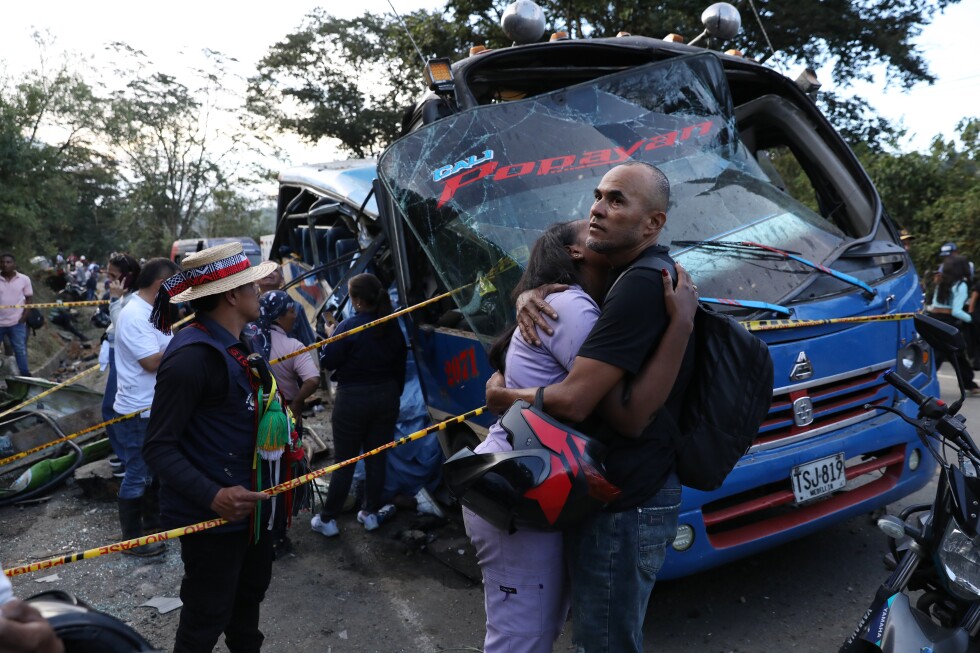
A deadly explosion on a bus in southwestern Colombia killed 13 people and injured at least 38 others on Saturday, marking a significant escalation in violence linked to drug trafficking in the region. Among the injured were five children, according to Cauca Health Secretary Carolina Camargo.
The attack occurred as the bus traveled along the Panamerican Highway in the municipality of Cajibio in Cauca province. General Hugo López, commander of Colombia’s Armed Forces, characterized the incident as a “terrorist act” during a news conference, attributing responsibility to dissidents of the former Revolutionary Armed Forces of Colombia (FARC) who rejected the 2016 peace agreement.
Military officials specifically pointed to a network led by an individual known as “Iván Mordisco” and the Jaime Martínez faction – both prominent FARC dissident groups operating in the region and among Colombia’s most wanted criminal organizations.
Colombian President Gustavo Petro took to social media platform X to condemn the attack, calling the perpetrators “terrorists, fascists, and drug traffickers.” He initially reported seven deaths and 17 wounded, though casualty figures were later updated as more information became available.
The bus bombing is part of a broader pattern of violence that has gripped southwestern Colombia in recent days. Authorities reported at least 26 separate incidents targeting public infrastructure over the past 48 hours. These include a shooting at a police station in rural Jamundi and an attack on a Civil Aviation radar facility in El Tambo, where security forces intercepted and neutralized three explosives-laden drones earlier on Saturday.
On Friday, attackers detonated two vehicles rigged with explosives near military installations in the cities of Cali and Palmira, causing material damage but no casualties. The rapid succession of violent incidents prompted an emergency response from high-ranking officials, with Defense Minister Pedro Sánchez leading a delegation of regional governors and local authorities in Palmira when the deadly bus explosion occurred.
“These criminals seek to instill fear, but we will respond with firmness,” Sánchez declared on social media platform X, signaling the government’s determination to address the deteriorating security situation.
The escalation has generated urgent calls for federal intervention. Francisca Toro, governor of neighboring Valle del Cauca province, has appealed to the national government for “immediate support,” specifically requesting reinforced security forces, enhanced intelligence operations, and “decisive actions” against what she described as a “terrorist-level escalation.”
According to Colombian authorities, the violence stems from intensifying territorial disputes between rival armed groups competing for control over lucrative drug trafficking routes. The provinces of Cauca and Valle del Cauca serve as critical hubs for illicit activities, providing access to sea and river routes leading to the port of Buenaventura – a strategic transit point for moving drugs to Central America and European markets.
The Colombian government has responded by offering substantial rewards for information leading to the apprehension of key figures behind the violence. Authorities have promised more than $1 million for information resulting in the capture of an individual identified only as “Marlon,” reportedly the leader of the region’s primary dissident group. Additionally, local officials have offered approximately $14,000 for information that could help identify those responsible for the recent attacks in Cali and Palmira.
The surge in violence underscores the persistent challenges Colombia faces in implementing the 2016 peace agreement with the FARC. While many former rebels reintegrated into civilian life, dissident factions rejected the accord and have since expanded their criminal activities, often forming alliances with other illegal armed groups involved in drug trafficking, illegal mining, and extortion throughout the country’s rural regions.
Fact Checker
Verify the accuracy of this article using The Disinformation Commission analysis and real-time sources.

10 Comments
Attacks like this only serve to further destabilize the region and impede progress. Addressing the root causes of drug trafficking and violence should be the top priority for the Colombian government.
I agree. Sustainable solutions require a comprehensive approach that tackles the economic and social drivers behind these criminal networks.
Attacks like this are deplorable and undermine efforts to achieve lasting peace and stability in Colombia. The government must take firm action to protect its citizens and bring the perpetrators to justice.
This is a concerning escalation of the security situation in Colombia. I hope the government can take effective measures to protect civilians and restore peace in the affected areas.
This is a horrific act of violence. My thoughts are with the victims and their loved ones. I hope the authorities can swiftly apprehend those responsible and prevent further such attacks.
This is a tragic and senseless loss of life. I hope the Colombian government can take effective measures to address the security challenges in the region and prevent such attacks in the future.
Deeply saddened to hear about this attack. My condolences to the families of the victims. The government must redouble its efforts to combat organized crime and protect innocent civilians.
Tragic news. My condolences to the families of the victims. This serves as a stark reminder of the ongoing challenges Colombia faces in combating organized crime and political violence.
You’re right. The government must redouble its efforts to dismantle these criminal groups and address the underlying issues driving the conflict.
This is a tragic and senseless attack. My heart goes out to the victims and their families. I hope the authorities are able to bring the perpetrators to justice swiftly.